
Quick Conversion Table
| Brand | Equivalent | Match |
|---|---|---|
| Anchor | 267 | close |
| Madeira | 1407 | close |
| Cosmo ⚠ | 119 | close |
| Sullivans | 45343 | close |
| J&P Coats | 6261 | close |
| Dimensions | 6067 | close |
| Bucilla | 6067 | close |
| Candamar | 6062 | close |
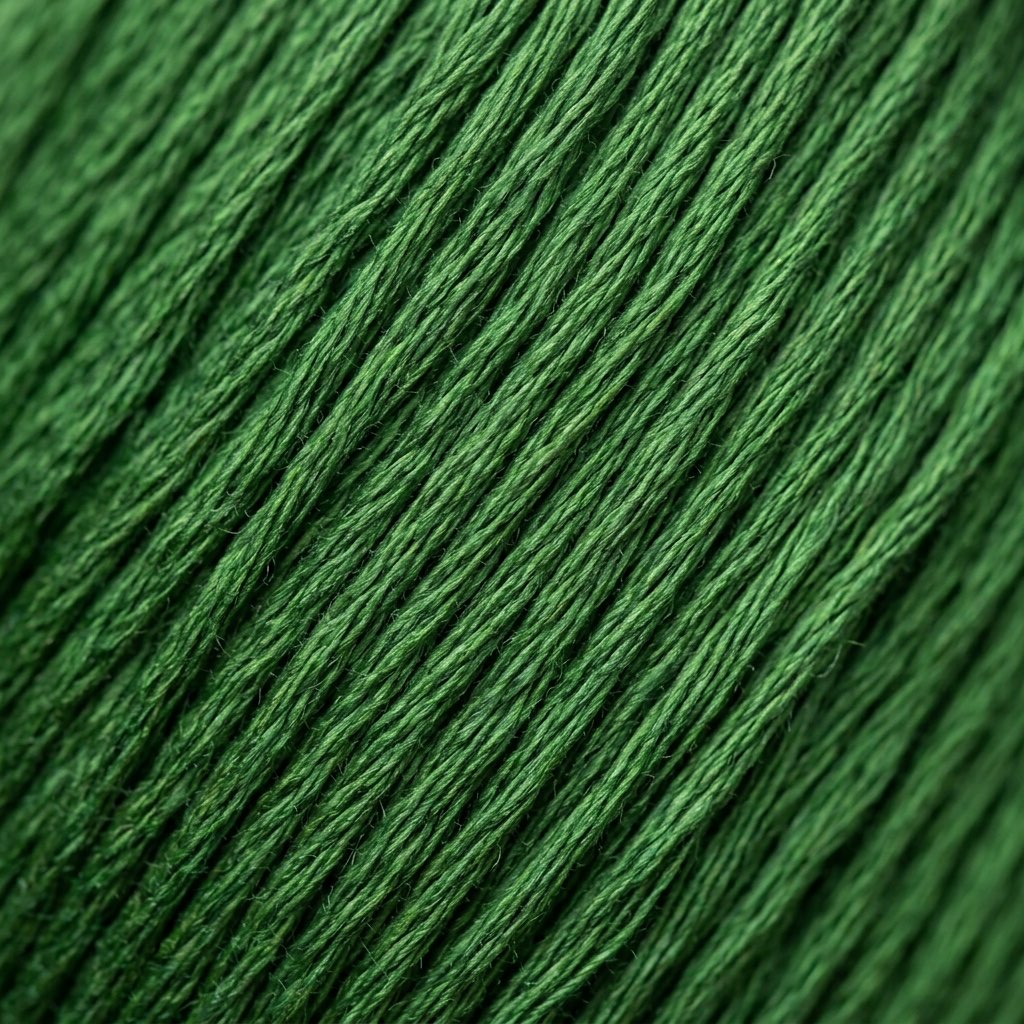
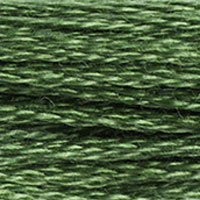
Every shading family needs a reliable mid-value — the color that does the most work, covers the most area, and defines the fundamental character of the gradient. In the hunter green family, DMC 3346 Hunter Green is that color. Lighter than the deep-shadow DMC 3345 (Dark Hunter Green) and darker than the yellow-influenced DMC 3347 and DMC 3348 (Light Yellow Green), it represents the standard mid-tone of healthy deciduous foliage: not in deep shadow, not in direct sunlight, just the genuine middle of what a green leaf looks like when the light is even and natural.
The Mid-Tone That Defines the Family
Mid-value colors in any shading family are the ones that use the most thread — they cover the largest areas, since most of a leaf's surface falls somewhere between full shadow and full highlight. Experienced stitchers know to buy more of the mid-tones in any thread family, and DMC 3346 is a classic example: in a botanical design that uses the full hunter green family, you'll go through significantly more 3346 than 3345 or 3348.
This practical consideration is worth understanding before you start a large botanical or nature project. A design with extensive foliage coverage using the hunter green family might need four or five skeins of 3346 versus one or two of 3345. Checking the pattern's thread list carefully before buying is especially important for mid-value colors that carry this kind of coverage load.
Natural Uses in Design
Real deciduous foliage — oak, maple, beech, apple, lime, most garden shrubs — falls in this green range for most of the growing season. DMC 3346 captures the color of healthy summer leaves seen in normal daylight accurately enough to read as genuinely naturalistic rather than conventionally "decorative green." This makes it an excellent choice for nature and botanical designs that prioritize realism over stylization.
Garden and cottage designs, which are consistently among the most popular cross-stitch categories, use this mid-forest-green extensively. Roses with full foliage, herb garden designs, flower border samplers, and garden scene landscapes all rely on some version of this mid-green for the main plant body color. DMC 3346's slightly blue-shifted character (it leans ever so slightly toward a forest green rather than a yellow-green) gives it a freshness and depth that reads as genuine vegetation.
Wildlife designs for woodland birds and animals use DMC 3346 as environmental color — the green of the habitat the animal lives in, appearing in background foliage, leaf perches, and habitat details. This contextual use requires a green that reads as real rather than decorative, and 3346 delivers that consistently.
Working With the Hunter Green Family
One of the pleasures of working with a well-designed four-value thread family like the hunter greens is watching a flat canvas develop genuine three-dimensionality as the value steps go in. When you've placed your DMC 3345 shadows and are working DMC 3346 as the main fill, the design starts to come alive in a way that the single darkest value alone doesn't achieve. Adding DMC 3347 for lighter areas and DMC 3348 for highlights completes the transformation.
For stitchers new to shading with multiple values: resist the temptation to blend the steps too carefully at the boundaries. Crisp, clear value transitions in cross-stitch actually read as smooth from normal viewing distance — the pixel-like nature of the stitches does the visual blending automatically. Attempting to smooth transitions by mixing or blending threads at boundaries can result in muddy middle zones that read as less defined rather than more natural.
All four brand equivalents for DMC 3346 are listed as close rather than exact — reflecting the difficulty of precisely matching a richly saturated mid-forest-green across brands. Anchor 267, Madeira 1407, Cosmo 119, and Sullivans 45343 are all in the correct territory, but in-person comparison is advisable before using any of them in a prominent mid-fill role alongside original DMC threads.
The mid-value position of DMC 3346 in the hunter green family makes accurate matching more important than it would be for the darkest or lightest values. The eye is more sensitive to value and hue errors in mid-tones (because they appear in larger areas) than at the extremes of a gradient. A substitute that's even slightly darker or lighter than 3346 will compress one side of the gradient and expand the other, disrupting the smooth shading effect.
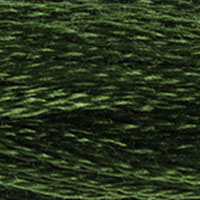
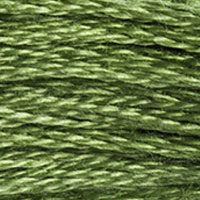
From stash, DMC 895 (Very Dark Hunter Green) is too dark. DMC 3362 (Dark Pine Green) is a reasonable neighbor with slightly more olive influence. For a mid-green fill when 3346 is unavailable, DMC 986 (Very Dark Forest Green) is notably darker, while DMC 989 (Forest Green) is a reliable mid-green with a slightly warmer, more yellow character than 3346. Within the complete hunter green family, substituting only the mid-value while keeping the DMC originals for the shadow and highlight positions tends to produce better results than mixing brands for all four values.
Reference quality
How We Validate This Color Record
Use this page as a reference card for DMC 3346: the structured data, quick conversions, and long-form copy are all tied back to the same stored color record.
- Methodology
- This page renders DMC 3346, its hex value, and every brand equivalent from the site's source-of-truth color record, then checks long-form body copy against those same stored fields.
- Verification status
- Source-field checked. The page content is audited against the stored DMC number, brand equivalents, and match-quality labels before publishing.
- Last reviewed
- 2026-04-20
- Approximation warning
- Screen hex values, thread photos, and cross-brand conversions are reference aids. Dye lots, thread sheen, and fabric color can still shift the result in hand.
Decision guide
When to use the DMC 3346 reference page
This page should help you decide faster between palette planning, brand substitution, and shade comparison without turning the color record into a thin lookup page.
Best for
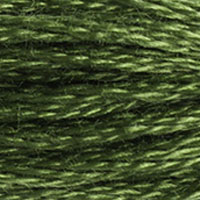
- + Palette planning when you want the stored DMC 3346 Hunter Green record, hex value #406A3A, and linked brand equivalents in one place.
- + Checking the quickest cross-brand shortlist before you buy floss, compare stash substitutes, or route into a more specific conversion page.
- + Finding nearby shades in the greens family before you commit to accents, shading, or background blends.
Watch for
- ! Screen previews are only reference aids. Hunter Green can shift on real fabric because thread sheen, stitch coverage, and room lighting change how the color reads.
- ! A stored equivalent is still a shortlist, not a guarantee that two brands will disappear into each other in the same stitched motif.
- ! Older charts, discontinued kit floss, and dye-lot variation can all introduce small but visible differences that the page cannot detect for you.
Before you commit
- Confirm the role of DMC 3346 Hunter Green: decide whether you need an exact hero shade, a forgiving background, or a rough stash substitute.
- Compare on project fabric: view the skein or stitched sample on the same fabric count and color you will actually use.
- Use the linked conversion pages next: open the brand-specific pages when you need match-quality caveats before substituting away from the DMC reference.
DMC 3346 FAQ
These questions appear on the page so the FAQ schema stays aligned with what visitors can actually read.
What is the Anchor equivalent of DMC 3346?+
The closest Anchor equivalent to DMC 3346 (Hunter Green) is Anchor 267. This is a close match.
What color is DMC 3346?+
DMC 3346 is called "Hunter Green" and has a hex color value of #406A3A. It belongs to the greens color family.
What is the Madeira equivalent of DMC 3346?+
The closest Madeira equivalent to DMC 3346 (Hunter Green) is Madeira 1407. This is a close match.
How DMC 3346 Looks on Fabric
The same thread appears different depending on your fabric. Always test on your project fabric.
White Aida
Cream / Ecru
Black Aida
Pairs Well With
DMC colors commonly used alongside 3346 Hunter Green.
Woodland Forest
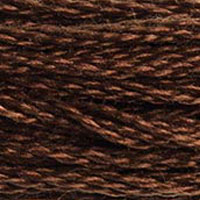
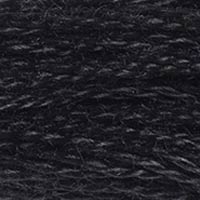
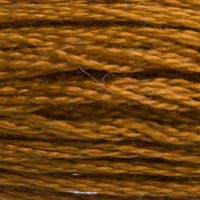
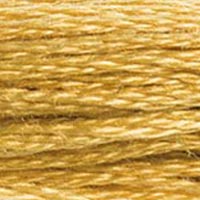
Earth Tones
Shading Companions
Detailed Conversions
Where to Buy DMC 3346
This section contains affiliate links. We may earn a small commission at no cost to you.
Related Guides
Free Printable Thread Conversion Chart
Pick a brand, enter your email, and we'll send you a printable chart mapping all 552 DMC colors to that brand's equivalents. Zero spam, one chart.
Thanks! Here's your free chart:
Download Your ChartOpens in a new tab. Use your browser's Print → Save as PDF.
No spam. Your email is stored securely and never shared.