
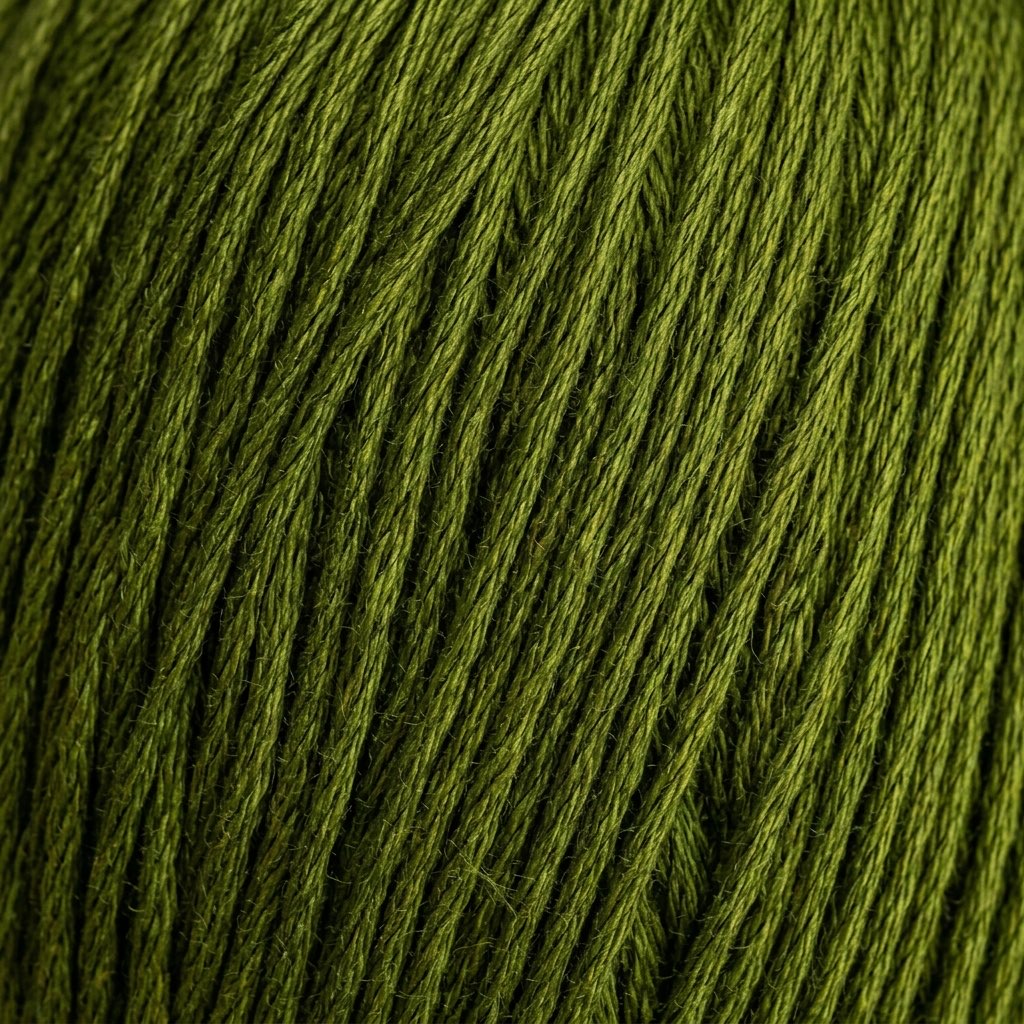
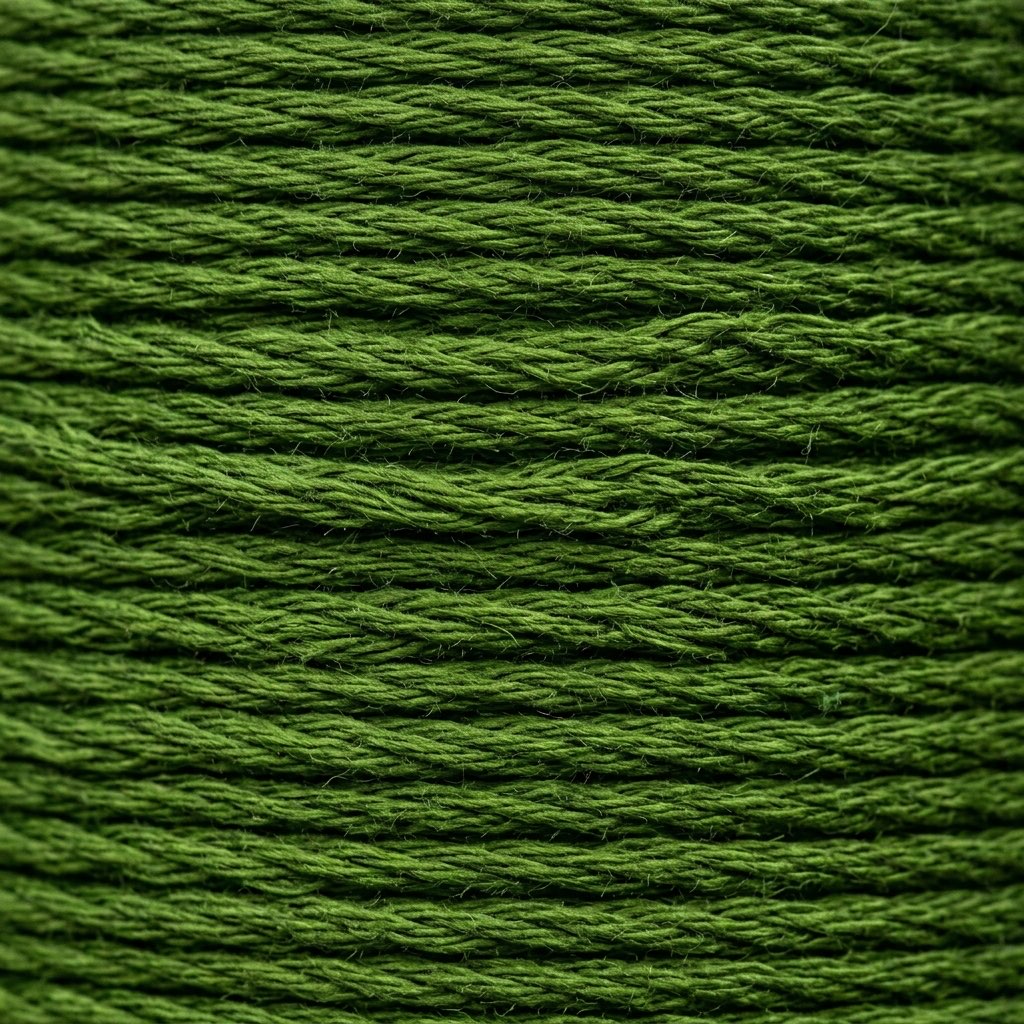
DMC 280 — Very Dark Yellow Green
Greens family · Hex #4E6000
Quick Conversion Table
| Brand | Equivalent | Match |
|---|---|---|
| Anchor | 845 | close |
| Madeira | 1617 | close |
| Cosmo ⚠ | 982 | close |
| Sullivans | 45327 | close |
Camouflage Green: Military History Woven Into Thread
Before modern digital camouflage patterns, before infrared-defeating fabric coatings, before computer-generated breakup patterns — there was olive drab. The deep, dark yellow-green that militaries worldwide adopted because it matched the one color that covers most of the earth's habitable surface: vegetation in shadow. DMC 280 is that color. It's the darkest value in the yellow-green family, sitting so deep and muted that it barely registers as green at all under low light. This is the green of military canvas, of World War II jeep paint, of the webbing on a soldier's pack.
The cultural weight of this shade is worth acknowledging because it affects how viewers respond to stitched pieces that use it prominently. Olive drab carries connotations of utility, austerity, endurance — qualities that make it unexpectedly powerful in sampler work and text-heavy designs where you want authority without the harshness of black. Backstitch lettering in DMC 280 instead of DMC 310 (Black) produces text that's firm and legible but warmer, more organic, and less stark.
Building Depth in the Yellow-Green Spectrum
DMC 280 anchors the dark end of the yellow-green gradient alongside DMC 281 (Dark Yellow Green) and DMC 282 (Medium Yellow Green). Together, these three form one of the most useful micro-gradients in the green family for stitching olive groves, autumn hillsides, and evergreen undergrowth. The gradient moves from 280's near-black depth through 281's dark olive to 282's more recognizable medium green, creating a value range that handles shadow-to-midtone transitions in a single color family.
For landscape stitching, 280 is the color of deep forest shadow — the areas where canopy is so thick that sunlight rarely penetrates. It grounds a green palette the way DMC 310 grounds a greyscale. Without an anchor point this dark, lighter greens can float and feel disconnected from the ground. Two or three rows of 280 at the base of a forest scene provide visual weight that tells the viewer "this is where the trees meet the earth."
Beyond landscapes, 280 has quietly become a favorite among military history stitchers — those dedicated enthusiasts who stitch regiment badges, historical flags, and military insignia with exacting accuracy. The olive-drab quality is authentic to period colors in a way that brighter greens aren't, and 280 appears in more than a few regiment color charts and military-themed heritage patterns.
Technique and Coverage
Because 280 is so dark, coverage issues that are invisible with medium-value threads become apparent. Any gaps between stitches allow the background fabric to show through as bright spots, especially on white or light Aida. Two full strands on 14-count with consistent railroading are non-negotiable. On 18-count, some stitchers even move to three strands or use a laying tool to ensure the deep olive reads as a solid, uniform area rather than a mesh of dark thread over visible white fabric. If you're working a full-coverage piece on 18-count and the background is white, consider dyeing or painting the fabric behind dark-thread areas before you stitch — it's an advanced technique, but it eliminates the white-fleck problem that plagues many dark-green fills.
Olive Drab Precision: Getting the Undertone Right
Madeira 1617 earns an exact match rating here, and for good reason — Madeira handles dark olive tones with impressive fidelity. If DMC 280 isn't available, Madeira 1617 is the substitute to reach for without hesitation. The only caveat is Madeira's slightly different twist, which can affect coverage density in very dark fills. You might need to adjust your stitch tension slightly tighter with the Madeira version to achieve the same opaque look.
Anchor 845 gets close but tends to sit a hair cooler — slightly more blue-green and less yellow-green in the mix. For standalone use this is often imperceptible, but if you're stitching the 280/281/282 gradient and substituting only one of the three, the temperature shift can break the family cohesion. Either substitute all three from the same brand or none.
Cosmo 982 is available in regions where DMC can be hard to source and handles the darkness well, though some stitchers report the yellow-green character is slightly more muted — reading as a dark neutral olive rather than a dark warm olive. For military-themed work where you want authentic olive drab, this subtle difference might actually be an improvement.
Avoid substituting with DMC 3051 (Dark Green Gray) — they're similar in value but different in temperature. 3051 carries a cooler, more purely green character, while 280 has that decisive yellow warmth that reads as olive. Similarly, DMC 934 (Black Avocado Green) is darker but greener, without 280's olive-khaki quality.
Reference quality
How We Validate This Color Record
Use this page as a reference card for DMC 280: the structured data, quick conversions, and long-form copy are all tied back to the same stored color record.
- Methodology
- This page renders DMC 280, its hex value, and every brand equivalent from the site's source-of-truth color record, then checks long-form body copy against those same stored fields.
- Verification status
- Source-field checked. The page content is audited against the stored DMC number, brand equivalents, and match-quality labels before publishing.
- Last reviewed
- 2026-04-20
- Approximation warning
- Screen hex values, thread photos, and cross-brand conversions are reference aids. Dye lots, thread sheen, and fabric color can still shift the result in hand.
Decision guide
When to use the DMC 280 reference page
This page should help you decide faster between palette planning, brand substitution, and shade comparison without turning the color record into a thin lookup page.
Best for
- + Palette planning when you want the stored DMC 280 Very Dark Yellow Green record, hex value #4E6000, and linked brand equivalents in one place.
- + Checking the quickest cross-brand shortlist before you buy floss, compare stash substitutes, or route into a more specific conversion page.
- + Finding nearby shades in the greens family before you commit to accents, shading, or background blends.
Watch for
- ! Screen previews are only reference aids. Very Dark Yellow Green can shift on real fabric because thread sheen, stitch coverage, and room lighting change how the color reads.
- ! A stored equivalent is still a shortlist, not a guarantee that two brands will disappear into each other in the same stitched motif.
- ! Older charts, discontinued kit floss, and dye-lot variation can all introduce small but visible differences that the page cannot detect for you.
Before you commit
- Confirm the role of DMC 280 Very Dark Yellow Green: decide whether you need an exact hero shade, a forgiving background, or a rough stash substitute.
- Compare on project fabric: view the skein or stitched sample on the same fabric count and color you will actually use.
- Use the linked conversion pages next: open the brand-specific pages when you need match-quality caveats before substituting away from the DMC reference.
DMC 280 FAQ
These questions appear on the page so the FAQ schema stays aligned with what visitors can actually read.
What is the Anchor equivalent of DMC 280?+
The closest Anchor equivalent to DMC 280 (Very Dark Yellow Green) is Anchor 845. This is a close match.
What color is DMC 280?+
DMC 280 is called "Very Dark Yellow Green" and has a hex color value of #4E6000. It belongs to the greens color family.
What is the Madeira equivalent of DMC 280?+
The closest Madeira equivalent to DMC 280 (Very Dark Yellow Green) is Madeira 1617. This is a close match.
How DMC 280 Looks on Fabric
The same thread appears different depending on your fabric. Always test on your project fabric.
White Aida
Cream / Ecru
Black Aida
Pairs Well With
DMC colors commonly used alongside 280 Very Dark Yellow Green.
Suggested Palette
Detailed Conversions
Where to Buy DMC 280
This section contains affiliate links. We may earn a small commission at no cost to you.
Related Guides
Free Printable Thread Conversion Chart
Pick a brand, enter your email, and we'll send you a printable chart mapping all 552 DMC colors to that brand's equivalents. Zero spam, one chart.
Thanks! Here's your free chart:
Download Your ChartOpens in a new tab. Use your browser's Print → Save as PDF.
No spam. Your email is stored securely and never shared.