
Quick Conversion Table
| Brand | Equivalent | Match |
|---|---|---|
| Anchor | 341 | exact |
| Madeira | 0314 | close |
| Cosmo ⚠ | 467 | close |
| Sullivans | 45264 | close |
| J&P Coats | 3340 | close |
| Dimensions | 13340 | close |
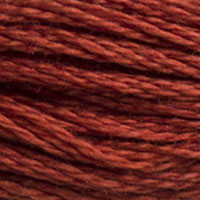
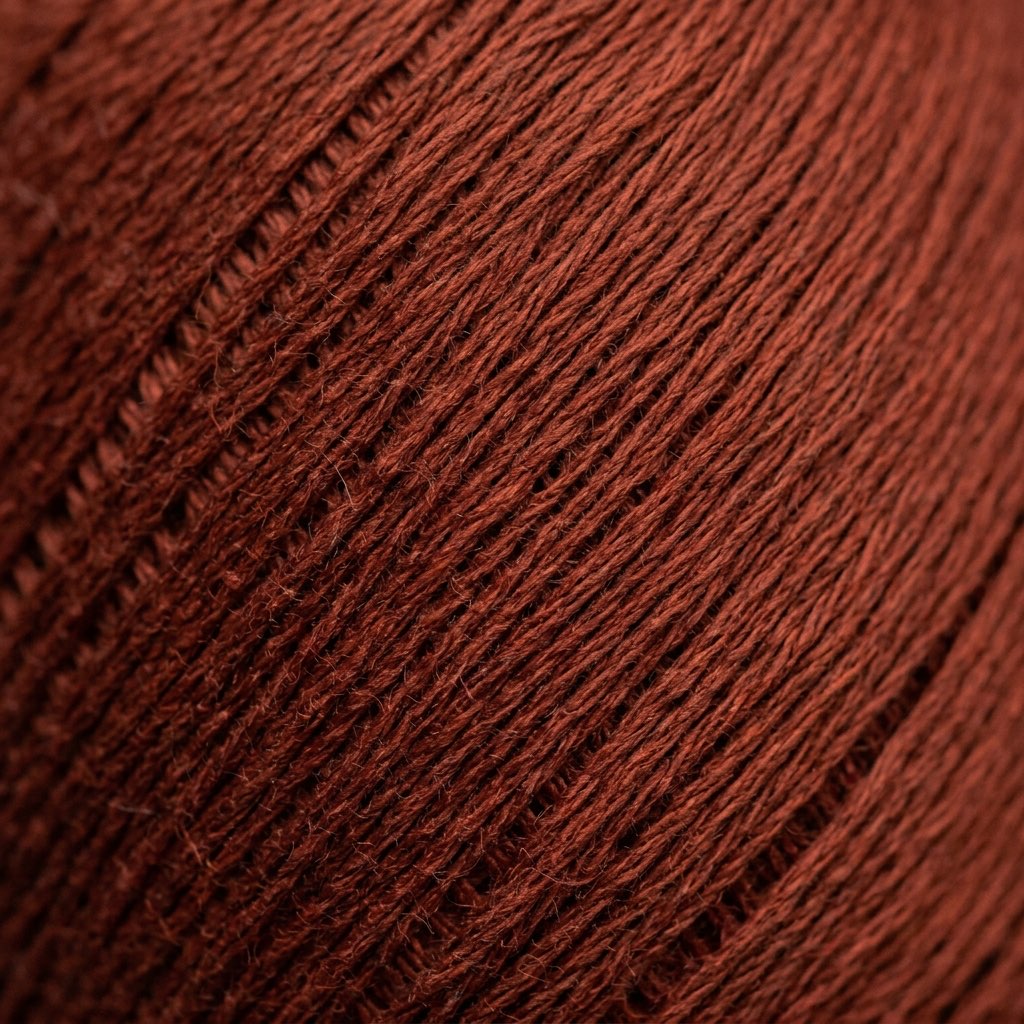
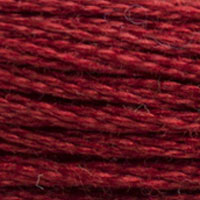
Copper as a metal goes through a visible aging process that most metals don't: it starts bright and reddish, oxidizes toward orange and brown, and eventually verdigris into green. DMC 918 Dark Red Copper captures the earliest stage of that aging — not the bright fresh copper of a new penny, but the color of copper that's been handled and warmed, slightly darkened, the red deepened toward brown without losing its essential metallic warmth. It's the color of old pennies in a jar, of a copper-bottomed pot that's seen some use, of autumn bark on certain trees.
In the DMC copper family — running from DMC 918 (Dark Red Copper) at the darkest through DMC 919 (Red Copper), DMC 920 (Medium Copper), DMC 921 (Copper), and DMC 922 (Light Copper) at the lightest — 918 anchors the shadow end. It's substantially darker than 919, dark enough to function almost as a neutral dark anchor in warm-toned designs. At #82340A, the red-brown combination puts it in a territory that also relates to earth tones, terracotta, and the darker members of the DMC brown family.
Where 918 Fits in Nature Subjects
Animal subjects in particular depend on threads like 918. Fox and red squirrel designs use it for the deep shadows in the fur, where the warm red-orange coat gets fully shaded away from light. Autumn bird plumage — robins, wrens, certain finches — often has warm russet-brown elements that land exactly in 918's color range. Deer and other ungulates with tawny-brown coloring use 918 in the darker shadow zones of their coats, typically paired with DMC 433 (Medium Brown) and DMC 435 (Very Light Brown) for a complete fur-shading palette.
Rustic and folk art designs — the kind that depict traditional crafts, farm tools, stoneware pottery, or historical domestic objects — find 918 equally useful. The color reads as aged, well-used, and unpretentious in a way that more chromatic reds and oranges don't. A cast-iron skillet rendered in cross-stitch would use 918 for the warmest highlights on its black surface; a terracotta pot would use it for the deepest shadow zones beneath the rim.
The Copper Family as a Design Tool
One of the most underrated things about the DMC copper family is how well it spans the gap between the red family and the brown family. Where the gap in many thread collections creates awkward jumps, the 918–922 sequence provides smooth transitional values that design software can exploit for complex organic subjects. Autumn foliage is a good example: the transition from warm orange-red leaves through the tawny brown of dried leaves and into the deep brown of bark requires exactly the value range that 918 through DMC 433 can provide.
For stitchers who work on portrait and figure subjects that include skin tones with warm undertones, 918 occasionally appears in the darkest shadow zones of warm-toned complexions. It's not a primary skin tone color, but as a deep shadow accent in tanned or warm-olive skin rendering, it can be more harmonious than DMC 3371 (Black Brown) in designs where a warm-chromatic shadow is more accurate than a neutral dark.
Anchor 341 and Madeira 0314 both carry exact ratings, making DMC 918 well-supported across brands. Anchor 341 is a reliable substitute with a comparable dark red-copper character. For stitchers who maintain a mixed-brand stash, this conversion is one of the more trustworthy in the warm-brown/dark-copper range.
Madeira 0314 is also dependable. Madeira's consistency in the copper-to-brown range is generally good, and 0314 reads comparably to DMC 918 in both fill and backstitch roles. For long-term display pieces, Madeira's colorfastness profile is worth considering — copper tones can be somewhat susceptible to fading in strong light, and Madeira's dye formulations in this range have a solid reputation for stability.
Cosmo 467 and Sullivans 45264 carry close ratings. The Cosmo version may trend slightly differently in the red-versus-brown balance within the dark copper range. Test against existing DMC 918 stitches if you're supplementing a partially completed project rather than substituting entirely.
Within DMC, if 918 is unavailable, DMC 919 (Red Copper) is the next step lighter and preserves the color family character. DMC 3826 (Golden Brown) is another neighbor that shares warmth and darkness without being in the copper family specifically. For projects where 918 serves as the deepest shadow in a copper gradient, nothing below it (darker) in the DMC copper family exists — if you need something darker, DMC 300 (Very Dark Mahogany) or DMC 838 (Very Dark Beige Brown) provide dark warm-brown alternatives at the cost of losing the copper-specific color character.
Reference quality
How We Validate This Color Record
Use this page as a reference card for DMC 918: the structured data, quick conversions, and long-form copy are all tied back to the same stored color record.
- Methodology
- This page renders DMC 918, its hex value, and every brand equivalent from the site's source-of-truth color record, then checks long-form body copy against those same stored fields.
- Verification status
- Source-field checked. The page content is audited against the stored DMC number, brand equivalents, and match-quality labels before publishing.
- Last reviewed
- 2026-04-20
- Approximation warning
- Screen hex values, thread photos, and cross-brand conversions are reference aids. Dye lots, thread sheen, and fabric color can still shift the result in hand.
Decision guide
When to use the DMC 918 reference page
This page should help you decide faster between palette planning, brand substitution, and shade comparison without turning the color record into a thin lookup page.
Best for
- + Palette planning when you want the stored DMC 918 Dark Red Copper record, hex value #82340A, and linked brand equivalents in one place.
- + Checking the quickest cross-brand shortlist before you buy floss, compare stash substitutes, or route into a more specific conversion page.
- + Finding nearby shades in the reds family before you commit to accents, shading, or background blends.
Watch for
- ! Screen previews are only reference aids. Dark Red Copper can shift on real fabric because thread sheen, stitch coverage, and room lighting change how the color reads.
- ! A stored equivalent is still a shortlist, not a guarantee that two brands will disappear into each other in the same stitched motif.
- ! Older charts, discontinued kit floss, and dye-lot variation can all introduce small but visible differences that the page cannot detect for you.
Before you commit
- Confirm the role of DMC 918 Dark Red Copper: decide whether you need an exact hero shade, a forgiving background, or a rough stash substitute.
- Compare on project fabric: view the skein or stitched sample on the same fabric count and color you will actually use.
- Use the linked conversion pages next: open the brand-specific pages when you need match-quality caveats before substituting away from the DMC reference.
DMC 918 FAQ
These questions appear on the page so the FAQ schema stays aligned with what visitors can actually read.
What is the Anchor equivalent of DMC 918?+
The closest Anchor equivalent to DMC 918 (Dark Red Copper) is Anchor 341. This is an exact match.
What color is DMC 918?+
DMC 918 is called "Dark Red Copper" and has a hex color value of #82340A. It belongs to the reds color family.
What is the Madeira equivalent of DMC 918?+
The closest Madeira equivalent to DMC 918 (Dark Red Copper) is Madeira 0314. This is a close match.
How DMC 918 Looks on Fabric
The same thread appears different depending on your fabric. Always test on your project fabric.
White Aida
Cream / Ecru
Black Aida
Pairs Well With
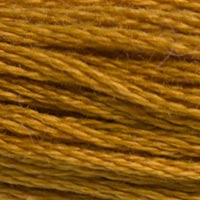
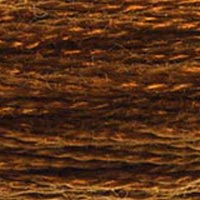
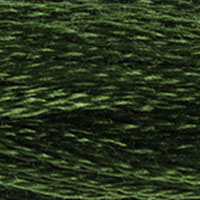
DMC colors commonly used alongside 918 Dark Red Copper.
Detailed Conversions
Where to Buy DMC 918
This section contains affiliate links. We may earn a small commission at no cost to you.
Related Guides
Free Printable Thread Conversion Chart
Pick a brand, enter your email, and we'll send you a printable chart mapping all 552 DMC colors to that brand's equivalents. Zero spam, one chart.
Thanks! Here's your free chart:
Download Your ChartOpens in a new tab. Use your browser's Print → Save as PDF.
No spam. Your email is stored securely and never shared.