
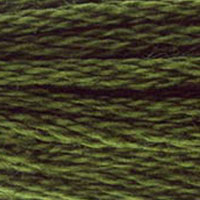
DMC 936 — Very Dark Avocado Green
Greens family · Hex #4C5826
Quick Conversion Table
| Brand | Equivalent | Match |
|---|---|---|
| Anchor | 846 | exact |
| Madeira | 1505 | close |
| Cosmo ⚠ | 635 | close |
| Sullivans | 45278 | close |
| J&P Coats | 6269 | close |
| Dimensions | 6181 | close |
| Bucilla | 6316 | close |
Before using DMC 936 in a gradient, it's worth knowing that the naming in the Avocado Green family follows an unusual logic: DMC 936 (Very Dark Avocado Green) is actually lighter in value than DMC 935 (Dark Avocado Green). This counterintuitive ordering confuses stitchers every time they encounter it. When building a dark-to-light gradient through the avocado family, the correct order is 934 (Black) → 935 (Dark) → 936 (Very Dark) → 937 (Medium). Yes, "Very Dark" comes after "Dark" in the light direction. Accept it and move on — the colors themselves are excellent.
At #4C5826, DMC 936 sits in the deep olive-green territory that reads as one of nature's most persistent and underrated colors. Not the bright, obvious green of well-watered lawns, not the cool green of northern forests, but the specific yellow-green of olive trees in full summer, of dried sage and rosemary, of the undersides of leaves on plants that evolved for heat and drought. It's a color that communicates survival and resilience more than lushness — an aesthetic quality that designers working with Mediterranean, desert, and earth-toned palettes find valuable.
The Olive-Green Range and Its Design Applications
Olive green as a color family has had significant cultural weight in the 20th century beyond its botanical origins. Military camouflage colors in the olive range gave this shade associations with utility, durability, and the outdoors that persist in contemporary fashion and design. For cross-stitch designs with a rugged, natural, or utility-inspired aesthetic — hiking themes, outdoor adventure designs, botanical specimens in the field guide style — DMC 936 reads authentically and purposefully.
In traditional folk embroidery, particularly from Eastern European traditions (Hungarian, Romanian, Bulgarian), olive greens appear alongside warm oranges, deep reds, and golden yellows in characteristic palette combinations. DMC 936 fits naturally into these palettes as the green element, providing the organic earthiness that distinguishes folk traditions from other embroidery styles.
Garden and herb-focused designs — a growing category in contemporary cross-stitch patterns — use 936 extensively. Rosemary, sage, thyme, and olive branch designs share a common need for dark yellow-green foliage with warm undertones, and 936 delivers this more convincingly than cooler alternatives like DMC 895 (Very Dark Hunter Green). Adding DMC 937 (Medium Avocado Green) for the lighter surfaces and DMC 903 (Very Dark Old Gold) for the driest, most golden parts of dried herb stems completes a palette with excellent botanical authenticity.
Technical Notes for Working With 936
The dark value of 936 means it reads with particular clarity on natural linen — the contrast between the warm olive-green and the cream of natural linen is aesthetically complementary rather than simply contrasting. Many stitchers who work on linen specifically prefer the avocado greens to the cooler emerald or hunter greens for this reason: the warmth in both the thread and the linen ground creates cohesion.
For over-two work on 28-count evenweave, 936 provides excellent coverage. The pigmentation is sufficient that two strands over two fabric threads creates a clean, solid appearance. For over-one on the same count, consider three strands to ensure adequate coverage — the openness of over-one work on fine fabric can make darker colors look slightly less saturated than they would in over-two.
Anchor 846 and Madeira 1505 both carry exact ratings, making DMC 936 well-supported for brand substitution despite the naming confusion within the avocado family. Anchor 846 is a reliable equivalent that maintains the characteristic warm olive quality. Madeira 1505 is equally dependable.
A note on building the avocado gradient in Anchor: the Anchor numbers for the avocado family aren't sequential either, so it's worth keeping a reference list rather than guessing. The key is verifying that you have the correct value step in the gradient, regardless of what the number is on the label.
Cosmo 635 and Sullivans 45278 carry close ratings. In the dark olive-green range, close-rated substitutes are generally serviceable for most applications — the warmth and general character are preserved, even if the precise shade balance differs slightly from DMC 936. For designs where the specific warm-yellow-green quality of 936 is aesthetically central, test first.
Within DMC, remember the naming anomaly: the value immediately darker than 936 is DMC 935 (Dark Avocado Green), not something numbered 936-adjacent. The immediately lighter shade is DMC 937 (Medium Avocado Green). For standalone use where 936 is unavailable and you need a dark warm green, DMC 580 (Dark Moss Green) is the closest alternative in a different family, sharing the olive-yellow-green character at a comparable dark value.
Reference quality
How We Validate This Color Record
Use this page as a reference card for DMC 936: the structured data, quick conversions, and long-form copy are all tied back to the same stored color record.
- Methodology
- This page renders DMC 936, its hex value, and every brand equivalent from the site's source-of-truth color record, then checks long-form body copy against those same stored fields.
- Verification status
- Source-field checked. The page content is audited against the stored DMC number, brand equivalents, and match-quality labels before publishing.
- Last reviewed
- 2026-04-20
- Approximation warning
- Screen hex values, thread photos, and cross-brand conversions are reference aids. Dye lots, thread sheen, and fabric color can still shift the result in hand.
Decision guide
When to use the DMC 936 reference page
This page should help you decide faster between palette planning, brand substitution, and shade comparison without turning the color record into a thin lookup page.
Best for
- + Palette planning when you want the stored DMC 936 Very Dark Avocado Green record, hex value #4C5826, and linked brand equivalents in one place.
- + Checking the quickest cross-brand shortlist before you buy floss, compare stash substitutes, or route into a more specific conversion page.
- + Finding nearby shades in the greens family before you commit to accents, shading, or background blends.
Watch for
- ! Screen previews are only reference aids. Very Dark Avocado Green can shift on real fabric because thread sheen, stitch coverage, and room lighting change how the color reads.
- ! A stored equivalent is still a shortlist, not a guarantee that two brands will disappear into each other in the same stitched motif.
- ! Older charts, discontinued kit floss, and dye-lot variation can all introduce small but visible differences that the page cannot detect for you.
Before you commit
- Confirm the role of DMC 936 Very Dark Avocado Green: decide whether you need an exact hero shade, a forgiving background, or a rough stash substitute.
- Compare on project fabric: view the skein or stitched sample on the same fabric count and color you will actually use.
- Use the linked conversion pages next: open the brand-specific pages when you need match-quality caveats before substituting away from the DMC reference.
DMC 936 FAQ
These questions appear on the page so the FAQ schema stays aligned with what visitors can actually read.
What is the Anchor equivalent of DMC 936?+
The closest Anchor equivalent to DMC 936 (Very Dark Avocado Green) is Anchor 846. This is an exact match.
What color is DMC 936?+
DMC 936 is called "Very Dark Avocado Green" and has a hex color value of #4C5826. It belongs to the greens color family.
What is the Madeira equivalent of DMC 936?+
The closest Madeira equivalent to DMC 936 (Very Dark Avocado Green) is Madeira 1505. This is a close match.
How DMC 936 Looks on Fabric
The same thread appears different depending on your fabric. Always test on your project fabric.
White Aida
Cream / Ecru
Black Aida
Pairs Well With
DMC colors commonly used alongside 936 Very Dark Avocado Green.
Suggested Palette
Shading Companions
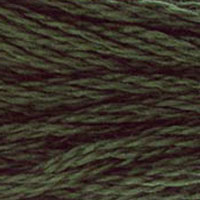
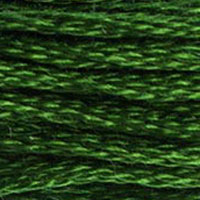
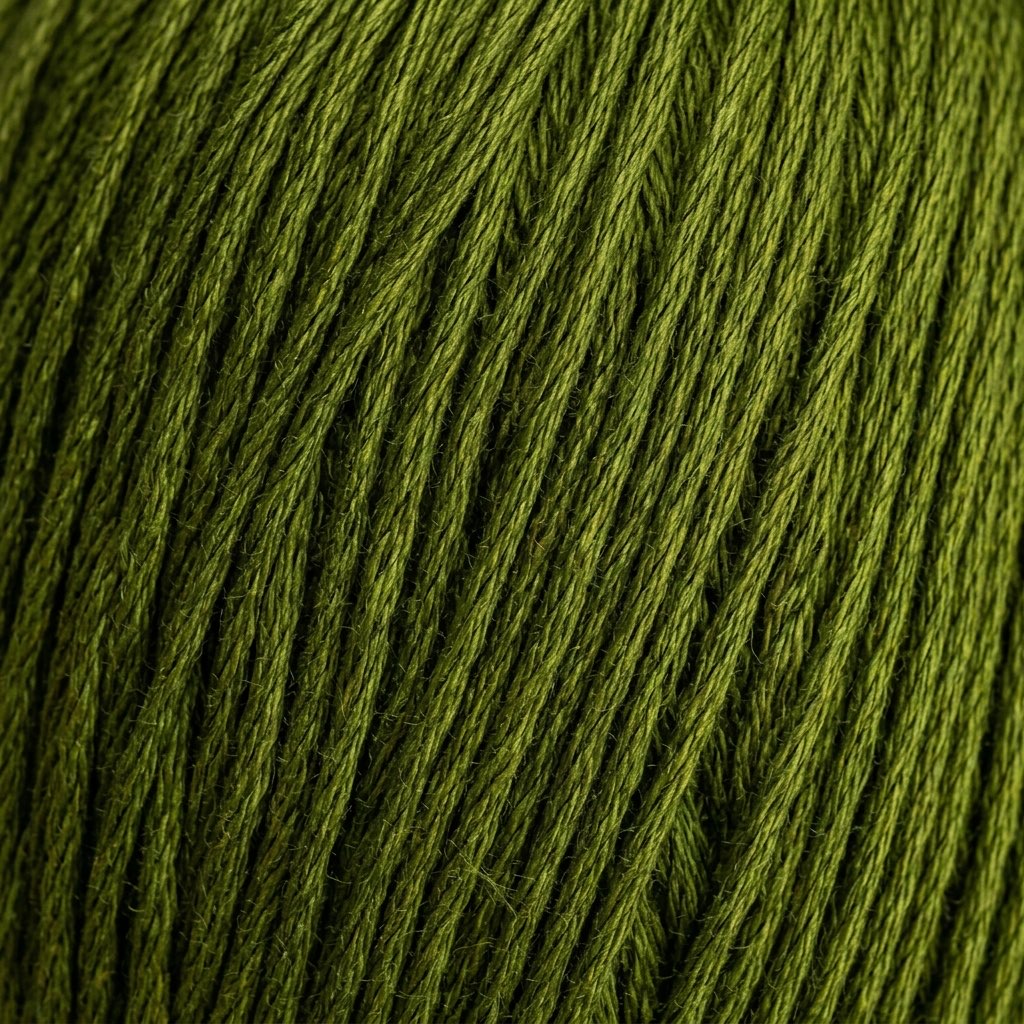
Detailed Conversions
Where to Buy DMC 936
This section contains affiliate links. We may earn a small commission at no cost to you.
Related Guides
Free Printable Thread Conversion Chart
Pick a brand, enter your email, and we'll send you a printable chart mapping all 552 DMC colors to that brand's equivalents. Zero spam, one chart.
Thanks! Here's your free chart:
Download Your ChartOpens in a new tab. Use your browser's Print → Save as PDF.
No spam. Your email is stored securely and never shared.