
Quick Conversion Table
| Brand | Equivalent | Match |
|---|---|---|
| Anchor | 877 | close |
| Madeira | 1703 | close |
| Cosmo ⚠ | 969 | close |
| Sullivans | 45478 | close |
| J&P Coats | 6213 | close |
Celadon: When Pottery Inspires Thread
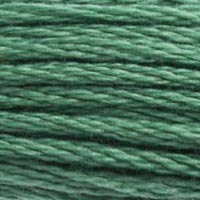
Celadon isn't just a color — it's a 2,000-year-old ceramic tradition. The celadon glazes developed during China's Song Dynasty produced a jade-like surface that ranged from pale grey-green to this deeper, more saturated blue-green that DMC 163 captures. These weren't accidental colors; potters spent generations perfecting the iron-oxide glazes and reduction firing techniques that produced exactly this hue. When you thread your needle with 163, you're working with a color that people have considered worth pursuing for millennia.
DMC 163, Medium Celadon Green, occupies the middle ground in the celadon family — darker and more assertive than the whisper-light celadons (DMC 3817, DMC 3813) but not as deep or shadowy as DMC 3815 (Dark Celadon Green). It's the workhorse value, the one that carries the most visual weight in celadon-themed designs. If a pattern calls for celadon and only gives you one shade to work with, this is usually the one that makes sense.
The blue-green balance in 163 is genuinely interesting from a color theory perspective. It sits right at the point where green starts to pull toward blue, but hasn't committed to either. In warm light — candlelight, incandescent, golden-hour sun — it reads greener. Under cool fluorescent or blue-white LED light, it shifts perceptibly toward teal. This chameleonic quality means your stitching will look subtly different depending on where and when it's viewed, which can be either a feature or an annoyance depending on your temperament.
Stitching with Jade Tones: Practical Considerations
On white Aida, 163 reads as distinctly cool and sophisticated — it has enough saturation to hold its own without feeling overwhelming. On cream or ivory fabric, the warmth of the base rounds out the thread's cooler edges, producing something closer to true jade. On black Aida, 163 practically glows, making it an excellent choice for dramatic East Asian-inspired motifs where you want that celadon luminosity against a dark ground.
Coverage with 163 is reliable. Two strands on 14-count give you clean, full crosses. On 18-count, you can get away with two strands if you railroad consistently, but some stitchers prefer the slightly lighter coverage of two strands without railroading — the fabric peeking through adds to the jade-like translucency. Over one on higher-count linens, a single strand of 163 produces exquisite detail work for small motifs: miniature bonsai trees, tiny koi fish, delicate bamboo stalks.
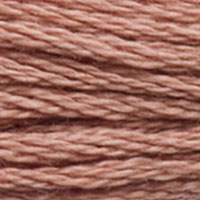
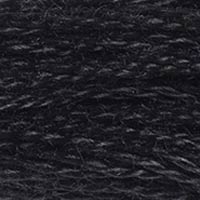
This is one of those colors that rewards careful companion selection. Pair it with DMC 3816 (Celadon Green) for a one-step-lighter harmony, or step further into contrast with DMC 3814 (Aquamarine) for a brighter, more tropical counterpoint. For designs inspired by Chinese ceramics or Japanese gardens, combine 163 with DMC 758 (Very Light Terra Cotta) and DMC 3033 (Very Light Mocha Brown) — the warm terracotta-and-cream against cool celadon creates the exact palette you see in museum-quality Asian pottery displays. For a richer, more autumnal take, add DMC 3787 (Dark Brown Grey) for deep shadows and let the celadon serve as the jewel tone in an otherwise muted composition.
Finding That Exact Jade-Green Balance
The challenge with substituting celadon greens is that the blue-green balance point is extremely specific. Tip slightly too far toward blue and you've got teal. Too far toward green and you've lost the ceramic-glaze quality that makes celadon celadon. DMC 163 threads the needle — literally — between these two failure modes.
Anchor 877 gets close and is the substitute most stitchers reach for first. It preserves the general blue-green character, though some stitchers report it leans slightly warmer — a hair more green, a hair less blue — than the DMC version. In a celadon gradient using multiple shades, this warmth shift might disrupt the family cohesion, so test it against your other celadon threads before committing.
Madeira 1703 is also listed as a close match and brings a slightly smoother finish. On Aida this barely matters, but on evenweave or linen the smoother thread surface catches light differently, which can enhance or diminish the jade-like quality depending on the weave. In my experience, Madeira's version reads slightly more polished — appropriate for decorative pieces, perhaps less naturalistic for botanical work.
Cosmo 969 offers a subtly different interpretation that's worth testing on your actual fabric. Cosmo threads tend toward softer hand overall, and at this particular blue-green intersection, the softness translates to a slightly dustier read. For vintage-inspired or shabby chic projects, that dustiness might actually be preferable to DMC's cleaner saturation.
Within the DMC range itself, don't confuse 163 with DMC 3816 (Celadon Green) — 3816 is lighter and slightly warmer. For the specific medium-depth, cool-leaning celadon that 163 provides, there's no direct DMC substitute at the same value.
Reference quality
How We Validate This Color Record
Use this page as a reference card for DMC 163: the structured data, quick conversions, and long-form copy are all tied back to the same stored color record.
- Methodology
- This page renders DMC 163, its hex value, and every brand equivalent from the site's source-of-truth color record, then checks long-form body copy against those same stored fields.
- Verification status
- Source-field checked. The page content is audited against the stored DMC number, brand equivalents, and match-quality labels before publishing.
- Last reviewed
- 2026-04-20
- Approximation warning
- Screen hex values, thread photos, and cross-brand conversions are reference aids. Dye lots, thread sheen, and fabric color can still shift the result in hand.
Decision guide
When to use the DMC 163 reference page
This page should help you decide faster between palette planning, brand substitution, and shade comparison without turning the color record into a thin lookup page.
Best for
- + Palette planning when you want the stored DMC 163 Medium Celadon Green record, hex value #4D8361, and linked brand equivalents in one place.
- + Checking the quickest cross-brand shortlist before you buy floss, compare stash substitutes, or route into a more specific conversion page.
- + Finding nearby shades in the greens family before you commit to accents, shading, or background blends.
Watch for
- ! Screen previews are only reference aids. Medium Celadon Green can shift on real fabric because thread sheen, stitch coverage, and room lighting change how the color reads.
- ! A stored equivalent is still a shortlist, not a guarantee that two brands will disappear into each other in the same stitched motif.
- ! Older charts, discontinued kit floss, and dye-lot variation can all introduce small but visible differences that the page cannot detect for you.
Before you commit
- Confirm the role of DMC 163 Medium Celadon Green: decide whether you need an exact hero shade, a forgiving background, or a rough stash substitute.
- Compare on project fabric: view the skein or stitched sample on the same fabric count and color you will actually use.
- Use the linked conversion pages next: open the brand-specific pages when you need match-quality caveats before substituting away from the DMC reference.
DMC 163 FAQ
These questions appear on the page so the FAQ schema stays aligned with what visitors can actually read.
What is the Anchor equivalent of DMC 163?+
The closest Anchor equivalent to DMC 163 (Medium Celadon Green) is Anchor 877. This is a close match.
What color is DMC 163?+
DMC 163 is called "Medium Celadon Green" and has a hex color value of #4D8361. It belongs to the greens color family.
What is the Madeira equivalent of DMC 163?+
The closest Madeira equivalent to DMC 163 (Medium Celadon Green) is Madeira 1703. This is a close match.
How DMC 163 Looks on Fabric
The same thread appears different depending on your fabric. Always test on your project fabric.
White Aida
Cream / Ecru
Black Aida
Pairs Well With
DMC colors commonly used alongside 163 Medium Celadon Green.
Suggested Palette
Shading Companions
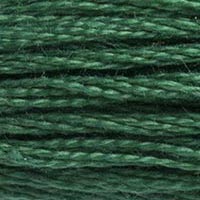
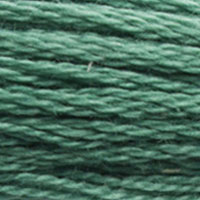
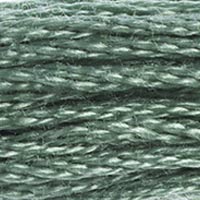
Detailed Conversions
Where to Buy DMC 163
This section contains affiliate links. We may earn a small commission at no cost to you.
Related Guides
Free Printable Thread Conversion Chart
Pick a brand, enter your email, and we'll send you a printable chart mapping all 552 DMC colors to that brand's equivalents. Zero spam, one chart.
Thanks! Here's your free chart:
Download Your ChartOpens in a new tab. Use your browser's Print → Save as PDF.
No spam. Your email is stored securely and never shared.