
DMC 113 — Variegated Antique Mauve
Pinks family · Hex #C09898
Quick Conversion Table
| Brand | Equivalent | Match |
|---|---|---|
| Anchor | 968 | close |
| Madeira | 0808 | close |
| Cosmo ⚠ | 2587 | close |
| Sullivans | 45083 | close |
Antique Before You Even Stitch It
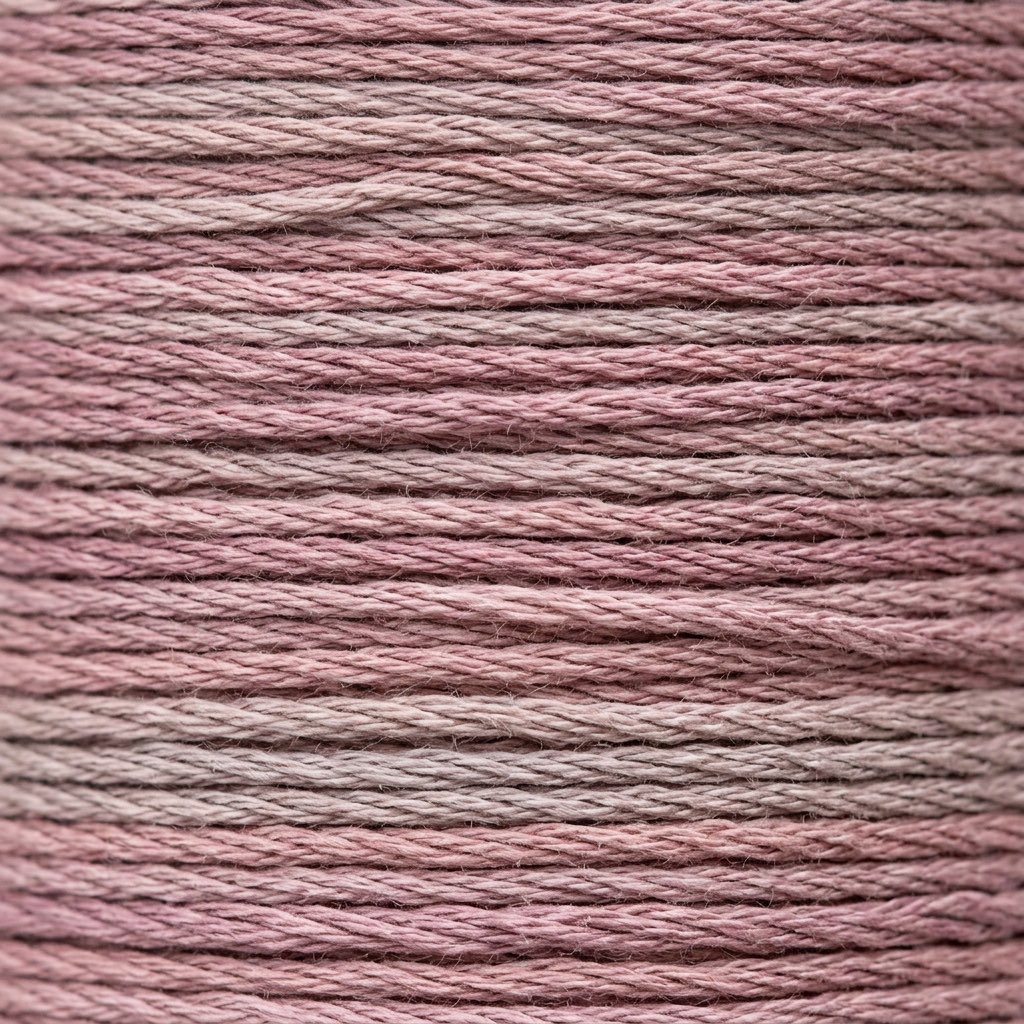
Some threads earn the word "antique" in their name. DMC 113 doesn't just earn it — it embodies it. This variegated mauve shifts through a range of muted, greyed pinks that look like they've already spent fifty years hanging in a parlor, quietly aging into something more beautiful than they started. That quality makes it almost uniquely suited to reproduction work, vintage-style samplers, and any project where you want the freshly stitched result to look like a treasured family heirloom.
The color range of 113 moves through territory that's hard to describe precisely because it avoids pure anything. It's not quite pink, not quite mauve, not quite grey — it occupies a muted middle ground where those colors overlap. The greyed-down quality means this thread has virtually no sweetness to it. Where DMC 107 (Variegated Dusty Rose) still reads as definitively pink, 113 has shed enough saturation to feel genuinely neutral in many contexts. You could use it alongside browns and taupes in a sampler border and it wouldn't look out of place.
That neutrality-within-pink is a rare quality in the DMC range, and it's why reproduction sampler designers reach for 113 regularly. Historical samplers from the 18th and 19th centuries used naturally dyed threads — madder root, cochineal, brazilwood — that produced warm pinks which faded over decades into exactly the kind of greyed, antique rose that 113 replicates right out of the skein. Instead of waiting two hundred years for your stitching to develop patina, you can start with it.
Variegation in the Service of Realism
The variegated nature of 113 serves a different purpose than it does in brighter threads. In a vivid variegated pink, the color shifts create decorative interest — pattern, movement, visual energy. In 113, the shifts are subtler, moving between values that are already close together, and the effect is less about pattern and more about texture. The slight variation mimics the uneven fading you see in antique textiles, where some areas caught more light and bleached more than others. It's variation that reads as authenticity rather than decoration.
This makes 113 particularly effective for backgrounds and fill areas in vintage-style designs. A solid mauve background looks deliberately chosen; a variegated one looks like it happened naturally, like the fabric itself has a history. For band samplers where different motifs sit in horizontal rows separated by decorative borders, using 113 as a background or fill thread ties the sections together with a cohesive, aged quality.
On fabric choice, natural linen is the obvious partner. White Aida can make the antique mauves look oddly clinical, the bright white ground contradicting the thread's whole aesthetic. Cream Aida is better. But natural linen — with its warm, flax-colored background — is where 113 reaches its full potential. The fabric and thread look like they belong to the same era, the same world. On 28-count or 32-count linen over two, 113 produces the kind of subtle, muted beauty that makes people lean in to look more closely.
Companion Colors and Palette Building
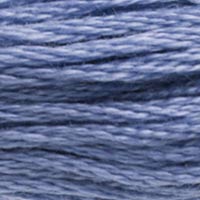
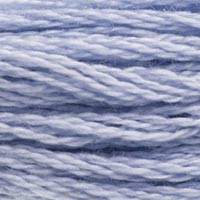
Building a palette around 113 means embracing the muted. Pair it with DMC 3726 (Dark Antique Mauve) and DMC 3727 (Light Antique Mauve) for a cohesive family of greyed pinks — the solid threads provide anchoring clarity while 113 adds tonal movement. For a fuller reproduction sampler palette, bring in DMC 611 (Drab Brown), DMC 3781 (Dark Mocha Brown), and DMC 3011 (Dark Khaki Green). These earthy companions reinforce the antique character and create palettes that look pulled from a museum textile collection.
For cottage-style florals, 113 works beautifully as a background texture thread in a garden scene. Let the brighter flowers — DMC 3350 (Ultra Dark Dusty Rose), DMC 223 (Light Shell Pink), DMC 3688 (Medium Mauve) — carry the foreground interest while 113 fills in softer, recessive areas. The variegation keeps these background areas from looking flat without competing with the focal flowers.
Matching a variegated antique mauve means getting two things right simultaneously: the greyed, unsaturated quality and the transition range. Miss the grey muting and your substitute will look too pink, too alive, too new — destroying the entire antique effect that makes 113 valuable in the first place.
Anchor 968 is rated close and captures the general mauve territory, though Anchor's version may carry slightly more warmth. For reproduction sampler work where the aged, desaturated quality is the whole point, stitch a test area on your actual fabric before committing — even a small warmth difference can shift a color from "antique" to "merely dusty." Madeira 0808 approaches the same greyed-mauve zone with Madeira's typical smooth finish, which can change how the variegation reads at the surface level.
Cosmo 2587 is another close-match option. Cosmo threads tend to have slightly different twist characteristics, which can affect how variegated colors distribute across stitches — tighter twist means the color changes appear over shorter intervals. This isn't necessarily worse, just different, and for a background fill the effect may actually be more subtle.
If substitutes aren't satisfying you, consider blending solid DMC threads to approximate the effect. One strand of DMC 3727 (Light Antique Mauve) with one strand of DMC 778 (Very Light Antique Mauve) creates a heathered tone in the right territory. You lose the gradual gradient but gain the muted, two-tone quality that makes variegated threads interesting. For a sampler border where consistency matters less than character, this approach can work beautifully. Sullivans 45083 rounds out your options but check the greying level — some substitutes read as pink-that-faded rather than mauve-that-aged, and the distinction matters for the overall feel of the piece.
Reference quality
How We Validate This Color Record
Use this page as a reference card for DMC 113: the structured data, quick conversions, and long-form copy are all tied back to the same stored color record.
- Methodology
- This page renders DMC 113, its hex value, and every brand equivalent from the site's source-of-truth color record, then checks long-form body copy against those same stored fields.
- Verification status
- Source-field checked. The page content is audited against the stored DMC number, brand equivalents, and match-quality labels before publishing.
- Last reviewed
- 2026-04-20
- Approximation warning
- Screen hex values, thread photos, and cross-brand conversions are reference aids. Dye lots, thread sheen, and fabric color can still shift the result in hand.
Decision guide
When to use the DMC 113 reference page
This page should help you decide faster between palette planning, brand substitution, and shade comparison without turning the color record into a thin lookup page.
Best for
- + Palette planning when you want the stored DMC 113 Variegated Antique Mauve record, hex value #C09898, and linked brand equivalents in one place.
- + Checking the quickest cross-brand shortlist before you buy floss, compare stash substitutes, or route into a more specific conversion page.
- + Finding nearby shades in the pinks family before you commit to accents, shading, or background blends.
Watch for
- ! Screen previews are only reference aids. Variegated Antique Mauve can shift on real fabric because thread sheen, stitch coverage, and room lighting change how the color reads.
- ! A stored equivalent is still a shortlist, not a guarantee that two brands will disappear into each other in the same stitched motif.
- ! Older charts, discontinued kit floss, and dye-lot variation can all introduce small but visible differences that the page cannot detect for you.
Before you commit
- Confirm the role of DMC 113 Variegated Antique Mauve: decide whether you need an exact hero shade, a forgiving background, or a rough stash substitute.
- Compare on project fabric: view the skein or stitched sample on the same fabric count and color you will actually use.
- Use the linked conversion pages next: open the brand-specific pages when you need match-quality caveats before substituting away from the DMC reference.
DMC 113 FAQ
These questions appear on the page so the FAQ schema stays aligned with what visitors can actually read.
What is the Anchor equivalent of DMC 113?+
The closest Anchor equivalent to DMC 113 (Variegated Antique Mauve) is Anchor 968. This is a close match.
What color is DMC 113?+
DMC 113 is called "Variegated Antique Mauve" and has a hex color value of #C09898. It belongs to the pinks color family.
What is the Madeira equivalent of DMC 113?+
The closest Madeira equivalent to DMC 113 (Variegated Antique Mauve) is Madeira 0808. This is a close match.
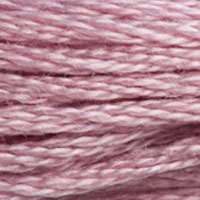
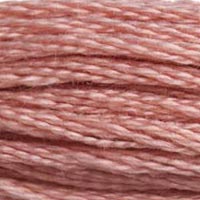
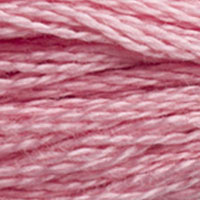
How DMC 113 Looks on Fabric
The same thread appears different depending on your fabric. Always test on your project fabric.
White Aida
Cream / Ecru
Black Aida
Pairs Well With
DMC colors commonly used alongside 113 Variegated Antique Mauve.
Suggested Palette
Shading Companions
Detailed Conversions
Where to Buy DMC 113
This section contains affiliate links. We may earn a small commission at no cost to you.
Related Guides
Free Printable Thread Conversion Chart
Pick a brand, enter your email, and we'll send you a printable chart mapping all 552 DMC colors to that brand's equivalents. Zero spam, one chart.
Thanks! Here's your free chart:
Download Your ChartOpens in a new tab. Use your browser's Print → Save as PDF.
No spam. Your email is stored securely and never shared.