
Quick Conversion Table
| Brand | Equivalent | Match |
|---|---|---|
| Anchor | 1218 | close |
| Madeira | 0304 | close |
| Cosmo ⚠ | 2582 | close |
| Sullivans | 45092 | close |
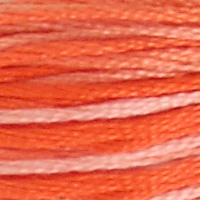
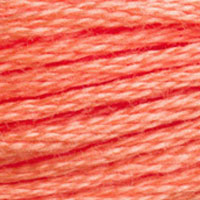
Variegated threads occupy a special place in the cross-stitch world — and DMC 106 Variegated Coral makes a compelling case for why the whole category deserves more love. Rather than a flat, single-tone coral, this thread shifts through warm salmon pinks, deeper orange-corals, and lighter peachy tones within a single skein. What comes off the needle creates that naturally shaded look that would otherwise require careful thread painting or meticulous color-changing every few stitches.
Understanding How Variegated Threads Actually Work
Variegated threads are dyed in long repeating segments, which means the effect you get depends enormously on how you stitch — and this is where a lot of stitchers get surprised. Cross-country stitching (completing each cross before moving on) produces scattered, speckled color variation. Parking your thread or stitching in rows allows the color transitions to blend more gradually, creating gentle ombre-like gradients. Neither approach is wrong, but they produce dramatically different results with DMC 106.
On 14-count Aida, the color segments typically repeat often enough that you'll see real variation across even a small filled area. On evenweave linen stitched over-two, the segments stretch out more, creating smoother transitions between the coral and salmon tones. Experiment on a small scrap before committing to your main project — the difference can be striking.
Where DMC 106 Shines
Floral designs are the obvious home for this thread. Coral flowers — bougainvillea, ranunculus, garden roses — take on a painterly depth when stitched with DMC 106 that flat solid-colored coral threads simply can't match. The built-in shading suggests petals catching different angles of light without any extra effort from you.
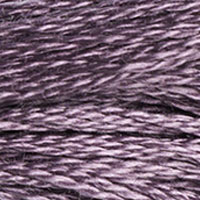
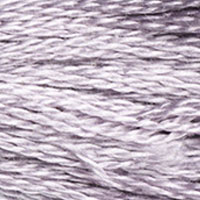
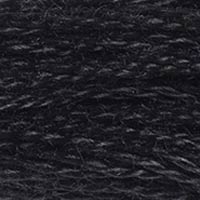
Underwater and tropical themes are another natural fit. Reef fish, sea anemones, tropical sunsets — all of these benefit from the warm color movement that DMC 106 provides. Pair it with DMC 321 (Red) for richer shadow areas, DMC 353 (Peach) for lighter highlights, or DMC 743 (Medium Yellow) when you want to push the palette toward a warm golden-orange sunrise effect.
Seasonal ornaments and holiday designs get a lift from variegated threads too. A Christmas ornament stitched in DMC 106 reads as lively and handcrafted in a way that solid coral doesn't quite achieve. The color movement catches the eye and rewards close examination.
Pairing and Palette Considerations
Because DMC 106 contains multiple tones within itself, pairing it requires some care. Solid threads that sit at the midpoint of its range — a clean medium coral like DMC 352 (Light Coral) — can look jarring next to it, because the variegated thread keeps going lighter and darker while the solid stays put. Instead, consider using DMC 106 for the main fill and a slightly darker solid like DMC 351 (Coral) or DMC 350 (Medium Coral) for backstitch outlines. This grounds the movement without fighting it.
Neutral companions work beautifully: DMC 3033 (Very Light Mocha Brown) or DMC 644 (Medium Beige Gray) in the background let DMC 106 do its expressive thing without competition. On darker or richly colored evenweave fabric, the lighter peachy segments of DMC 106 pop dramatically — a beautiful effect for sampler borders and band designs.
Finding a true substitute for a variegated thread is inherently approximate — the whole point of DMC 106 is its built-in color movement, and no single solid thread can replicate that. Anchor 1218 is the listed close match, but it reads as a flat medium coral. It will get the job done in terms of hue, but you lose the texture and dimension that make DMC 106 worth using.
If you're committed to a variegated look but can't source DMC 106, consider Cosmo 2582 or Madeira 0304 — both are listed as close matches in the coral range. Regional availability varies considerably; stitchers in Australia and parts of Europe report easier access to Cosmo variegated threads, while Madeira's variegated range can be harder to find outside the UK and Germany.
A DIY approach that some stitchers swear by: use a blended needle with DMC 352 (Light Coral) and DMC 351 (Coral) together in the same needle. This creates a handmade two-tone effect that won't move through a gradient the way a true variegated thread does, but it adds dimension that flat solid coral lacks. Sullivans 45092 is the closest commercial substitute if you want to stay in the variegated category — though some stitchers report that Sullivans variegated threads have slightly shorter color repeat lengths than DMC, producing a more speckled rather than gradient result.
Reference quality
How We Validate This Color Record
Use this page as a reference card for DMC 106: the structured data, quick conversions, and long-form copy are all tied back to the same stored color record.
- Methodology
- This page renders DMC 106, its hex value, and every brand equivalent from the site's source-of-truth color record, then checks long-form body copy against those same stored fields.
- Verification status
- Source-field checked. The page content is audited against the stored DMC number, brand equivalents, and match-quality labels before publishing.
- Last reviewed
- 2026-04-20
- Approximation warning
- Screen hex values, thread photos, and cross-brand conversions are reference aids. Dye lots, thread sheen, and fabric color can still shift the result in hand.
Decision guide
When to use the DMC 106 reference page
This page should help you decide faster between palette planning, brand substitution, and shade comparison without turning the color record into a thin lookup page.
Best for
- + Palette planning when you want the stored DMC 106 Variegated Coral record, hex value #E87060, and linked brand equivalents in one place.
- + Checking the quickest cross-brand shortlist before you buy floss, compare stash substitutes, or route into a more specific conversion page.
- + Finding nearby shades in the oranges family before you commit to accents, shading, or background blends.
Watch for
- ! Screen previews are only reference aids. Variegated Coral can shift on real fabric because thread sheen, stitch coverage, and room lighting change how the color reads.
- ! A stored equivalent is still a shortlist, not a guarantee that two brands will disappear into each other in the same stitched motif.
- ! Older charts, discontinued kit floss, and dye-lot variation can all introduce small but visible differences that the page cannot detect for you.
Before you commit
- Confirm the role of DMC 106 Variegated Coral: decide whether you need an exact hero shade, a forgiving background, or a rough stash substitute.
- Compare on project fabric: view the skein or stitched sample on the same fabric count and color you will actually use.
- Use the linked conversion pages next: open the brand-specific pages when you need match-quality caveats before substituting away from the DMC reference.
DMC 106 FAQ
These questions appear on the page so the FAQ schema stays aligned with what visitors can actually read.
What is the Anchor equivalent of DMC 106?+
The closest Anchor equivalent to DMC 106 (Variegated Coral) is Anchor 1218. This is a close match.
What color is DMC 106?+
DMC 106 is called "Variegated Coral" and has a hex color value of #E87060. It belongs to the oranges color family.
What is the Madeira equivalent of DMC 106?+
The closest Madeira equivalent to DMC 106 (Variegated Coral) is Madeira 0304. This is a close match.
How DMC 106 Looks on Fabric
The same thread appears different depending on your fabric. Always test on your project fabric.
White Aida
Cream / Ecru
Black Aida
Pairs Well With
DMC colors commonly used alongside 106 Variegated Coral.
Suggested Palette
Shading Companions
Detailed Conversions
Where to Buy DMC 106
This section contains affiliate links. We may earn a small commission at no cost to you.
Related Guides
Free Printable Thread Conversion Chart
Pick a brand, enter your email, and we'll send you a printable chart mapping all 552 DMC colors to that brand's equivalents. Zero spam, one chart.
Thanks! Here's your free chart:
Download Your ChartOpens in a new tab. Use your browser's Print → Save as PDF.
No spam. Your email is stored securely and never shared.