
Quick Conversion Table
| Brand | Equivalent | Match |
|---|---|---|
| Anchor | 10 | exact |
| Madeira | 0214 | close |
| Cosmo ⚠ | 2343 | close |
| Sullivans | 45075 | close |
| J&P Coats | 3011 | close |
| Dimensions | 6030 | close |
| Bucilla | 1351 | close |
| Candamar | 6030 | close |
The Color of Living Reefs
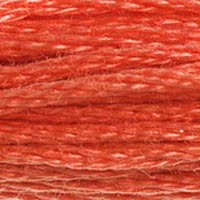
Coral the organism gives coral the color its name, and DMC 351 captures that connection with surprising fidelity. The living coral polyps of tropical reefs display exactly this warm, medium-light red-pink — not the bleached white of dead coral, not the electric neon of certain soft corals, but the healthy, warm tone of a thriving reef seen through a few feet of clear Caribbean water. In 2019, Pantone named "Living Coral" as its Color of the Year, and the cross-stitch world noticed that DMC 351 had been sitting in their stash all along, waiting for the trend to catch up.
The hex (#E96A67) places 351 in the sweet spot between pink and red. Equal parts warm and friendly, this is a shade that people respond to positively almost universally. Color psychology research consistently ranks warm, medium-saturation colors in this range as approachable and pleasant — they carry the energy of red without its aggression, the sweetness of pink without its childishness. That broad appeal makes 351 one of the most versatile reds in the DMC range, equally at home in baby samplers, wedding records, and botanical illustrations.
The Coral Family's Approachable Middle Child
Within the 349-353 coral gradient, DMC 351 holds the middle ground — lighter than 350 (Medium Coral) and darker than 352 (Light Coral). This middle position makes it the most frequently called-for shade in the family, because it is bright enough to carry visual interest but soft enough to not overwhelm a design. Pattern designers reach for 351 when they want a red that says "welcome" rather than "stop."
Berry and fruit motifs use 351 extensively. Strawberry flesh — not the outer surface, which is closer to DMC 321 or 666, but the inner pink-red revealed when you slice a berry in half — is precisely this color. Raspberry designs pair 351 with DMC 3350 (Ultra Dark Dusty Rose) for the darker drupelets and DMC 353 (Peach) for the lighter, unripe segments. Pomegranate seed interiors, watermelon flesh, pink grapefruit sections — 351 anchors the palette for any fruit where the inner color is a warm, translucent red-pink.
Flower patterns call for 351 constantly. Coral roses (the actual coral-colored variety, Rosa 'Coral'), geraniums, azaleas, impatiens, and tulips in the salmon-to-coral range all center on this shade. For these botanical subjects, 351 typically serves as the primary petal color, with DMC 350 for shadowed petal undersides and DMC 352 or 353 for sunlit upper petal surfaces. The result is a flower that looks naturally lit rather than flat.
A Cross-Stitch Community Favorite
On any "most used DMC colors" survey, 351 consistently places in the top 30, despite not being one of the headline primaries like 321 (Red), 310 (Black), or blanc. Its popularity stems from its versatility — designers use it for everything from decorative borders to focal flowers to clothing details on human figures. A single skein of 351 contributes to more different types of projects than almost any other red in the range.
For baby and nursery designs, 351 offers warmth without intensity. It is the pink-red that reads as gentle — soft enough for a birth sampler, warm enough for a baby blanket design, and neutral enough in its gender associations (it leans neither fully pink nor fully red) to work for any baby. Paired with DMC 3761 (Light Sky Blue), DMC 3348 (Light Yellow Green), and DMC 745 (Light Pale Yellow), it anchors a pastel palette that feels modern rather than saccharine.
Coverage is clean and reliable. Two strands on 14-count produces full opacity with a smooth, even surface. At this lighter value, fabric color has a noticeable effect — the same thread looks distinctly more pink on white Aida and distinctly warmer on cream. On hand-dyed fabrics with warm undertones, 351 can shift almost into peach territory, which may or may not serve your design. When color accuracy matters, stitch a test swatch on your actual project fabric before committing.
Thread handling is unremarkable in the best possible way. Clean separation, consistent twist, no excessive pilling. It is the kind of thread you never think about while stitching, which means you can focus entirely on the pattern rather than fighting your materials. That invisible reliability is what separates a good thread from a great one.
Two Exact Matches and a Common Doubling Problem
Anchor 10 and Madeira 0214 both carry exact match ratings, making 351 one of the easier reds to substitute across brands. Anchor 10 delivers the same warm coral tone with matching coverage density, and the color accuracy holds well across lighting conditions. This is a safe, confident substitution.
Madeira 0214 is equally solid. At this medium-light value, Madeira's smoother finish is essentially invisible in the finished piece — the slight sheen that distinguishes Madeira from DMC becomes most apparent in darker, more saturated colors. For 351's purposes, the two brands are functionally identical in both color and surface quality.
Cosmo 2343 is listed as a close match, but note that this same Cosmo shade also appears as a close match for DMC 304 (Medium Red). These are very different threads — 351 is a light, warm coral while 304 is a deeper, cooler crimson. Cosmo 2343 sits between the two and cannot fully serve as either. If your project uses 351 without 304, the match is adequate. If both appear in the same design, one of them needs a different Cosmo alternative.
Sullivans 45075 is rated close. As always with Sullivans, verify coverage — this lighter-value thread is more susceptible to showing fabric through the stitches than darker shades, and any transparency will push the perceived color toward pink (on white fabric) or peach (on cream). Adding a third strand solves coverage issues but changes the stitch texture, which may or may not matter for your project.
Within DMC, the immediate neighbors are 350 (Medium Coral, one shade darker) and 352 (Light Coral, one shade lighter). If you are missing 351 from your stash, either neighbor can fill in depending on whether you would rather lean darker or lighter. For the exact midpoint, a blended needle with one strand of 350 and one strand of 352 approximates 351's value with decent accuracy.
Reference quality
How We Validate This Color Record
Use this page as a reference card for DMC 351: the structured data, quick conversions, and long-form copy are all tied back to the same stored color record.
- Methodology
- This page renders DMC 351, its hex value, and every brand equivalent from the site's source-of-truth color record, then checks long-form body copy against those same stored fields.
- Verification status
- Source-field checked. The page content is audited against the stored DMC number, brand equivalents, and match-quality labels before publishing.
- Last reviewed
- 2026-04-20
- Approximation warning
- Screen hex values, thread photos, and cross-brand conversions are reference aids. Dye lots, thread sheen, and fabric color can still shift the result in hand.
Decision guide
When to use the DMC 351 reference page
This page should help you decide faster between palette planning, brand substitution, and shade comparison without turning the color record into a thin lookup page.
Best for
- + Palette planning when you want the stored DMC 351 Coral record, hex value #E96A67, and linked brand equivalents in one place.
- + Checking the quickest cross-brand shortlist before you buy floss, compare stash substitutes, or route into a more specific conversion page.
- + Finding nearby shades in the reds family before you commit to accents, shading, or background blends.
Watch for
- ! Screen previews are only reference aids. Coral can shift on real fabric because thread sheen, stitch coverage, and room lighting change how the color reads.
- ! A stored equivalent is still a shortlist, not a guarantee that two brands will disappear into each other in the same stitched motif.
- ! Older charts, discontinued kit floss, and dye-lot variation can all introduce small but visible differences that the page cannot detect for you.
Before you commit
- Confirm the role of DMC 351 Coral: decide whether you need an exact hero shade, a forgiving background, or a rough stash substitute.
- Compare on project fabric: view the skein or stitched sample on the same fabric count and color you will actually use.
- Use the linked conversion pages next: open the brand-specific pages when you need match-quality caveats before substituting away from the DMC reference.
DMC 351 FAQ
These questions appear on the page so the FAQ schema stays aligned with what visitors can actually read.
What is the Anchor equivalent of DMC 351?+
The closest Anchor equivalent to DMC 351 (Coral) is Anchor 10. This is an exact match.
What color is DMC 351?+
DMC 351 is called "Coral" and has a hex color value of #E96A67. It belongs to the reds color family.
What is the Madeira equivalent of DMC 351?+
The closest Madeira equivalent to DMC 351 (Coral) is Madeira 0214. This is a close match.
How DMC 351 Looks on Fabric
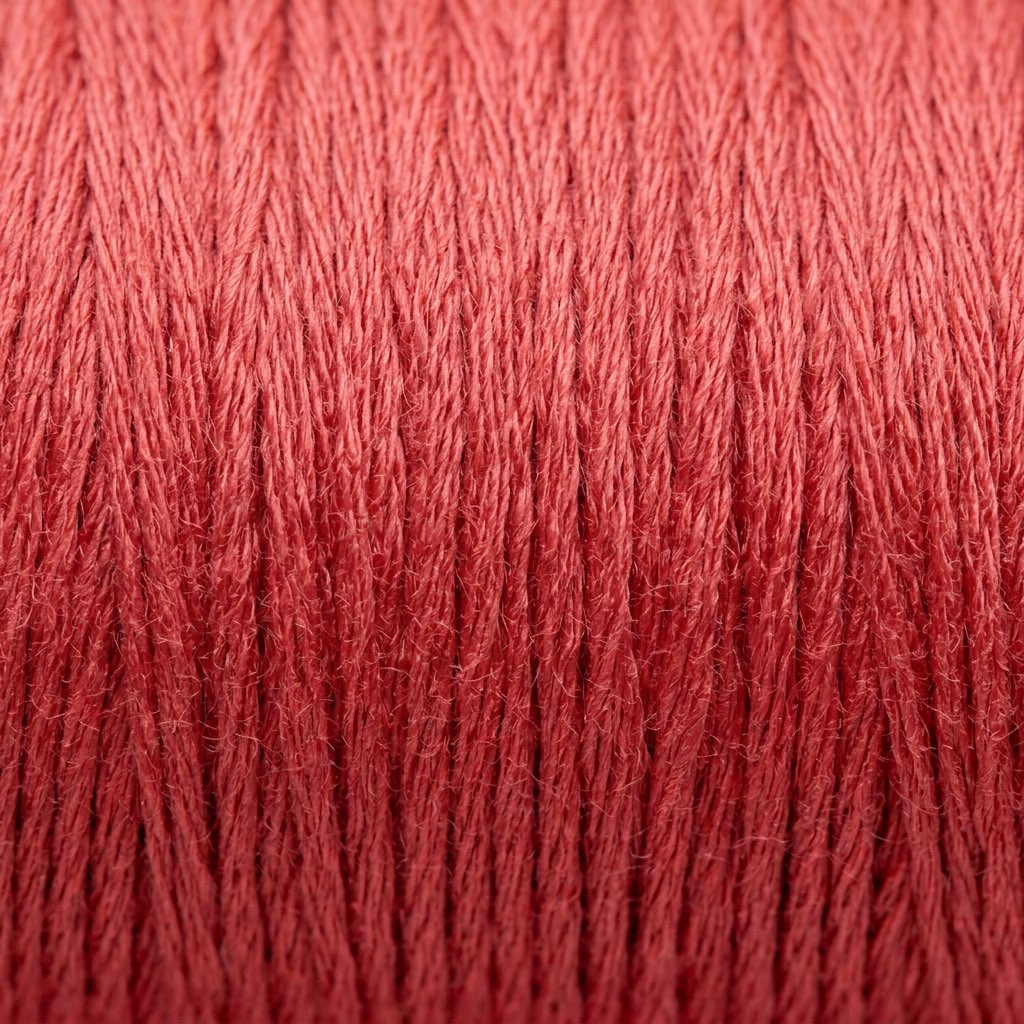
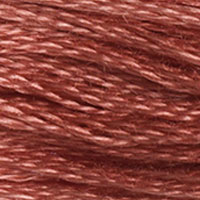
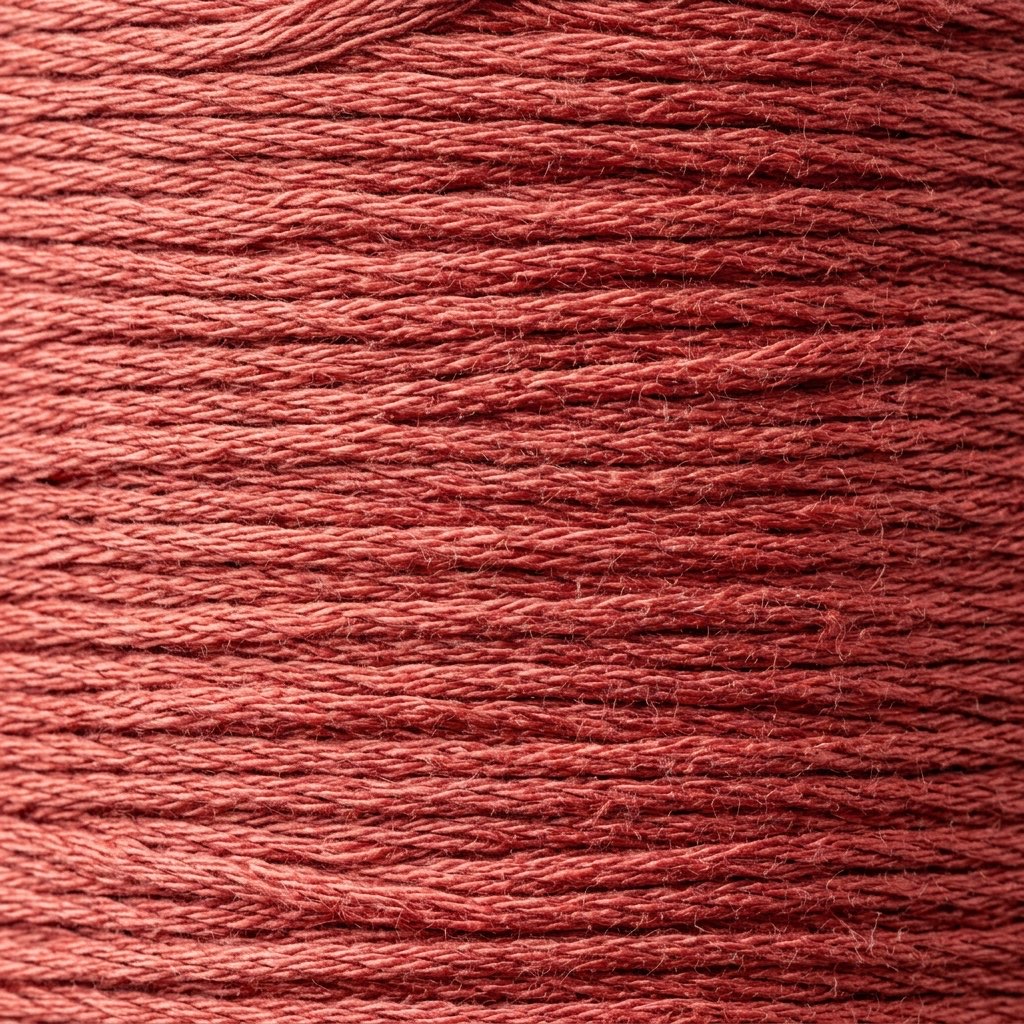
The same thread appears different depending on your fabric. Always test on your project fabric.
White Aida
Cream / Ecru
Black Aida
Pairs Well With
DMC colors commonly used alongside 351 Coral.
Suggested Palette
Shading Companions
Detailed Conversions
Where to Buy DMC 351
This section contains affiliate links. We may earn a small commission at no cost to you.
Related Guides
Free Printable Thread Conversion Chart
Pick a brand, enter your email, and we'll send you a printable chart mapping all 552 DMC colors to that brand's equivalents. Zero spam, one chart.
Thanks! Here's your free chart:
Download Your ChartOpens in a new tab. Use your browser's Print → Save as PDF.
No spam. Your email is stored securely and never shared.