
Quick Conversion Table
| Brand | Equivalent | Match |
|---|---|---|
| Anchor | 906 | close |
| Madeira | 2213 | close |
| Cosmo ⚠ | 598 | close |
| Sullivans | 45233 | close |
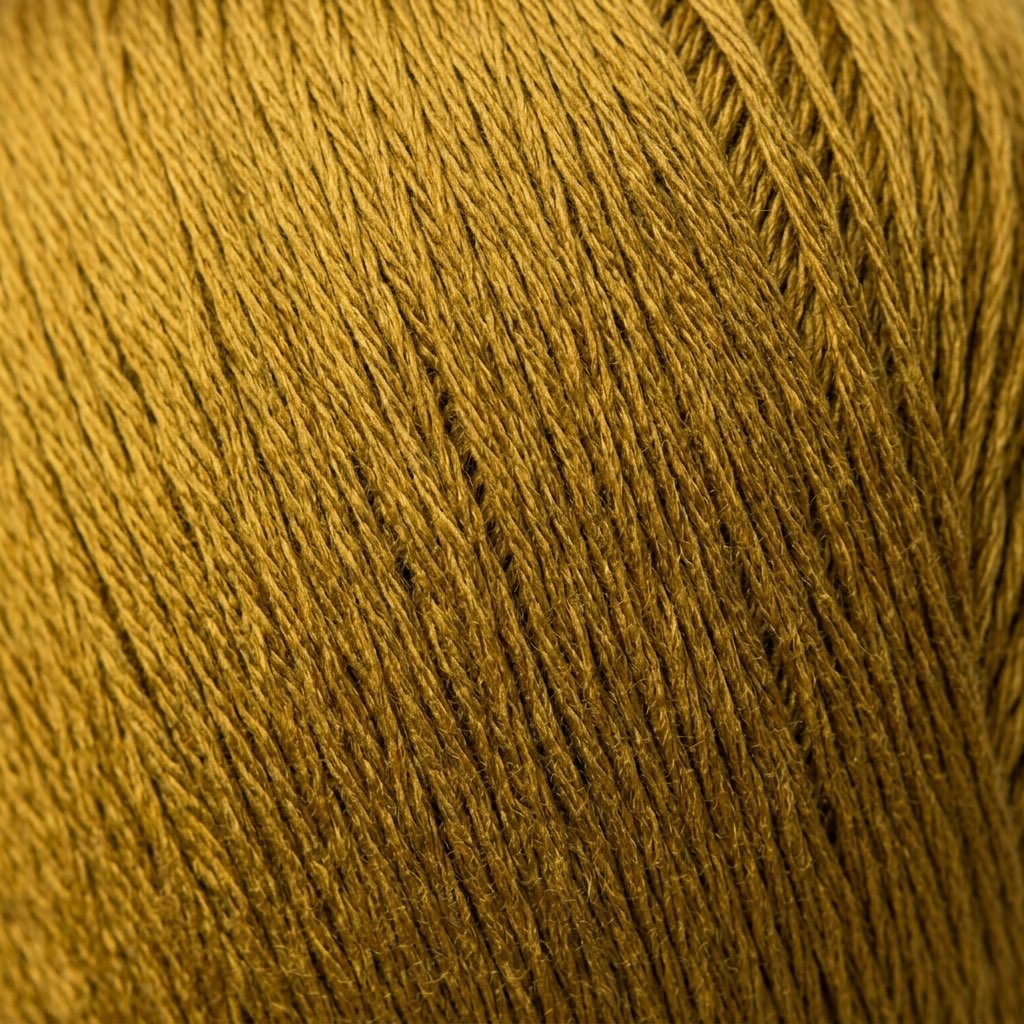
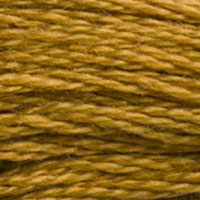
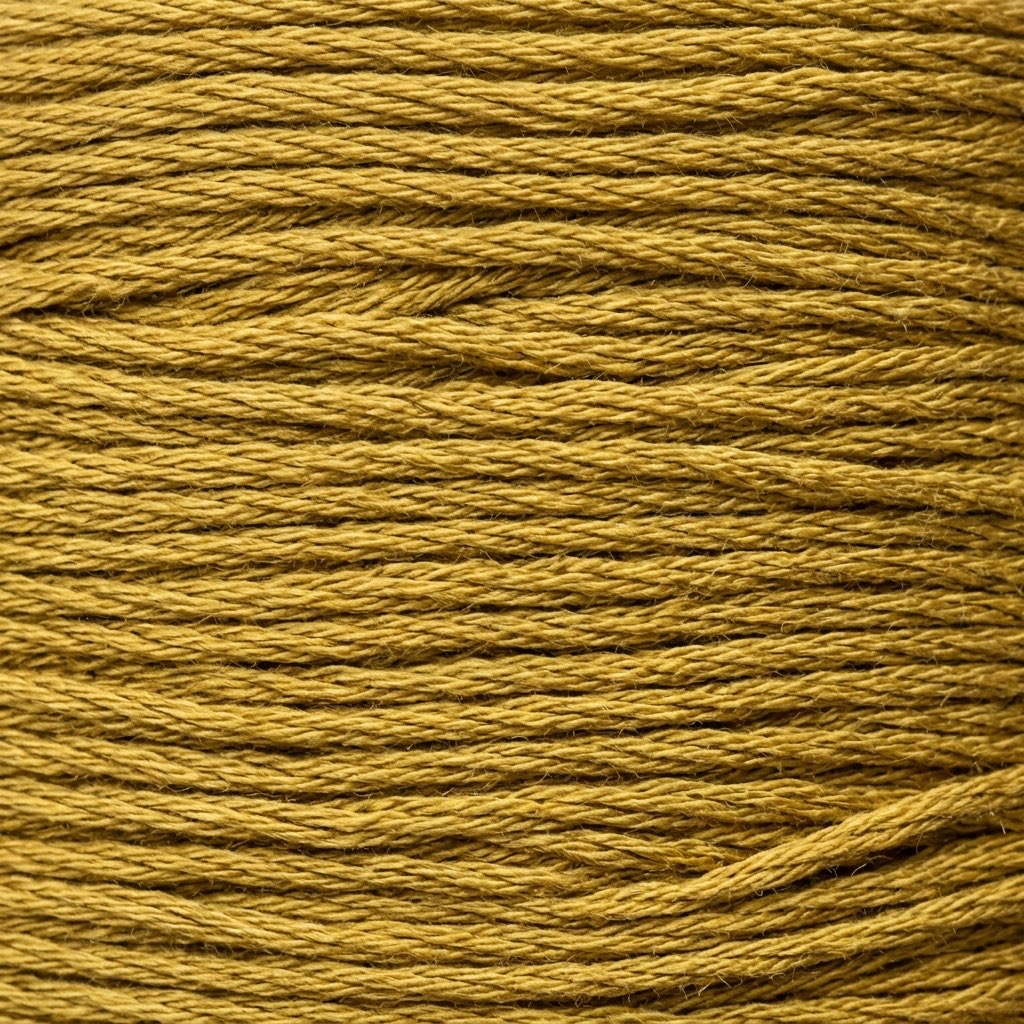
"Old gold" as a color concept has been doing a lot of work for a long time. It shows up in military insignia, university crests, vintage luxury goods, and antique textiles — anywhere that wants the prestige of gold without the brashness of bright yellow. DMC 903 Very Dark Old Gold takes that concept and pushes it to its logical extreme: this is gold that has truly aged, gone olive-amber, darkened the way antique metalwork does when it's been handled for a century. It's barely yellow anymore. It reads more like the color of strong tea, or old manuscript pages, or beeswax that's been stored a long time.
That quality makes it genuinely unusual in the DMC lineup. The Old Gold family — running from DMC 729 (Medium Old Gold) through DMC 680 (Dark Old Gold) to 903 — gets progressively more complex and less conventionally "gold" as it darkens. By the time you reach 903, the color has enough green in it to read almost olive in certain lighting. This isn't a flaw; it's the characteristic that makes it useful in ways that brighter golds simply aren't.
Where the Olive-Gold Quality Shines
Celtic and medieval-inspired designs find 903 indispensable. The illuminated manuscript tradition used inks and pigments in exactly this tonal range — a gold that read as precious but earthy, not flashy. Stitching a Celtic knotwork pattern with 903 against a dark background produces the visual language of aged metalwork in a way that DMC 3822 (Light Straw) or DMC 3820 (Dark Straw) simply can't replicate.
Autumn palette work is another natural home. When building a fall foliage scene and needing the ground color of dried leaves — the ones that have turned past orange and yellow into that particular desiccated golden-brown — 903 fills the role precisely. It sits naturally between warm greens and amber-browns, exactly where dried autumn vegetation lives chromatically. Pair it with DMC 936 (Very Dark Avocado Green) and DMC 433 (Medium Brown) for a completely convincing dry-grass-and-fallen-leaf palette.
Heraldic and historical costume pieces also benefit from 903 as a shadow color on brighter gold fill areas. Using DMC 3822 (Light Straw) or DMC 729 (Medium Old Gold) for the main body and dropping 903 into the shaded recesses creates a dimensional quality that suggests actual metalwork rather than flat color.
Palette Behavior: When Gold Goes Olive
The interesting design challenge with 903 is that depending on what you place next to it, it can read either as a very dark gold or as a warm olive. Next to bright reds and oranges, the gold quality dominates. Next to medium greens, the olive quality comes forward. This gives it unusual flexibility as a bridge color in complex palettes — you can use it at the border between a golden-yellow section and a green section, and it reads comfortably in both neighborhoods.
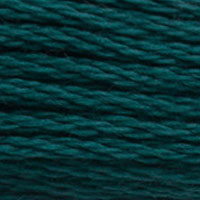
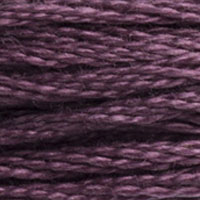
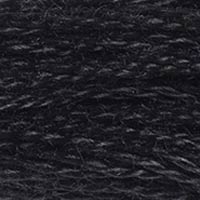
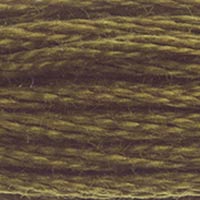
For stitchers who enjoy building analogous palettes, 903 bridges DMC 580 (Dark Moss Green) on one side and DMC 680 (Dark Old Gold) on the other, creating a range through yellowed-green that's especially useful for nature subjects: pond edges, marshland, sage-colored foliage, the undersides of certain leaves. In a SAL or WIP where you're assembling colors in advance, 903 is the kind of skein you buy even when it's not on the pattern's list, because it always ends up being exactly what you need to bridge an awkward transition.
Unusually for a DMC color in this range, all four brand equivalents for 903 carry only close ratings — there's no exact match available in Anchor, Madeira, Cosmo, or Sullivans. This reflects the specificity of this color: the precise olive-amber mixture of 903 is distinctive enough that no other brand has replicated it exactly.
Anchor 906 is the closest substitute available and reads similarly in most contexts, though it may trend slightly warmer and less olive. If you're switching from DMC 903 to Anchor 906, the shift is subtle enough that in most patterns — especially those where 903 serves as a shadow or accent — you won't notice a problem. Where the difference may show is in designs that specifically exploit the olive quality of 903; Anchor 906 may look slightly more conventionally gold by comparison.
Madeira 2213 is another serviceable alternative. Madeira's formulation in the old-gold range is generally consistent, and 2213 reads comparably in most contexts. Cosmo 598 and Sullivans 45233 both work adequately as substitutes for most applications but carry the same caveat: the distinctive olive cast of DMC 903 may be slightly reduced in both.
Within the DMC range itself, if 903 is unavailable, DMC 680 (Dark Old Gold) is the nearest neighbor and reads similarly though with slightly less green inflection. DMC 829 (Very Dark Golden Olive) is another option that leans further into the olive direction and may actually be preferred in some designs where the green component matters more than the gold.
Reference quality
How We Validate This Color Record
Use this page as a reference card for DMC 903: the structured data, quick conversions, and long-form copy are all tied back to the same stored color record.
- Methodology
- This page renders DMC 903, its hex value, and every brand equivalent from the site's source-of-truth color record, then checks long-form body copy against those same stored fields.
- Verification status
- Source-field checked. The page content is audited against the stored DMC number, brand equivalents, and match-quality labels before publishing.
- Last reviewed
- 2026-04-20
- Approximation warning
- Screen hex values, thread photos, and cross-brand conversions are reference aids. Dye lots, thread sheen, and fabric color can still shift the result in hand.
Decision guide
When to use the DMC 903 reference page
This page should help you decide faster between palette planning, brand substitution, and shade comparison without turning the color record into a thin lookup page.
Best for
- + Palette planning when you want the stored DMC 903 Very Dark Old Gold record, hex value #8A7010, and linked brand equivalents in one place.
- + Checking the quickest cross-brand shortlist before you buy floss, compare stash substitutes, or route into a more specific conversion page.
- + Finding nearby shades in the yellows family before you commit to accents, shading, or background blends.
Watch for
- ! Screen previews are only reference aids. Very Dark Old Gold can shift on real fabric because thread sheen, stitch coverage, and room lighting change how the color reads.
- ! A stored equivalent is still a shortlist, not a guarantee that two brands will disappear into each other in the same stitched motif.
- ! Older charts, discontinued kit floss, and dye-lot variation can all introduce small but visible differences that the page cannot detect for you.
Before you commit
- Confirm the role of DMC 903 Very Dark Old Gold: decide whether you need an exact hero shade, a forgiving background, or a rough stash substitute.
- Compare on project fabric: view the skein or stitched sample on the same fabric count and color you will actually use.
- Use the linked conversion pages next: open the brand-specific pages when you need match-quality caveats before substituting away from the DMC reference.
DMC 903 FAQ
These questions appear on the page so the FAQ schema stays aligned with what visitors can actually read.
What is the Anchor equivalent of DMC 903?+
The closest Anchor equivalent to DMC 903 (Very Dark Old Gold) is Anchor 906. This is a close match.
What color is DMC 903?+
DMC 903 is called "Very Dark Old Gold" and has a hex color value of #8A7010. It belongs to the yellows color family.
What is the Madeira equivalent of DMC 903?+
The closest Madeira equivalent to DMC 903 (Very Dark Old Gold) is Madeira 2213. This is a close match.
How DMC 903 Looks on Fabric
The same thread appears different depending on your fabric. Always test on your project fabric.
White Aida
Cream / Ecru
Black Aida
Pairs Well With
DMC colors commonly used alongside 903 Very Dark Old Gold.
Suggested Palette
Shading Companions
Detailed Conversions
Where to Buy DMC 903
This section contains affiliate links. We may earn a small commission at no cost to you.
Related Guides
Free Printable Thread Conversion Chart
Pick a brand, enter your email, and we'll send you a printable chart mapping all 552 DMC colors to that brand's equivalents. Zero spam, one chart.
Thanks! Here's your free chart:
Download Your ChartOpens in a new tab. Use your browser's Print → Save as PDF.
No spam. Your email is stored securely and never shared.