
Quick Conversion Table
| Brand | Equivalent | Match |
|---|---|---|
| Anchor | 1086 | exact |
| Madeira | 1913 | close |
| Cosmo ⚠ | 2311 | close |
| Sullivans | 45237 | close |
| J&P Coats | 5360 | close |
| Dimensions | 6099 | close |
| Bucilla | 839 | close |
| Candamar | 6099 | close |
Tree trunks, wooden fence posts, the worn leather of an old saddle, the bark of birch or beech in deep shadow — natural organic materials in their darker register share a quality that synthetic pigments rarely capture well. DMC 839, Dark Beige Brown at hex #675541, sits at exactly that intersection of dark, warm, and earthy. It's the color that makes wooden textures look structural rather than decorative, animal subjects look grounded in real fur rather than flat illustration, and earth tones look like actual earth rather than approximations.
Structural Role in the Beige Brown Family
838 anchors the darkest value in the family, but 839 is arguably the more frequently used of the two in practical stitching. Because 839 sits at a value where detail is still clearly readable while shadow is still convincingly deep, it functions as the primary dark in most two- or three-color beige brown gradients. A design that uses just 839 and 841 (Light Beige Brown) gets a workable two-tone warm brown system that covers surprising ground. Adding 838 for the deepest accents and 842 (Very Light Beige Brown) for the lightest moments creates a four-tone system that handles most realistic rendering challenges in this color family.
Cross-country stitchers who work on large full-coverage pieces often find that 839 has excellent cross-stitch coverage — its darker value means the thread doesn't need to fight for visibility against the fabric weave, and the warm character reads clearly even in large undifferentiated areas.
Horses, Dogs, and Large Animal Subjects
Bay horses have a warm brown body color with black points (legs, mane, tail), and 839 captures the shadow tones of bay horse coloring authentically. The darker areas of a bay horse's coat — the deep flanks, the shadow under the belly, the junction between body and neck — use 839 as their primary dark, with 840 and 841 handling the main body coat and the lighter shoulder and face areas. Horse cross-stitch is a specialized area of the craft with dedicated designers and a passionate community, and getting the brown tones right is essential to the credibility of the finished piece.
Dogs with wheaten, fawn, or natural brown coats — Labs, retrievers, certain terriers — use the beige brown family for their primary fur rendering. 839 handles the deep shadow fur, the shading under the chin and in the ear canals, and the contrast-defining dark zones that give a dog portrait its three-dimensional character.
Furniture, Architecture, and Craft Objects
Wooden objects rendered in cross-stitch — furniture in interior scene designs, building facades, rustic prop elements — benefit from 839 as their primary dark wood tone. Knotty pine, aged oak, dark walnut: all of these wood species have a mid-to-dark warm brown note that 839 covers well. Combined with DMC 840 (Medium Beige Brown) for the main wood grain body and DMC 842 (Very Light Beige Brown) for sun-struck highlights, 839 gives wooden surfaces a sense of real material texture.
Wicker baskets, woven boxes, and cane furniture in still-life cross-stitch also use the beige brown family heavily, with 839 handling the deepest shadow weave strands. The over-and-under quality of woven texture depends on strong value contrast between the weave strands — 839 and 842 together create exactly this contrast within a warm, naturalistic palette.
Anchor 1086 and Madeira 1913 both earn exact match ratings, giving 839 reliable alternatives across the major brands. For stitchers who use Anchor or Madeira as their primary brand, this means the dark beige brown family is consistently available and accurately matched.
Cosmo 2311 and Sullivans 45237 are close matches. The standard dark brown considerations apply — at 839's dark value, even close matches typically look correct in finished work because the high pigment density masks minor undertone variations. The warm, earthy quality of 839 is robust enough that slight brand differences don't usually change the visual effect of the finished piece.
Within DMC, 839's neighbors are DMC 838 (Very Dark Beige Brown), which is significantly darker, and DMC 840 (Medium Beige Brown), which is clearly lighter. For designs that use the full five-step range, any substitution disrupts the gradient. For designs where 839 appears as the primary dark brown without a five-step system, either 838 (adding more depth) or 840 (adding more lightness) can substitute depending on whether you want to push darker or lighter.
Outside the beige brown family, DMC 869 (Very Dark Hazelnut Brown) shares a similar warm, dark brown character and is worth comparing to 839 if you need a slight shift in undertone. 869 is slightly more red-orange in its brown quality compared to 839's more neutral beige-brown character. Both read as dark warm brown in most contexts, but side by side the difference is visible — particularly important to know for designs where both colors appear in adjacent areas.
Reference quality
How We Validate This Color Record
Use this page as a reference card for DMC 839: the structured data, quick conversions, and long-form copy are all tied back to the same stored color record.
- Methodology
- This page renders DMC 839, its hex value, and every brand equivalent from the site's source-of-truth color record, then checks long-form body copy against those same stored fields.
- Verification status
- Source-field checked. The page content is audited against the stored DMC number, brand equivalents, and match-quality labels before publishing.
- Last reviewed
- 2026-04-20
- Approximation warning
- Screen hex values, thread photos, and cross-brand conversions are reference aids. Dye lots, thread sheen, and fabric color can still shift the result in hand.
Decision guide
When to use the DMC 839 reference page
This page should help you decide faster between palette planning, brand substitution, and shade comparison without turning the color record into a thin lookup page.
Best for
- + Palette planning when you want the stored DMC 839 Dark Beige Brown record, hex value #675541, and linked brand equivalents in one place.
- + Checking the quickest cross-brand shortlist before you buy floss, compare stash substitutes, or route into a more specific conversion page.
- + Finding nearby shades in the browns family before you commit to accents, shading, or background blends.
Watch for
- ! Screen previews are only reference aids. Dark Beige Brown can shift on real fabric because thread sheen, stitch coverage, and room lighting change how the color reads.
- ! A stored equivalent is still a shortlist, not a guarantee that two brands will disappear into each other in the same stitched motif.
- ! Older charts, discontinued kit floss, and dye-lot variation can all introduce small but visible differences that the page cannot detect for you.
Before you commit
- Confirm the role of DMC 839 Dark Beige Brown: decide whether you need an exact hero shade, a forgiving background, or a rough stash substitute.
- Compare on project fabric: view the skein or stitched sample on the same fabric count and color you will actually use.
- Use the linked conversion pages next: open the brand-specific pages when you need match-quality caveats before substituting away from the DMC reference.
DMC 839 FAQ
These questions appear on the page so the FAQ schema stays aligned with what visitors can actually read.
What is the Anchor equivalent of DMC 839?+
The closest Anchor equivalent to DMC 839 (Dark Beige Brown) is Anchor 1086. This is an exact match.
What color is DMC 839?+
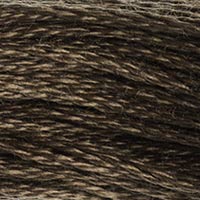
DMC 839 is called "Dark Beige Brown" and has a hex color value of #675541. It belongs to the browns color family.
What is the Madeira equivalent of DMC 839?+
The closest Madeira equivalent to DMC 839 (Dark Beige Brown) is Madeira 1913. This is a close match.
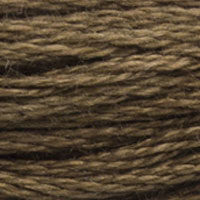
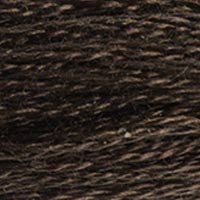
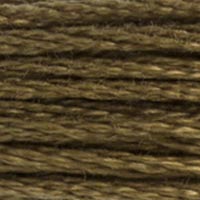
How DMC 839 Looks on Fabric
The same thread appears different depending on your fabric. Always test on your project fabric.
White Aida
Cream / Ecru
Black Aida
Pairs Well With
DMC colors commonly used alongside 839 Dark Beige Brown.
Suggested Palette
Shading Companions
Detailed Conversions
Where to Buy DMC 839
This section contains affiliate links. We may earn a small commission at no cost to you.
Related Guides
Free Printable Thread Conversion Chart
Pick a brand, enter your email, and we'll send you a printable chart mapping all 552 DMC colors to that brand's equivalents. Zero spam, one chart.
Thanks! Here's your free chart:
Download Your ChartOpens in a new tab. Use your browser's Print → Save as PDF.
No spam. Your email is stored securely and never shared.