
Quick Conversion Table
| Brand | Equivalent | Match |
|---|---|---|
| Anchor | 161 | close |
| Madeira | 1012 | close |
| Cosmo ⚠ | 254 | close |
| Sullivans | 45227 | close |
| J&P Coats | 7180 | close |
| Dimensions | 17180 | close |
| Bucilla | 304 | close |
| Candamar | 6008 | close |
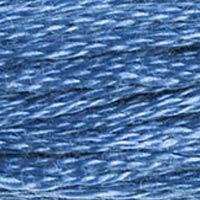
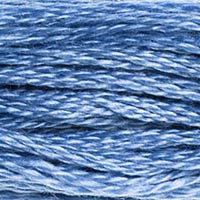
Ask any stitcher to pick their most reliable, most-used mid-tone blue, and DMC 826 comes up again and again. Medium Blue at hex #6B9EBF is the color of a clear mid-morning sky, a well-worn chambray shirt, and shallow Caribbean water catching sunlight — which is to say, it's the platonic notion of blue-blue, neither too light nor too dark, neither too warm nor too cool. Patterns reach for it constantly precisely because of that reliability.
The Versatility Case
826's position in the value scale — solidly mid-tone, with good saturation — makes it function equally well as a fill color, a mid-tone in a gradient, or even a light accent when surrounded by darker blues. That flexibility is relatively rare. Many mid-tone colors are either too close to their neighbors to provide useful contrast or too far from the colors they're meant to bridge. 826 consistently sits in just the right place.
In the 826 family progression — running from DMC 824 (Very Dark Blue) through DMC 826 and out to DMC 827 (Very Light Blue) and DMC 828 (Ultra Very Light Blue) — 826 is the pivot point. It's light enough to read as a mid-tone when surrounded by 824, and dark enough to anchor the light end of a gradient when 827 and 828 follow. This pivot-point quality is why so many patterns include 826 specifically when they only have budget for two or three blues: it splits the difference between dark and light more usefully than most other single colors could.
Sky and Water Applications
Summer sky cross-stitch that runs from deep blue above to lighter near the horizon frequently uses 826 as the primary sky color — one step lighter than 824, with 827 handling the transitional haze and 828 handling the very palest near-horizon area. This three-color sky system (824 or 820 for zenith deep blue, 826 for mid-sky, 827 for horizon transition) creates a convincing atmosphere without requiring a dozen thread colors.
Tropical and Mediterranean water scenes use 826 for the sunlit, shallow water where you can see the bottom — the color between the deep ocean's 824 and the very shallow, near-transparent water of 828. Any poolside, lagoon, or beach design that needs realistic water gradation will likely include 826 at the mid-point of that scale.
Everyday Design Applications
Bluebirds, jays, and many other birds with bright blue plumage use 826 as their mid-tone body color, flanked by darker wing accents and lighter belly highlights. In wildlife cross-stitch, 826 often carries the largest area of a blue bird's body because its mid-tone quality matches the average value of bird plumage in normal light conditions.
Children's designs and folk art consistently reach for 826's clear, friendly medium blue — it reads as approachable and bright without the intensity of a primary blue or the formality of a deep navy. Cross-stitch kits for beginners frequently include 826 because it photographs well, reproduces predictably across fabric colors, and satisfies most people's mental model of what "blue" should look like.
For FlossTube stitchers doing haul videos and color card reviews, 826 is one of those reference colors that helps calibrate whether a camera's color balance is accurate — medium blue is a color most viewers can assess accurately from memory, so if 826 looks right on screen, other colors are probably well-represented too.
Madeira 1012 earns an exact match, while Anchor 161 is listed as close. This is notable because Anchor is usually one of the more reliable equivalents for DMC blues — the slight deviation here suggests that in this specific shade, Anchor's version reads a bit different in undertone or value. Some stitchers describe the Anchor equivalent as slightly more purple or slightly lighter than DMC 826. Test before committing in a design where the specific character of 826's clear, neutral medium blue is important.
Cosmo 254 and Sullivans 45227 are both close matches. Cosmo's characteristic silkier finish gives their medium blue a slightly more luminous quality, which reads as slightly more saturated or vivid in person compared to DMC's matte finish. Whether this is a feature or a problem depends entirely on your design context — for bright, modern designs, Cosmo's extra luminosity might be welcome; for muted or realistic renderings, it might read as too vivid.
Within DMC, the natural neighbors are DMC 825 (Dark Blue), one step darker in the same family, and DMC 827 (Very Light Blue), one step lighter. If 826 is unavailable and you need a medium blue, DMC 825 gives you slightly more depth while remaining in the same hue family. DMC 3755 (Baby Blue) is another option that sits near 826 in value but has a slightly different character — softer and less saturated — that works in some contexts where 826 would be used.
Reference quality
How We Validate This Color Record
Use this page as a reference card for DMC 826: the structured data, quick conversions, and long-form copy are all tied back to the same stored color record.
- Methodology
- This page renders DMC 826, its hex value, and every brand equivalent from the site's source-of-truth color record, then checks long-form body copy against those same stored fields.
- Verification status
- Source-field checked. The page content is audited against the stored DMC number, brand equivalents, and match-quality labels before publishing.
- Last reviewed
- 2026-04-20
- Approximation warning
- Screen hex values, thread photos, and cross-brand conversions are reference aids. Dye lots, thread sheen, and fabric color can still shift the result in hand.
Decision guide
When to use the DMC 826 reference page
This page should help you decide faster between palette planning, brand substitution, and shade comparison without turning the color record into a thin lookup page.
Best for
- + Palette planning when you want the stored DMC 826 Medium Blue record, hex value #6B9EBF, and linked brand equivalents in one place.
- + Checking the quickest cross-brand shortlist before you buy floss, compare stash substitutes, or route into a more specific conversion page.
- + Finding nearby shades in the blues family before you commit to accents, shading, or background blends.
Watch for
- ! Screen previews are only reference aids. Medium Blue can shift on real fabric because thread sheen, stitch coverage, and room lighting change how the color reads.
- ! A stored equivalent is still a shortlist, not a guarantee that two brands will disappear into each other in the same stitched motif.
- ! Older charts, discontinued kit floss, and dye-lot variation can all introduce small but visible differences that the page cannot detect for you.
Before you commit
- Confirm the role of DMC 826 Medium Blue: decide whether you need an exact hero shade, a forgiving background, or a rough stash substitute.
- Compare on project fabric: view the skein or stitched sample on the same fabric count and color you will actually use.
- Use the linked conversion pages next: open the brand-specific pages when you need match-quality caveats before substituting away from the DMC reference.
DMC 826 FAQ
These questions appear on the page so the FAQ schema stays aligned with what visitors can actually read.
What is the Anchor equivalent of DMC 826?+
The closest Anchor equivalent to DMC 826 (Medium Blue) is Anchor 161. This is a close match.
What color is DMC 826?+
DMC 826 is called "Medium Blue" and has a hex color value of #6B9EBF. It belongs to the blues color family.
What is the Madeira equivalent of DMC 826?+
The closest Madeira equivalent to DMC 826 (Medium Blue) is Madeira 1012. This is a close match.
How DMC 826 Looks on Fabric
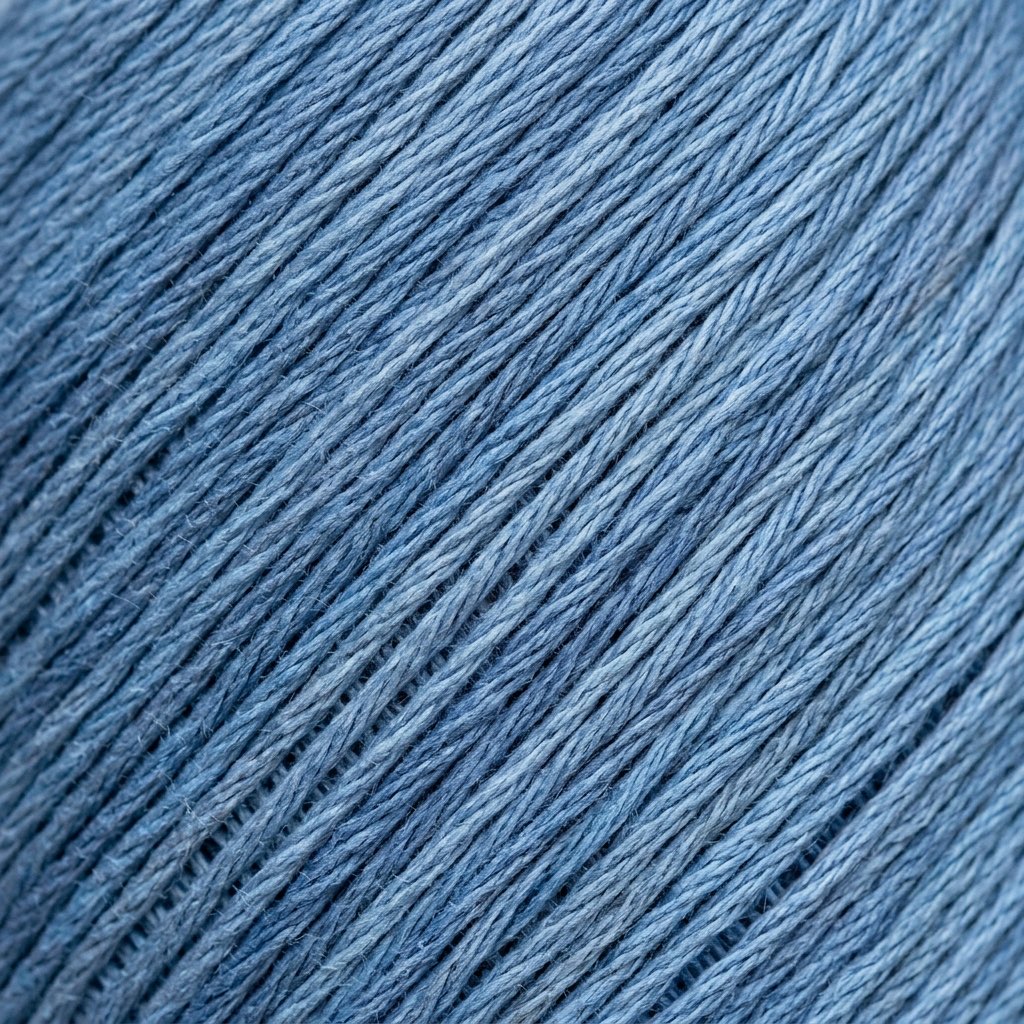
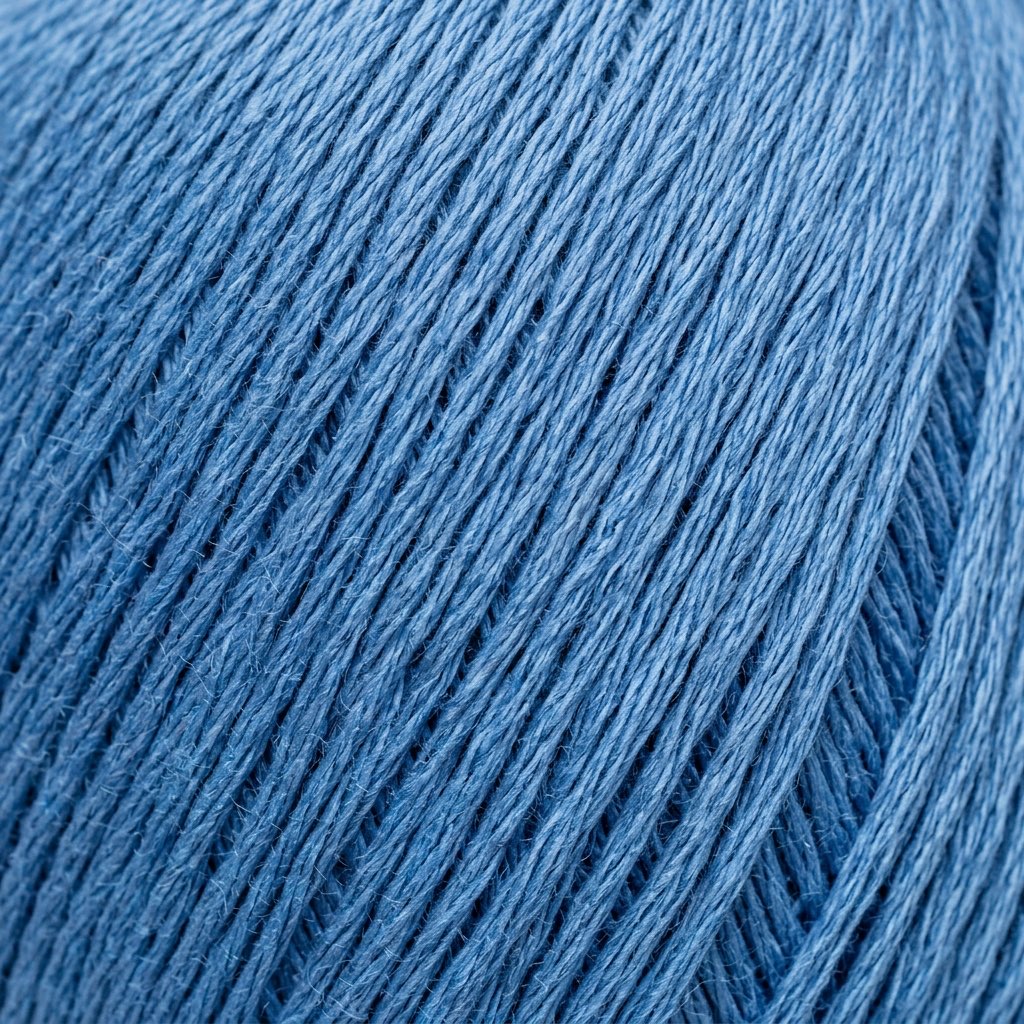
The same thread appears different depending on your fabric. Always test on your project fabric.
White Aida
Cream / Ecru
Black Aida
Pairs Well With
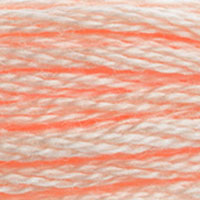
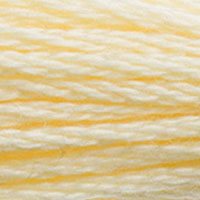
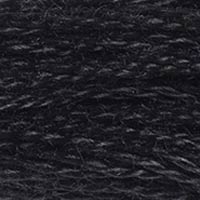
DMC colors commonly used alongside 826 Medium Blue.
Suggested Palette
Shading Companions
Detailed Conversions
Where to Buy DMC 826
This section contains affiliate links. We may earn a small commission at no cost to you.
Related Guides
Free Printable Thread Conversion Chart
Pick a brand, enter your email, and we'll send you a printable chart mapping all 552 DMC colors to that brand's equivalents. Zero spam, one chart.
Thanks! Here's your free chart:
Download Your ChartOpens in a new tab. Use your browser's Print → Save as PDF.
No spam. Your email is stored securely and never shared.