
Quick Conversion Table
| Brand | Equivalent | Match |
|---|---|---|
| Anchor | 145 | exact |
| Madeira | 0910 | exact |
| Cosmo ⚠ | 213 | close |
| Sullivans | 45209 | close |
| J&P Coats | 7030 | close |
| Dimensions | 6016 | close |
| Bucilla | 304 | close |
| Candamar | 6015 | close |
DMC 799 Medium Delft Blue — Centuries of Ceramic Beauty in Thread
The name is not an accident. DMC 799 captures the exact blue that has adorned Dutch Delftware pottery since the 17th century — that distinctive, clear, slightly cool blue painted over white tin glaze that became one of the most recognizable color palettes in decorative art history. If you have ever admired a Delft tile, a blue willow plate, or a porcelain vase in that characteristic blue-on-white style, you already know this color.
What makes the Delft blue so culturally resonant — and what 799 reproduces so well — is its balance. It is not a dark or heavy blue. It is not pastel. It occupies a confident middle range that reads as sophisticated and specific rather than generic. When you stitch with 799, the result looks intentional in a way that a plain "medium blue" might not.
This cultural association opens up an entire category of cross stitch projects that other blues simply cannot serve. Delftware-inspired designs — windmills, tulips, sailing ships, and ornamental borders rendered in blue on white fabric — rely on 799 as their defining color. These projects have a devoted following, particularly among stitchers with Dutch heritage or those who love European decorative arts.
But 799 is not limited to ceramic reproductions. Its clear, clean character makes it an excellent choice for anything that needs to read as "a good honest blue" without drama. It works in fair isle-inspired cross stitch borders, in Scandinavian-style snowflake patterns, and in folk art motifs from many traditions. Portuguese azulejo tile patterns, Chinese blue and white porcelain designs, and Japanese Arita ware reproductions all benefit from this shade.
From a technical standpoint, 799 has just enough saturation to maintain visibility on white fabric at any count, while remaining light enough to provide contrast against darker blues in shading sequences. It pairs naturally with DMC 798 (Dark Delft Blue) and DMC 800 (Pale Delft Blue) for a complete Delft-inspired gradient.
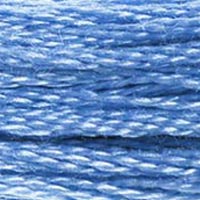
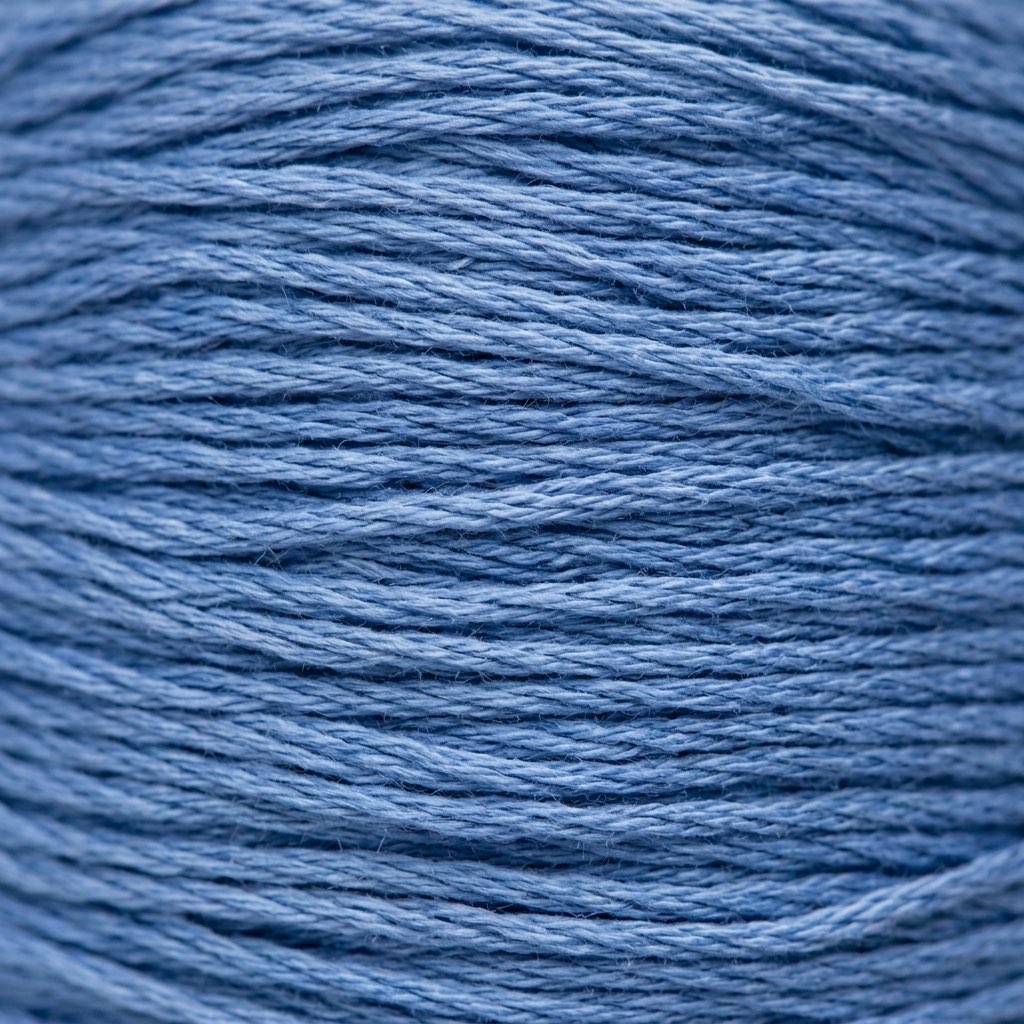
The hex value (#748EB6) positions it as a true medium blue with a cool lean — less grey than DMC 825, less green than DMC 517. It reads clean and bright under daylight, which is ideal for the crisp aesthetic of ceramic-inspired stitching.
Brand Alternatives for DMC 799 Medium Delft Blue
Anchor 145 is listed as an exact match for 799, and in practice it performs well. The color alignment is strong, and Anchor's thread has a similar weight that produces comparable coverage. For Delftware projects where color accuracy is important, Anchor 145 is a safe swap.
Madeira 0910 is also an exact match. Madeira's thread has a slightly tighter twist than DMC in some batches, which can actually produce crisper stitches — an advantage for the precise geometric patterns common in Delft-inspired work.
Cosmo 213 is a close match but worth testing. Cosmo blues can sometimes appear a shade more violet than their DMC counterparts, and in a Delft palette — where the blue needs to be clean and cool without purple — that difference matters. Stitch a test area on your project fabric before committing.
One thing to keep in mind with any Delft blue project: consistency is critical because these designs feature large areas of a single blue against white. Any shade variation between brands or dye lots will be immediately visible. If you are partway through a project and need to switch, try to overlap the transition in a small, complex area where individual stitches are harder to compare.
Reference quality
How We Validate This Color Record
Use this page as a reference card for DMC 799: the structured data, quick conversions, and long-form copy are all tied back to the same stored color record.
- Methodology
- This page renders DMC 799, its hex value, and every brand equivalent from the site's source-of-truth color record, then checks long-form body copy against those same stored fields.
- Verification status
- Source-field checked. The page content is audited against the stored DMC number, brand equivalents, and match-quality labels before publishing.
- Last reviewed
- 2026-04-20
- Approximation warning
- Screen hex values, thread photos, and cross-brand conversions are reference aids. Dye lots, thread sheen, and fabric color can still shift the result in hand.
Decision guide
When to use the DMC 799 reference page
This page should help you decide faster between palette planning, brand substitution, and shade comparison without turning the color record into a thin lookup page.
Best for
- + Palette planning when you want the stored DMC 799 Medium Delft Blue record, hex value #748EB6, and linked brand equivalents in one place.
- + Checking the quickest cross-brand shortlist before you buy floss, compare stash substitutes, or route into a more specific conversion page.
- + Finding nearby shades in the blues family before you commit to accents, shading, or background blends.
Watch for
- ! Screen previews are only reference aids. Medium Delft Blue can shift on real fabric because thread sheen, stitch coverage, and room lighting change how the color reads.
- ! A stored equivalent is still a shortlist, not a guarantee that two brands will disappear into each other in the same stitched motif.
- ! Older charts, discontinued kit floss, and dye-lot variation can all introduce small but visible differences that the page cannot detect for you.
Before you commit
- Confirm the role of DMC 799 Medium Delft Blue: decide whether you need an exact hero shade, a forgiving background, or a rough stash substitute.
- Compare on project fabric: view the skein or stitched sample on the same fabric count and color you will actually use.
- Use the linked conversion pages next: open the brand-specific pages when you need match-quality caveats before substituting away from the DMC reference.
DMC 799 FAQ
These questions appear on the page so the FAQ schema stays aligned with what visitors can actually read.
What is the Anchor equivalent of DMC 799?+
The closest Anchor equivalent to DMC 799 (Medium Delft Blue) is Anchor 145. This is an exact match.
What color is DMC 799?+
DMC 799 is called "Medium Delft Blue" and has a hex color value of #748EB6. It belongs to the blues color family.
What is the Madeira equivalent of DMC 799?+
The closest Madeira equivalent to DMC 799 (Medium Delft Blue) is Madeira 0910. This is an exact match.
Delft-Inspired and Beyond: Projects for DMC 799
The cultural richness of this shade makes it a standout for thematic projects:
- Delftware tile reproductions — Stitch individual tile motifs and frame them in a grid for a stunning wall display. Each tile can feature a different traditional motif: windmill, tulip, ship, or pastoral scene.
- Blue willow pattern pieces — The classic Blue Willow china pattern translates beautifully to cross stitch, with 799 as the primary blue.
- Scandinavian folk art borders — Clean blue on white fabric mirrors the aesthetic of Nordic textile traditions.
- Azulejo-inspired panels — Portuguese blue tile art is another tradition that maps perfectly onto cross stitch grids.
For a complete blue-and-white ceramic palette, combine DMC 799 with DMC 800 (Pale Delft Blue) for highlights, DMC 798 (Dark Delft Blue) for shadows, and stitch on bright white 18-count Aida for the crispest result. The higher count lets you capture the fine detail that makes ceramic-inspired patterns sing.
How DMC 799 Looks on Fabric
The same thread appears different depending on your fabric. Always test on your project fabric.
White Aida
Cream / Ecru
Black Aida
Pairs Well With
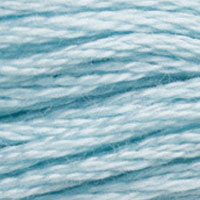
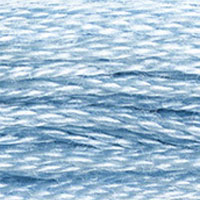
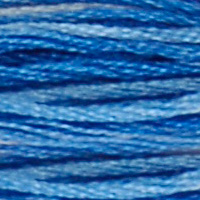
DMC colors commonly used alongside 799 Medium Delft Blue.


Detailed Conversions
Where to Buy DMC 799
This section contains affiliate links. We may earn a small commission at no cost to you.
Related Guides
Free Printable Thread Conversion Chart
Pick a brand, enter your email, and we'll send you a printable chart mapping all 552 DMC colors to that brand's equivalents. Zero spam, one chart.
Thanks! Here's your free chart:
Download Your ChartOpens in a new tab. Use your browser's Print → Save as PDF.
No spam. Your email is stored securely and never shared.