
Quick Conversion Table
| Brand | Equivalent | Match |
|---|---|---|
| Anchor | 130 | close |
| Madeira | 1006 | close |
| Cosmo ⚠ | 2625 | close |
| Sullivans | 45210 | close |
The Sky at Its Most Honest
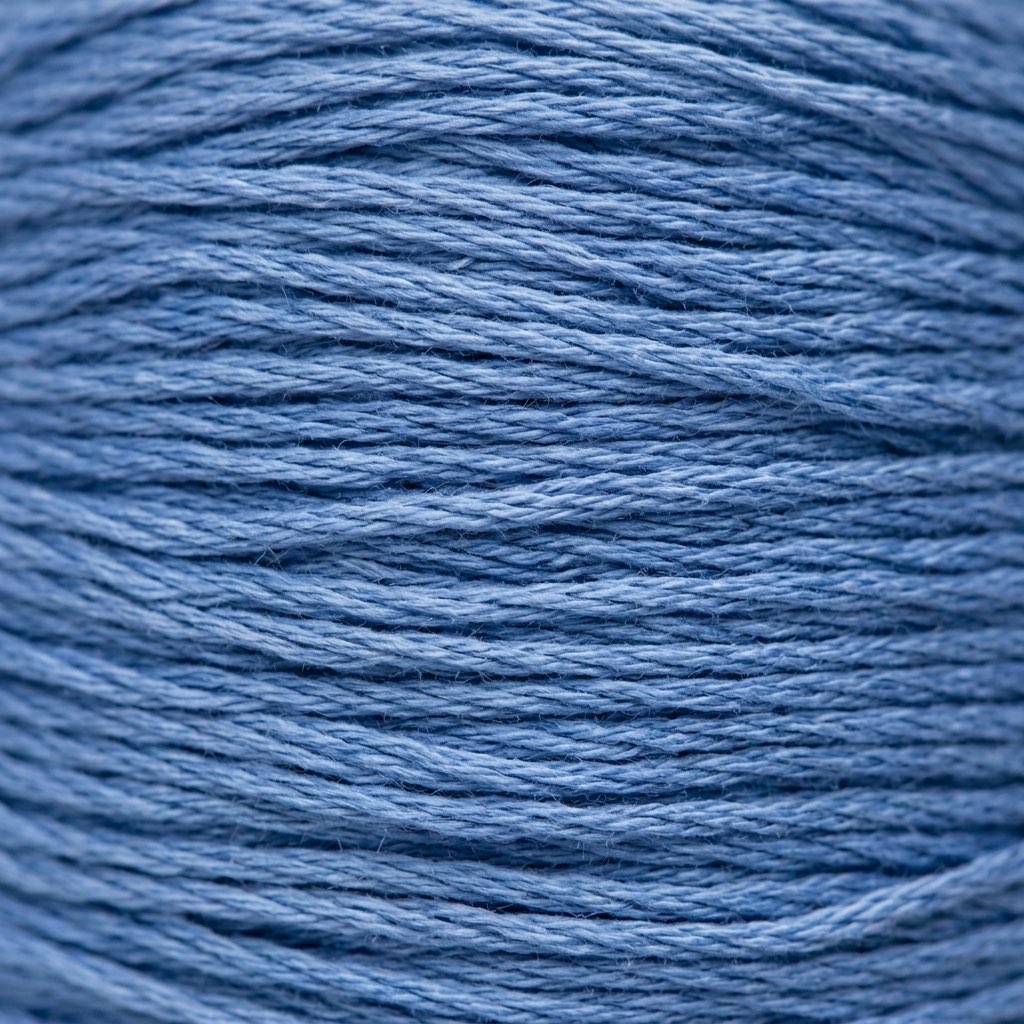
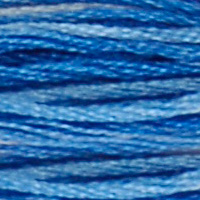
There's a particular quality to the sky about an hour after sunrise on a clear morning — not the dramatic pinks and oranges of dawn, not yet the flat, saturated blue of midday, but something in between. A blue that's still remembering the gentleness of early light. DMC 117 lives in that moment. This variegated thread moves through soft, medium-value blues with enough subtlety that the transitions feel atmospheric rather than decorative, like clouds you can almost see through.
Compared to its more assertive sibling DMC 102 (Variegated Royal Blue), thread 117 operates in a lighter, more approachable register. Where 102 demands attention with its deep sapphire drama, 117 suggests and recedes. This makes it extraordinarily useful for backgrounds — skies, water at a distance, the hazy blue of far-off mountains — where you want visual interest without visual weight. The variegation adds life to what might otherwise be a monotonous expanse of same-color stitches, and the medium value keeps it firmly in the background where it belongs.
Working with Gentle Variegation
The color shifts in DMC 117 are relatively gentle, which gives you more flexibility in how you stitch with it than you might have with a high-contrast variegated thread. Cross-country stitching, which can produce a chaotic patchwork effect with strongly variegated threads, actually works reasonably well here because the tonal range is narrow enough that adjacent stitches of different tones still read as harmonious rather than jarring.
That said, the Danish method still produces the most polished results, creating soft horizontal bands of shifting color that mimic the way light moves across a real sky. If you're filling a large sky area on 14-count Aida, consider keeping your working lengths around 15 inches — long enough to show a complete color cycle, short enough to prevent tangling and fraying that degrades the thread's subtle sheen.
For fabric interaction, DMC 117 is one of those blues that changes character dramatically depending on what it's stitched onto. On white Aida, it reads as a clean, airy sky blue — cheerful and straightforward. On natural or oatmeal linen, the warm fabric tone underneath mixes visually with the cool thread, creating a slightly greyed, more atmospheric quality that's perfect for vintage-style landscape work. On cream evenweave, you get something in between: still clearly blue, but with a warmth that softens it beautifully.
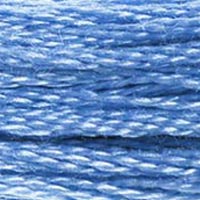
DMC 117 pairs naturally with solid blues in its tonal neighborhood. Use it alongside DMC 809 (Delft Blue) for water scenes where the variegated thread handles the mid-ground and the solid handles areas that need consistent color. For sky gradients, try building from DMC 3756 (Ultra Very Light Baby Blue) at the horizon through 117 in the middle expanse up to DMC 322 (Dark Baby Blue) overhead. The variegated thread in the middle band creates a natural-looking transition zone that smooths out the steps between the solid shades flanking it.
Spring and summer seasonal designs are a natural home for this thread. Floral patterns where 117 fills the sky behind a garden scene, baby-themed designs where the gentle blue creates a soft, nurturing atmosphere, and seaside landscapes where it suggests calm coastal waters — all benefit from the thread's friendly, uncomplicated palette range. It's also surprisingly effective in geometric patterns where you want visual texture without introducing a new color: use 117 for a single-color geometric fill, and the variegation creates pattern-within-pattern interest that solid thread can't achieve.
Matching DMC 117's Quiet Range
The challenge with substituting any variegated thread is that solid replacements can only approximate the midpoint of the color range, missing the movement that makes variegation worthwhile. Anchor 130, as a solid, captures the general blue tone you'd see if you squinted at 117 from across the room — a pleasant medium blue — but it flattens the subtle shifts that give the thread its character.
Madeira 1006 hits a similar note: a reliable medium blue that works as a color match but not a texture match. If your pattern uses 117 as a background fill specifically for its variegated quality, neither of these solids will deliver the same effect. If it's used in small motifs where the variegation barely registers, any of these substitutes will serve you well.
Cosmo 2625 and Sullivans 45210 both land in the medium blue family, and both are reasonable solid-for-variegated swaps where necessary. The real question when substituting is whether your pattern chose 117 for its color or for its variability. Look at the design: is 117 used in large fill areas (the designer likely wanted the variegated effect) or in small, isolated motifs (the color is the main point, and any similar blue works)?
For a closer match to the actual variegated behavior, look within each brand's own variegated or overdyed lines. Many independent dyers produce hand-overdyed flosses that achieve similar soft blue gradations — Weeks Dye Works, Classic Colorworks, and Thread Gatherer all carry blues in this gentle tonal range. They won't match stitch-for-stitch, but they'll preserve the visual character that drew the designer to a variegated thread in the first place.
Reference quality
How We Validate This Color Record
Use this page as a reference card for DMC 117: the structured data, quick conversions, and long-form copy are all tied back to the same stored color record.
- Methodology
- This page renders DMC 117, its hex value, and every brand equivalent from the site's source-of-truth color record, then checks long-form body copy against those same stored fields.
- Verification status
- Source-field checked. The page content is audited against the stored DMC number, brand equivalents, and match-quality labels before publishing.
- Last reviewed
- 2026-04-20
- Approximation warning
- Screen hex values, thread photos, and cross-brand conversions are reference aids. Dye lots, thread sheen, and fabric color can still shift the result in hand.
Decision guide
When to use the DMC 117 reference page
This page should help you decide faster between palette planning, brand substitution, and shade comparison without turning the color record into a thin lookup page.
Best for
- + Palette planning when you want the stored DMC 117 Variegated Blue record, hex value #7090C8, and linked brand equivalents in one place.
- + Checking the quickest cross-brand shortlist before you buy floss, compare stash substitutes, or route into a more specific conversion page.
- + Finding nearby shades in the blues family before you commit to accents, shading, or background blends.
Watch for
- ! Screen previews are only reference aids. Variegated Blue can shift on real fabric because thread sheen, stitch coverage, and room lighting change how the color reads.
- ! A stored equivalent is still a shortlist, not a guarantee that two brands will disappear into each other in the same stitched motif.
- ! Older charts, discontinued kit floss, and dye-lot variation can all introduce small but visible differences that the page cannot detect for you.
Before you commit
- Confirm the role of DMC 117 Variegated Blue: decide whether you need an exact hero shade, a forgiving background, or a rough stash substitute.
- Compare on project fabric: view the skein or stitched sample on the same fabric count and color you will actually use.
- Use the linked conversion pages next: open the brand-specific pages when you need match-quality caveats before substituting away from the DMC reference.
DMC 117 FAQ
These questions appear on the page so the FAQ schema stays aligned with what visitors can actually read.
What is the Anchor equivalent of DMC 117?+
The closest Anchor equivalent to DMC 117 (Variegated Blue) is Anchor 130. This is a close match.
What color is DMC 117?+
DMC 117 is called "Variegated Blue" and has a hex color value of #7090C8. It belongs to the blues color family.
What is the Madeira equivalent of DMC 117?+
The closest Madeira equivalent to DMC 117 (Variegated Blue) is Madeira 1006. This is a close match.
How DMC 117 Looks on Fabric
The same thread appears different depending on your fabric. Always test on your project fabric.
White Aida
Cream / Ecru
Black Aida
Pairs Well With
DMC colors commonly used alongside 117 Variegated Blue.
Suggested Palette
Shading Companions
Detailed Conversions
Where to Buy DMC 117
This section contains affiliate links. We may earn a small commission at no cost to you.
Related Guides
Free Printable Thread Conversion Chart
Pick a brand, enter your email, and we'll send you a printable chart mapping all 552 DMC colors to that brand's equivalents. Zero spam, one chart.
Thanks! Here's your free chart:
Download Your ChartOpens in a new tab. Use your browser's Print → Save as PDF.
No spam. Your email is stored securely and never shared.