
Quick Conversion Table
| Brand | Equivalent | Match |
|---|---|---|
| Anchor | 8 | exact |
| Madeira | 0304 | close |
| Cosmo ⚠ | 2341 | close |
| Sullivans | 45077 | close |
| J&P Coats | 3006 | close |
| Dimensions | 6031 | close |
| Bucilla | 353 | close |
| Candamar | 6031 | close |
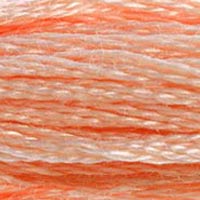
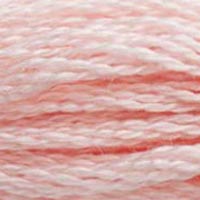
Peach as a color is one of those soft, accessible warm tones that almost nobody dislikes — it carries the warmth of orange and coral without the intensity, the gentleness of pink without the sweetness. As a thread, DMC 353 Peach occupies a specific and useful role in the warm-light territory where skin tones, fruit illustrations, sunset palettes, and delicate floral designs all converge. It's the color that bridges peach-pink and pale salmon, and it handles this bridging role with considerable grace.
Utility in Skin Tone Rendering
Skin tone work in cross-stitch is among the most technically demanding color applications, and DMC 353 Peach is one of the most frequently used threads in fair-to-medium complexion rendering. At this pale, warm-peachy value, it represents the highlights of fair skin in good light — the forehead in direct sun, the high point of a cheekbone, the warm glow of a neck or arm in full daylight. Its warmth prevents the chalky, lifeless look that cooler highlights can produce, while its lightness ensures it reads as a genuine bright area rather than a mid-tone.
Portrait stitchers frequently build their fair-complexion palette starting from DMC 353 as the bright end, stepping down through DMC 352 (Light Coral), DMC 351 (Coral), and DMC 356 (Medium Terra Cotta) for progressively deeper and more shadowed skin areas. This sequence creates convincing skin tone depth for fair to light-medium complexions. The key to making it work is maintaining the warm orange-peach undertone throughout the sequence — cold pinks at the bright end will look disconnected from warm deeper tones.
Fruit and Food Illustration
Fresh peaches are the obvious literal application, but DMC 353's palette extends to a wide range of fruit and food subjects. Nectarines, apricots (the pale inside flesh), certain varieties of plum skin, tropical mangoes with the right light — all of these have areas in the pale warm-peach range. Food-illustrated cross-stitch and kitchen-themed samplers (which are consistently popular) use this thread regularly for the warm-pastel tones of fresh fruit at its most appetizing.
Ice cream and confection-themed designs also make heavy use of pale peachy tones — peach ice cream, certain macarons, the warm tone of vanilla custard in bright light. DMC 353's specific combination of orange and pink reads as inviting and edible, which makes it naturally well-suited to food imagery.
Floral and Botanical Context
Garden roses in the peach-to-apricot range — particularly the tea roses and climbing varieties that have traditionally been popular in embroidery — use DMC 353 as a primary tone in the lightest, most sunlit petal areas. Combine it with DMC 352 (Light Coral) for mid-tones, DMC 351 (Coral) for shadow areas, and DMC 350 (Medium Coral) for the deepest shadow, and you have a complete warm-coral rose shading sequence that reads as naturalistic and dimensional. Add DMC 3354 (Light Dusty Rose) for adjacent design elements where you need a slightly more muted version of the same warm pink.
Anchor 8 and Madeira 0304 are exact matches for DMC 353 — reliable one-for-one substitutes from either brand. Cosmo 2341 and Sullivans 45077 are close matches. In the pale peachy range, differences between close-match substitutes are subtle enough that most stitchers won't notice in non-critical applications. For portrait skin tone work, where DMC 353 is serving as the top of a carefully calibrated gradient, using the exact-match brands is worthwhile.
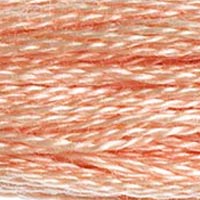
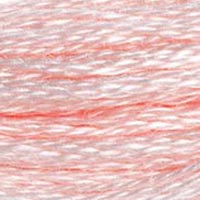
Within the DMC range, DMC 352 (Light Coral) is the most natural substitute when 353 is unavailable — it's slightly more saturated and richer, so it reads as a slightly deeper version of the same warm tone. This is usually an acceptable adjustment in all but the most color-critical applications. DMC 3341 (Apricot) and DMC 3824 (Light Apricot) are neighbors in the pale orange-peach territory with slightly more orange influence and less pink.
One note for stitchers who use DMC 353 frequently in skin tone work: the thread can look significantly different under different light sources. Under incandescent or warm LED light, it reads as warmer and more orange; under cool daylight or cool LED, it reads more pink. If you're checking a skin tone palette, always evaluate under the type of light most similar to where the finished piece will be displayed — gallery lighting, natural window light, and warm room lighting all produce different results.
Reference quality
How We Validate This Color Record
Use this page as a reference card for DMC 353: the structured data, quick conversions, and long-form copy are all tied back to the same stored color record.
- Methodology
- This page renders DMC 353, its hex value, and every brand equivalent from the site's source-of-truth color record, then checks long-form body copy against those same stored fields.
- Verification status
- Source-field checked. The page content is audited against the stored DMC number, brand equivalents, and match-quality labels before publishing.
- Last reviewed
- 2026-04-20
- Approximation warning
- Screen hex values, thread photos, and cross-brand conversions are reference aids. Dye lots, thread sheen, and fabric color can still shift the result in hand.
Decision guide
When to use the DMC 353 reference page
This page should help you decide faster between palette planning, brand substitution, and shade comparison without turning the color record into a thin lookup page.
Best for
- + Palette planning when you want the stored DMC 353 Peach record, hex value #FED7CC, and linked brand equivalents in one place.
- + Checking the quickest cross-brand shortlist before you buy floss, compare stash substitutes, or route into a more specific conversion page.
- + Finding nearby shades in the pinks family before you commit to accents, shading, or background blends.
Watch for
- ! Screen previews are only reference aids. Peach can shift on real fabric because thread sheen, stitch coverage, and room lighting change how the color reads.
- ! A stored equivalent is still a shortlist, not a guarantee that two brands will disappear into each other in the same stitched motif.
- ! Older charts, discontinued kit floss, and dye-lot variation can all introduce small but visible differences that the page cannot detect for you.
Before you commit
- Confirm the role of DMC 353 Peach: decide whether you need an exact hero shade, a forgiving background, or a rough stash substitute.
- Compare on project fabric: view the skein or stitched sample on the same fabric count and color you will actually use.
- Use the linked conversion pages next: open the brand-specific pages when you need match-quality caveats before substituting away from the DMC reference.
DMC 353 FAQ
These questions appear on the page so the FAQ schema stays aligned with what visitors can actually read.
What is the Anchor equivalent of DMC 353?+
The closest Anchor equivalent to DMC 353 (Peach) is Anchor 8. This is an exact match.
What color is DMC 353?+
DMC 353 is called "Peach" and has a hex color value of #FED7CC. It belongs to the pinks color family.
What is the Madeira equivalent of DMC 353?+
The closest Madeira equivalent to DMC 353 (Peach) is Madeira 0304. This is a close match.
Baby and nursery projects claim DMC 353 Peach as a staple — its gentle, warm tone is one of the most popular background and accent colors in birth samplers, nursery wall art, and infant-themed designs. The thread photographs warmly under both natural and artificial light, which makes it one of those colors that always looks good in the progress photos and showcase images that are such an important part of contemporary cross-stitch community culture.
Summer and garden-themed pieces make consistent use of DMC 353 as well. Floral pieces with roses, peonies, or mixed garden flowers in peach-to-coral color schemes build around this thread as either a primary fill or a key highlight. Wedding samplers and anniversary pieces in peach and cream palettes — a style that's been popular for decades and shows no sign of declining — use DMC 353 as one of the foundational colors. The thread is also a key component in the warm-tone sunset gradient designs that have become a staple of the contemporary cross-stitch pattern market, appearing in the lightest, most bleached-out zone of the sunset sky where orange transitions toward gold.
How DMC 353 Looks on Fabric
The same thread appears different depending on your fabric. Always test on your project fabric.
White Aida
Cream / Ecru
Black Aida
Pairs Well With
DMC colors commonly used alongside 353 Peach.
Suggested Palette
Shading Companions
Detailed Conversions
Where to Buy DMC 353
This section contains affiliate links. We may earn a small commission at no cost to you.
Related Guides
Free Printable Thread Conversion Chart
Pick a brand, enter your email, and we'll send you a printable chart mapping all 552 DMC colors to that brand's equivalents. Zero spam, one chart.
Thanks! Here's your free chart:
Download Your ChartOpens in a new tab. Use your browser's Print → Save as PDF.
No spam. Your email is stored securely and never shared.