
Quick Conversion Table
| Brand | Equivalent | Match |
|---|---|---|
| Anchor | 292 | close |
| Madeira | 0101 | close |
| Cosmo ⚠ | 595 | close |
| Sullivans | 45230 | close |
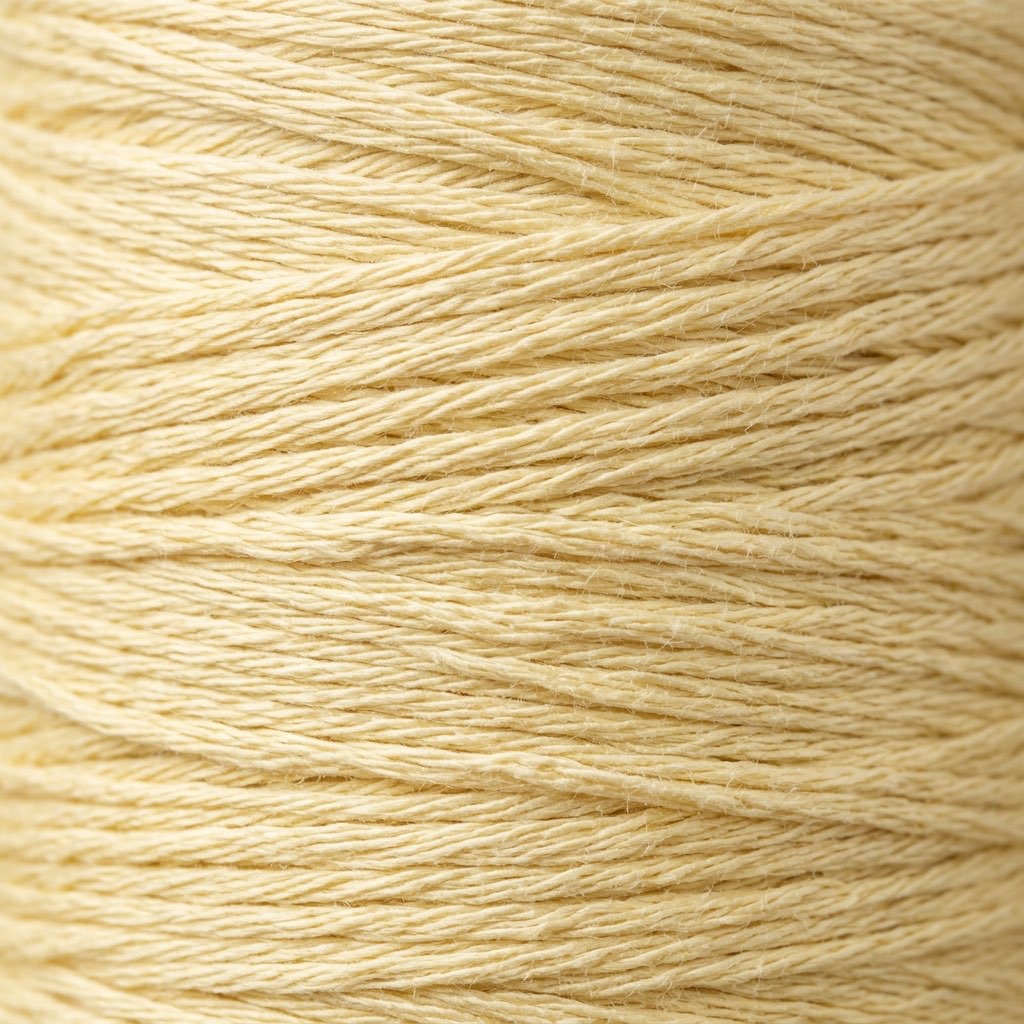
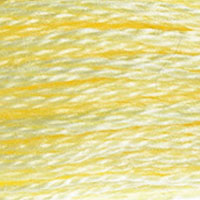
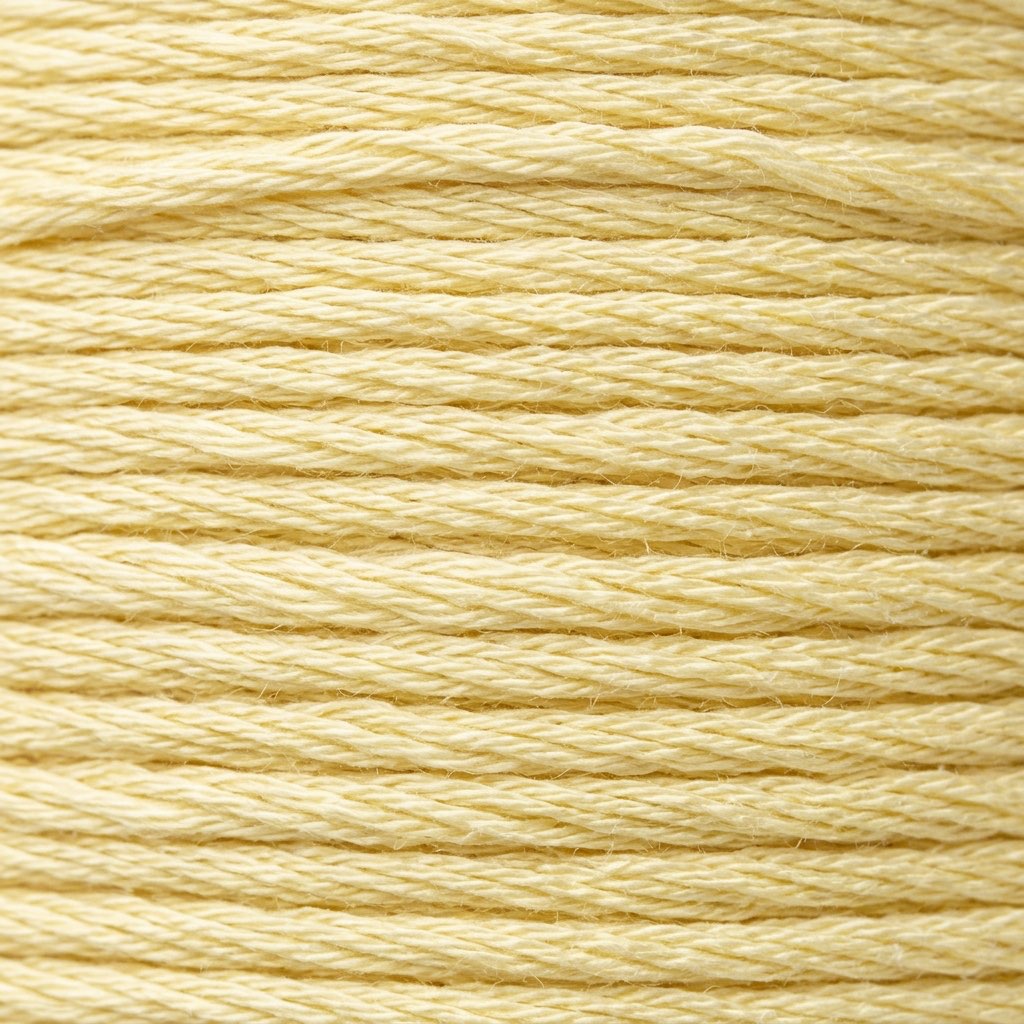
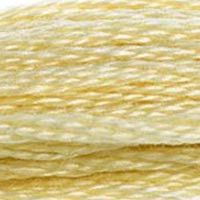
The lightest yellows in embroidery are among the most technically demanding, and DMC 714 Pale Yellow sits at the extreme pale end of its family. Its hex value #FFF8D0 is so close to white that many stitchers initially wonder if it'll register at all on light fabric. On 14-count white Aida, it reads as a whisper of yellow warmth rather than a solid presence. That near-invisible quality is precisely what makes it valuable: 714 is the thread that suggests rather than states, that implies sunlight rather than painting it in.
When Palest Yellow Is the Right Tool
Highlight work in yellow-toned subjects requires extreme pale values that don't overwhelm the design, and 714 fills this role. Sunflower petals at their lightest tips, dandelion seed head highlights, the palest area of a candlelight effect, the bright center of a daffodil's corona — these moments of near-white yellow warmth need 714 or something very close. DMC 727 Very Light Topaz is slightly darker and more definitively yellow; 714 reads even lighter, approaching the region where yellow and warm-white overlap.
On natural linen and evenweave, 714 performs differently than on white fabric. The fabric's warmth brings out the yellow in 714 more strongly, making it read as a visible light yellow rather than near-white. Stitchers working on linen sometimes discover this with surprise — a color they expected to serve as a near-invisible highlight instead reads as a definite mid-light. This fabric sensitivity is worth accounting for in project planning by working a small test area before committing to 714's role in the design.
Pale Yellow in Floral and Nature Work
Botanical embroidery and nature studies use pale yellows constantly for the highlights of pale flowers — primroses, pale roses, white tulips with yellow centers, and the many varieties of cream-yellow garden blooms. DMC 714 paired with DMC 726 Light Topaz and DMC 727 Very Light Topaz creates a complete three-tone palette for these pale yellow flowers, running from the deep golden center through the petal mid-tones to 714's near-white petal tips. For even paler flowers — white roses, cream peonies — 714 bridges the zone between the creamy flower body and the white highlight, preventing the stark contrast that would result from jumping directly to Blanc.
Butterfly wings also benefit from 714. The pale sulfur and cabbage whites of common butterflies often have that near-yellow warmth rather than true white, and 714 captures their specific coloring with botanical accuracy. Pair it with DMC 3078 Very Light Golden Yellow for slightly darker areas of the wing, and DMC 3865 for the true-white wingspots and edge highlights.
Fabric Interaction and Visibility
One practical note for stitchers working with 714 on white Aida: under artificial light, it can look nearly invisible until the surrounding colors are in place. This can be alarming mid-WIP when you're stitching an area of 714 and can barely see your progress. Work these sections in natural daylight or under a daylight lamp (5000K or higher), and the thread's contribution becomes clearer. Resist the impulse to substitute a darker yellow because the stitched area "doesn't look like anything" — the pale yellow typically reads correctly in the finished piece once it's surrounded by the full design.
All four brand equivalents for DMC 714 land at close, which is fairly typical for pale yellows where tiny differences in the white-to-yellow balance become proportionally more significant than the same differences in mid-toned colors. Anchor 292 is a reliable close match with consistent results across multiple dye lots.
Madeira 0101 and Cosmo 595 are both close but may register slightly differently depending on lighting — pale yellows are notoriously variable in appearance under different light sources. Sullivans 45230 is generally a functional substitute though, like all very pale colors, sheen differences between brands are more visible at this end of the value scale.
Within the DMC range, DMC 717 Pale Yellow is the obvious neighboring thread — it's slightly lighter than 714, and the two colors are close enough that many stitchers own both without needing both. For most highlight applications where 714 is used, DMC 727 Very Light Topaz works as a slightly more present, slightly darker substitute. DMC 3823 Ultra Pale Yellow is a reasonable emergency substitute — similar in intent if not identical in hue. DMC 3078 Very Light Golden Yellow shifts more toward warm gold and is noticeably different, but in the smallest highlight areas where 714 appears, the distinction may not be critical.
Reference quality
How We Validate This Color Record
Use this page as a reference card for DMC 714: the structured data, quick conversions, and long-form copy are all tied back to the same stored color record.
- Methodology
- This page renders DMC 714, its hex value, and every brand equivalent from the site's source-of-truth color record, then checks long-form body copy against those same stored fields.
- Verification status
- Source-field checked. The page content is audited against the stored DMC number, brand equivalents, and match-quality labels before publishing.
- Last reviewed
- 2026-04-20
- Approximation warning
- Screen hex values, thread photos, and cross-brand conversions are reference aids. Dye lots, thread sheen, and fabric color can still shift the result in hand.
Decision guide
When to use the DMC 714 reference page
This page should help you decide faster between palette planning, brand substitution, and shade comparison without turning the color record into a thin lookup page.
Best for
- + Palette planning when you want the stored DMC 714 Pale Yellow record, hex value #FFF8D0, and linked brand equivalents in one place.
- + Checking the quickest cross-brand shortlist before you buy floss, compare stash substitutes, or route into a more specific conversion page.
- + Finding nearby shades in the yellows family before you commit to accents, shading, or background blends.
Watch for
- ! Screen previews are only reference aids. Pale Yellow can shift on real fabric because thread sheen, stitch coverage, and room lighting change how the color reads.
- ! A stored equivalent is still a shortlist, not a guarantee that two brands will disappear into each other in the same stitched motif.
- ! Older charts, discontinued kit floss, and dye-lot variation can all introduce small but visible differences that the page cannot detect for you.
Before you commit
- Confirm the role of DMC 714 Pale Yellow: decide whether you need an exact hero shade, a forgiving background, or a rough stash substitute.
- Compare on project fabric: view the skein or stitched sample on the same fabric count and color you will actually use.
- Use the linked conversion pages next: open the brand-specific pages when you need match-quality caveats before substituting away from the DMC reference.
DMC 714 FAQ
These questions appear on the page so the FAQ schema stays aligned with what visitors can actually read.
What is the Anchor equivalent of DMC 714?+
The closest Anchor equivalent to DMC 714 (Pale Yellow) is Anchor 292. This is a close match.
What color is DMC 714?+
DMC 714 is called "Pale Yellow" and has a hex color value of #FFF8D0. It belongs to the yellows color family.
What is the Madeira equivalent of DMC 714?+
The closest Madeira equivalent to DMC 714 (Pale Yellow) is Madeira 0101. This is a close match.
How DMC 714 Looks on Fabric
The same thread appears different depending on your fabric. Always test on your project fabric.
White Aida
Cream / Ecru
Black Aida
Pairs Well With
DMC colors commonly used alongside 714 Pale Yellow.
Suggested Palette
Shading Companions
Detailed Conversions
Where to Buy DMC 714
This section contains affiliate links. We may earn a small commission at no cost to you.
Related Guides
Free Printable Thread Conversion Chart
Pick a brand, enter your email, and we'll send you a printable chart mapping all 552 DMC colors to that brand's equivalents. Zero spam, one chart.
Thanks! Here's your free chart:
Download Your ChartOpens in a new tab. Use your browser's Print → Save as PDF.
No spam. Your email is stored securely and never shared.