
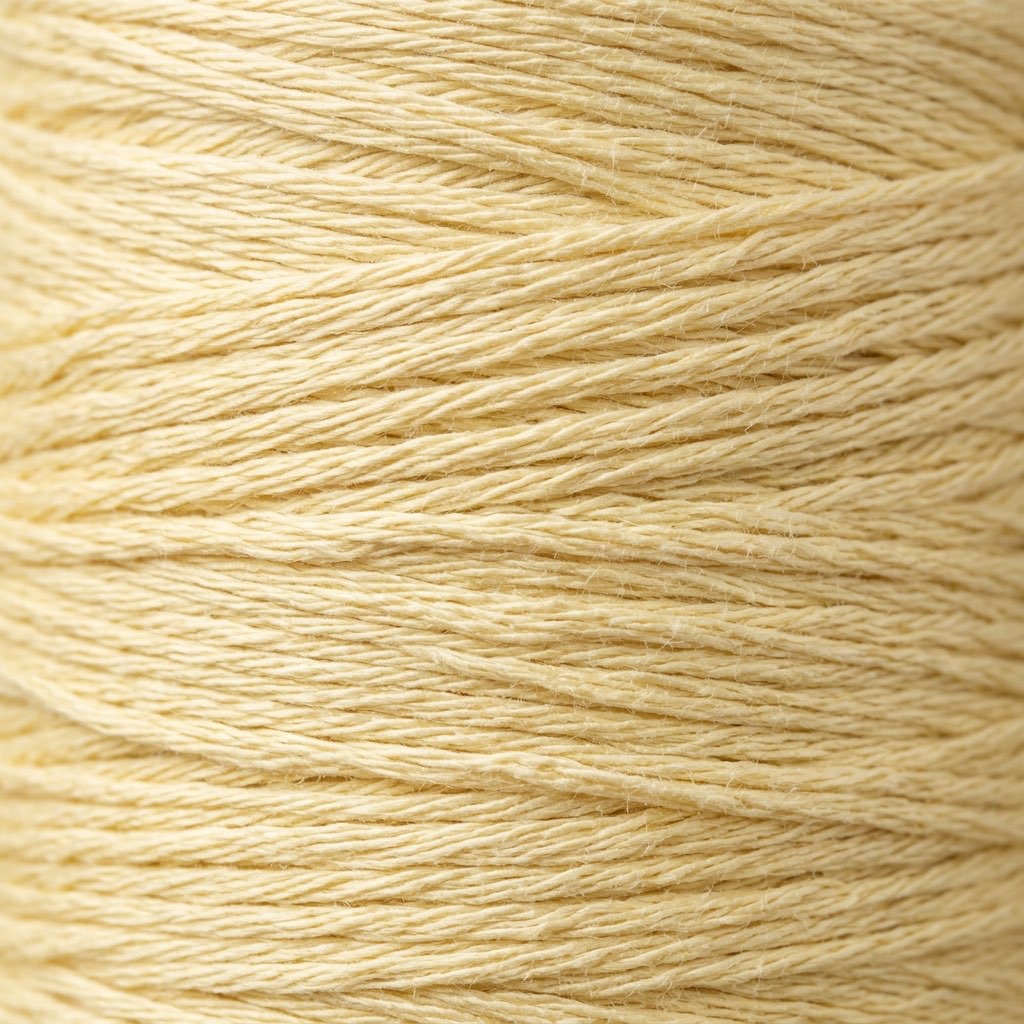
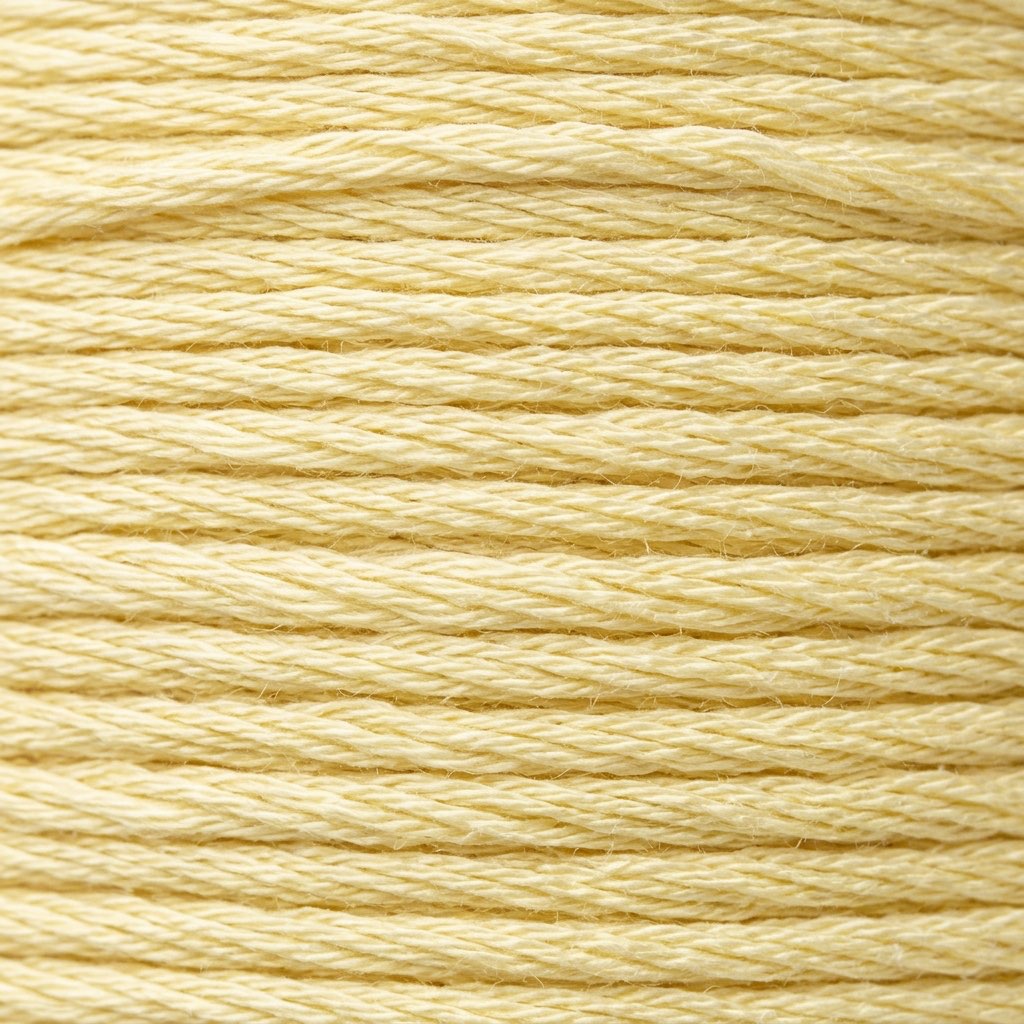
DMC 3078 — Very Light Golden Yellow
Yellows family · Hex #FDF9CD
Quick Conversion Table
| Brand | Equivalent | Match |
|---|---|---|
| Anchor | 292 | exact |
| Madeira | 0102 | close |
| Cosmo ⚠ | 141 | close |
| Sullivans | 45336 | close |
| J&P Coats | 2292 | close |
| Dimensions | 6123 | close |
| Bucilla | 6123 | close |
The Fabric Color Problem — and Why DMC 3078 Forces You to Think About It
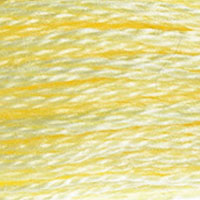
Every stitcher eventually learns that fabric color matters, but very pale yellows like DMC 3078 turn this gentle lesson into a pop quiz. On bright white Aida, this Very Light Golden Yellow shows up as a clearly distinct, soft butter shade — delicate but visible. Move it to cream or antique white fabric, and suddenly you're squinting, wondering if you stitched that area or forgot. On natural linen, it can practically vanish. This isn't a flaw in the thread. It's physics.
Understanding this interaction is actually the key to using DMC 3078 effectively. When you want it visible, stitch on white. When you want a barely-there glow — a halo around a candle flame, the softest highlight on an angel's robe, the faintest suggestion of morning light on a wall — choose a white or very pale fabric and let 3078 do its whisper-quiet thing. There's genuine artistry in a color that's almost not there.
Where Ultra-Pale Yellow Earns Its Skein
DMC 3078 occupies an interesting niche: it's the lightest golden yellow in the DMC range that still reads as definitively yellow rather than cream or off-white. Its neighbor DMC 3823 (Ultra Pale Yellow) is so light it verges on ivory, while DMC 745 (Light Pale Yellow) has noticeably more saturation. That narrow band — clearly yellow, barely tinted — makes 3078 invaluable for specific applications.
Highlight work is the primary one. In a shaded sunflower using DMC 743 (Medium Yellow), DMC 744 (Yellow), and DMC 745 (Light Pale Yellow) for the petals, 3078 provides the final bright highlight where sunlight would wash out the color. In angel and nativity scenes, it creates the pale golden glow around divine figures. In portrait work, it can serve as the lightest flesh tone highlight for fair-skinned subjects, particularly in combination with DMC 3770 (Very Light Tawny) or DMC 746 (Off White).
Star designs are another sweet spot. While brighter yellows like DMC 726 (Light Topaz) work for the core of a star, 3078 creates the surrounding corona — that soft, diffused light radiating outward. Stitch a few crosses of 3078 around a bright yellow star center, and the star appears to genuinely glow rather than just sitting flat on the fabric.
Coverage Challenges at the Pale End
Here's the practical reality: very light yellows are among the hardest colors to get clean, even coverage with. The thread itself is slightly more transparent than darker shades, which means your fabric shows through more. On 14-count Aida with two strands, you'll get acceptable coverage, but it won't look as solid as the same stitch count with a medium or dark yellow. Some stitchers add a third strand for fill areas, though this can make the stitches puffy on tighter counts.
Railroading — using your needle to separate the two strands so they lie flat and parallel — makes a noticeable difference with DMC 3078. The improved coverage from flat thread positioning is more important here than with opaque colors where it's just an aesthetic refinement. Take the extra half-second per stitch. Your finished piece will thank you.
Swapping Out DMC 3078 Very Light Golden Yellow
At this end of the color spectrum, tiny differences in warmth become magnified. A substitution that looks identical on a color card can read quite differently when stitched over a large area.
Anchor 292 is an exact match and the safest swap available. The color alignment is excellent, and both threads have similar coverage properties at this pale value.
Madeira 0102 is also exact. Madeira's version may appear very slightly warmer due to the thread's natural sheen, which at this pale saturation can shift the perceived hue. On small areas, the difference is invisible. On a large fill, you might notice a marginally more golden quality.
Cosmo 141 is a close match. Cosmo threads at the pale end of the spectrum can lean slightly cooler — more lemon than butter — so compare carefully before committing to a project that calls for warmth.
Within the DMC range, the close neighbors are worth understanding:
- 3078 vs. 745: 745 (Light Pale Yellow) is noticeably more saturated. If 3078 is a whisper, 745 is a murmur. They work beautifully together for shading but are not interchangeable.
- 3078 vs. 3823: 3823 (Ultra Pale Yellow) is lighter still and leans slightly more ivory. On white fabric, 3823 can be nearly invisible.
- 3078 vs. 727: 727 (Very Light Topaz) is slightly warmer and a touch more saturated — a reasonable substitute if you want the same role but with a bit more presence.
Reference quality
How We Validate This Color Record
Use this page as a reference card for DMC 3078: the structured data, quick conversions, and long-form copy are all tied back to the same stored color record.
- Methodology
- This page renders DMC 3078, its hex value, and every brand equivalent from the site's source-of-truth color record, then checks long-form body copy against those same stored fields.
- Verification status
- Source-field checked. The page content is audited against the stored DMC number, brand equivalents, and match-quality labels before publishing.
- Last reviewed
- 2026-04-20
- Approximation warning
- Screen hex values, thread photos, and cross-brand conversions are reference aids. Dye lots, thread sheen, and fabric color can still shift the result in hand.
Decision guide
When to use the DMC 3078 reference page
This page should help you decide faster between palette planning, brand substitution, and shade comparison without turning the color record into a thin lookup page.
Best for
- + Palette planning when you want the stored DMC 3078 Very Light Golden Yellow record, hex value #FDF9CD, and linked brand equivalents in one place.
- + Checking the quickest cross-brand shortlist before you buy floss, compare stash substitutes, or route into a more specific conversion page.
- + Finding nearby shades in the yellows family before you commit to accents, shading, or background blends.
Watch for
- ! Screen previews are only reference aids. Very Light Golden Yellow can shift on real fabric because thread sheen, stitch coverage, and room lighting change how the color reads.
- ! A stored equivalent is still a shortlist, not a guarantee that two brands will disappear into each other in the same stitched motif.
- ! Older charts, discontinued kit floss, and dye-lot variation can all introduce small but visible differences that the page cannot detect for you.
Before you commit
- Confirm the role of DMC 3078 Very Light Golden Yellow: decide whether you need an exact hero shade, a forgiving background, or a rough stash substitute.
- Compare on project fabric: view the skein or stitched sample on the same fabric count and color you will actually use.
- Use the linked conversion pages next: open the brand-specific pages when you need match-quality caveats before substituting away from the DMC reference.
DMC 3078 FAQ
These questions appear on the page so the FAQ schema stays aligned with what visitors can actually read.
What is the Anchor equivalent of DMC 3078?+
The closest Anchor equivalent to DMC 3078 (Very Light Golden Yellow) is Anchor 292. This is an exact match.
What color is DMC 3078?+
DMC 3078 is called "Very Light Golden Yellow" and has a hex color value of #FDF9CD. It belongs to the yellows color family.
What is the Madeira equivalent of DMC 3078?+
The closest Madeira equivalent to DMC 3078 (Very Light Golden Yellow) is Madeira 0102. This is a close match.
How DMC 3078 Looks on Fabric
The same thread appears different depending on your fabric. Always test on your project fabric.
White Aida
Cream / Ecru
Black Aida
Pairs Well With
DMC colors commonly used alongside 3078 Very Light Golden Yellow.
Suggested Palette
Shading Companions
Detailed Conversions
Where to Buy DMC 3078
This section contains affiliate links. We may earn a small commission at no cost to you.
Related Guides
Free Printable Thread Conversion Chart
Pick a brand, enter your email, and we'll send you a printable chart mapping all 552 DMC colors to that brand's equivalents. Zero spam, one chart.
Thanks! Here's your free chart:
Download Your ChartOpens in a new tab. Use your browser's Print → Save as PDF.
No spam. Your email is stored securely and never shared.