
Quick Conversion Table
| Brand | Equivalent | Match |
|---|---|---|
| Anchor | 392 | exact |
| Madeira | 1906 | close |
| Cosmo ⚠ | 368 | close |
| Sullivans | 45149 | close |
| J&P Coats | 5393 | close |
| Dimensions | 15832 | close |
| Bucilla | 642 | close |
| Candamar | 6104 | close |
There's a reason stitchers who've been around the community for a while tend to accumulate multiple skeins of DMC 642 Dark Beige Gray: it's the mid-shadow workhorse of the neutral palette, the thread that does the heavy lifting in more designs than most people realize. While DMC 640 handles the deep shadows and 644 carries the mid-light, 642 occupies the zone where the most actual stitching happens in any shaded neutral piece. It reads warmly without tipping into brown, softly without disappearing into a background, and darkly enough to separate forms without the harshness of a cool gray.
Sensory Character
Hold a skein of 642 in natural light against a piece of undyed linen and you'll see the relationship immediately — they're in the same color family, but 642 is several steps darker, providing the depth that raw linen can't. The effect is like a cloud passing over a landscape: the same warm neutrality, just weighted differently. This relationship with natural linen is one reason 642 appears so frequently in heritage sampler designs — it reads as an organic, period-appropriate tone even when the design itself is entirely modern.
Against white Aida, 642 reveals more of its gray component and reads somewhat cooler — not strikingly so, but enough that the same two-strand coverage that feels warm on linen will read as a more assertive medium gray on bright white fabric. This is worth knowing before you start, not after you've laid in a large fill area and it doesn't match your mental image of the finished piece.
Application Across Techniques
In counted cross stitch, 642 most often appears as part of a three or four-tone beige gray shading sequence alongside DMC 640 (darker), DMC 644 (lighter), and sometimes DMC 822 Light Beige Gray as a highlight. This sequence is a staple for stone walls, aged parchment, rough linen texture, and the shadow sides of white or silver objects. It's also an excellent choice for the mid-tones in gray animal portraits — cats, rabbits, and birds with silver-gray plumage all benefit from 642's warmth preventing them from reading as cool or lifeless.
In hardanger embroidery, where drawn threads and satin stitch blocks create strong textural contrast, 642 provides shadow depth that enhances the three-dimensional illusion without fighting the thread sheen. On evenweave, where you're stitching over-two, the thread coverage at medium count is particularly good — you get consistent, even fill without the patchiness that sometimes affects very pale neutrals at the same count.
Backstitching with 642 over lighter fills (644, 822) gives a soft, organic outline quality rather than the sharp definition of black or dark brown. Botanical illustrations and natural history designs frequently use this approach — the drawn line reads as form definition rather than graphic outline, keeping the piece feeling painted rather than cartoonish.
Stash Building Consideration
If you're building a stash from scratch and trying to prioritize, the beige gray family — and 642 in particular — deserves a place earlier in the queue than many stitchers give it. It's one of those colors that gets pulled for patterns from multiple different genres: wildlife, architectural, vintage sampler, botanical, and portrait. Dye lot variation is relatively minor in this range (it's hard to mess up a muted warm gray), but if you're planning a large piece, buying all your 642 from the same lot is still good practice.
Anchor 392 and Madeira 1906 are exact matches, giving you straightforward brand alternatives. Anchor 392 in particular is well-regarded as a color-accurate swap — the warmth-to-gray balance translates faithfully, which matters for a color as nuanced as this one.
Cosmo 368 and Sullivans 45149 land at close. Cosmo 368 is a fraction cooler and grayer than DMC 642; Sullivans 45149 can read slightly warmer in some lights. Both are workable in most contexts. For the mid-shadow role that 642 typically plays, a slight temperature shift at close range won't be obvious in the finished piece.
Within DMC, if you need to improvise, DMC 3787 Dark Brown Gray is slightly darker and warmer — usable in a pinch if you need more shadow than 642 provides but don't want to jump all the way to 640. Going lighter, DMC 644 is the natural next step. For a blended-needle approach mimicking 642's mid-tone, one strand of 640 and one strand of 644 creates a reasonable approximation at two strands total. It's not identical but works as an emergency measure when you're deep in a SAL and the local shop is out of stock.
One thing worth knowing about the beige gray family broadly: dye lot consistency is very good across all major brands for these muted, warm-gray tones. The complexity of achieving exact color is lower than for highly saturated or particularly unusual colors, which means dye lot variation between purchases is generally less of an issue. That said, if you're planning a large full-coverage piece where 642 covers significant territory — a stone wall background, a large architectural element — noting the lot number and buying enough at the start is still standard practice.
Reference quality
How We Validate This Color Record
Use this page as a reference card for DMC 642: the structured data, quick conversions, and long-form copy are all tied back to the same stored color record.
- Methodology
- This page renders DMC 642, its hex value, and every brand equivalent from the site's source-of-truth color record, then checks long-form body copy against those same stored fields.
- Verification status
- Source-field checked. The page content is audited against the stored DMC number, brand equivalents, and match-quality labels before publishing.
- Last reviewed
- 2026-04-20
- Approximation warning
- Screen hex values, thread photos, and cross-brand conversions are reference aids. Dye lots, thread sheen, and fabric color can still shift the result in hand.
Decision guide
When to use the DMC 642 reference page
This page should help you decide faster between palette planning, brand substitution, and shade comparison without turning the color record into a thin lookup page.
Best for
- + Palette planning when you want the stored DMC 642 Dark Beige Gray record, hex value #A49878, and linked brand equivalents in one place.
- + Checking the quickest cross-brand shortlist before you buy floss, compare stash substitutes, or route into a more specific conversion page.
- + Finding nearby shades in the neutrals family before you commit to accents, shading, or background blends.
Watch for
- ! Screen previews are only reference aids. Dark Beige Gray can shift on real fabric because thread sheen, stitch coverage, and room lighting change how the color reads.
- ! A stored equivalent is still a shortlist, not a guarantee that two brands will disappear into each other in the same stitched motif.
- ! Older charts, discontinued kit floss, and dye-lot variation can all introduce small but visible differences that the page cannot detect for you.
Before you commit
- Confirm the role of DMC 642 Dark Beige Gray: decide whether you need an exact hero shade, a forgiving background, or a rough stash substitute.
- Compare on project fabric: view the skein or stitched sample on the same fabric count and color you will actually use.
- Use the linked conversion pages next: open the brand-specific pages when you need match-quality caveats before substituting away from the DMC reference.
DMC 642 FAQ
These questions appear on the page so the FAQ schema stays aligned with what visitors can actually read.
What is the Anchor equivalent of DMC 642?+
The closest Anchor equivalent to DMC 642 (Dark Beige Gray) is Anchor 392. This is an exact match.
What color is DMC 642?+
DMC 642 is called "Dark Beige Gray" and has a hex color value of #A49878. It belongs to the neutrals color family.
What is the Madeira equivalent of DMC 642?+
The closest Madeira equivalent to DMC 642 (Dark Beige Gray) is Madeira 1906. This is a close match.
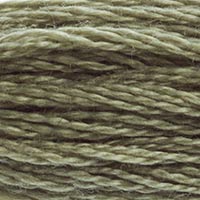
How DMC 642 Looks on Fabric
The same thread appears different depending on your fabric. Always test on your project fabric.
White Aida
Cream / Ecru
Black Aida
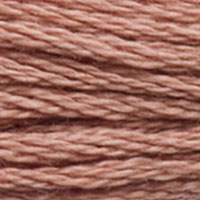
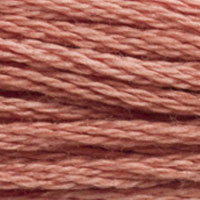
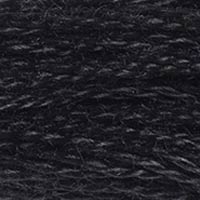
Pairs Well With
DMC colors commonly used alongside 642 Dark Beige Gray.
Suggested Palette
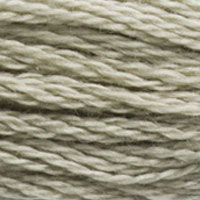
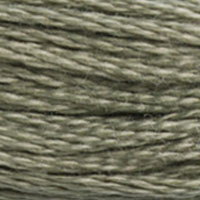
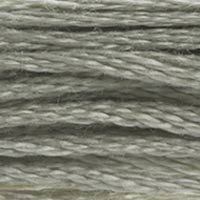
Shading Companions
Detailed Conversions
Where to Buy DMC 642
This section contains affiliate links. We may earn a small commission at no cost to you.
Related Guides
Free Printable Thread Conversion Chart
Pick a brand, enter your email, and we'll send you a printable chart mapping all 552 DMC colors to that brand's equivalents. Zero spam, one chart.
Thanks! Here's your free chart:
Download Your ChartOpens in a new tab. Use your browser's Print → Save as PDF.
No spam. Your email is stored securely and never shared.