
Quick Conversion Table
| Brand | Equivalent | Match |
|---|---|---|
| Anchor | 372 | exact |
| Madeira | 2102 | close |
| Cosmo ⚠ | 307 | close |
| Sullivans | 45093 | close |
| J&P Coats | 5350 | close |
Driftwood, Sand, and the Coastal Brown
Not all browns belong to the forest. DMC 422 is a beach brown — the color of sun-bleached driftwood that's been washed smooth by salt water and dried by wind. It's the warm, pale, slightly golden tone of dry sand above the tide line, the weathered surface of a wooden dock, the faded rope coiled on a pier. Where darker browns anchor you in the earth, 422 lifts toward light and air, carrying the warmth of afternoon sun on natural surfaces without the heaviness of a true brown.
This is the light member of the hazelnut family (420, 869, 422), and at this end of the gradient, the color has relaxed into something genuinely approachable. It's one of those threads that plays well with almost everything — warm enough to sit comfortably with reds, yellows, and oranges, but muted enough to avoid competing with brighter colors. Designers use it as a "friendly neutral" in exactly the way interior decorators use tan: it creates warmth without drawing attention to itself.
Owl Plumage and Bird Pattern Accuracy
If you're stitching birds — and bird cross-stitch has been having a serious moment for several years now — DMC 422 is one of your most-used threads. Barn owl breast feathers are this color. Sparrow back plumage uses it. The lighter bars on a red-tailed hawk's tail feathers need it. The warm face disk of a tawny owl is built from threads in this range. Bird patterns live and die on the accuracy of their brown palette, and 422 occupies a critical middle position between the dark flight feather colors and the pale belly tones.
For a barn owl — one of the most popular bird subjects in cross-stitch — build the face disk with DMC 422 as the main body color, DMC 437 (Light Tan) for the lighter areas near the edge of the disk, and DMC 420 (Dark Hazelnut Brown) for the dark speckling and the shadow around the eyes. The breast feathers use 422 as their lightest tone, with DMC 869 (Very Dark Hazelnut Brown) for the dark spots and DMC 436 (Tan) for the intermediate tone. Getting the browns right on a barn owl is 90% of the battle — the white face is just DMC Blanc and the eyes are a single dark color, but the body is a symphony of warm, golden browns that need to flow naturally from one value to the next.
Sparrows and finches use 422 differently — less as a body color and more as the warm undertone visible between darker brown markings. The bib and cap of a house sparrow are darker (DMC 433 or 434), but 422 shows through as the warm base beneath, giving the bird's plumage that layered, textured quality that separates a good bird from a great one. One strand of 422 blended with one strand of DMC 437 in a blended needle creates a beautiful in-between value for the softer breast feathers.
Lighting Shifts and the Chameleonic Quality
One of 422's quietly remarkable traits is how much it shifts under different lighting conditions. In bright natural daylight, it reads as a clear, warm golden-tan — obviously a light brown with a gold lean. Under warm incandescent light, the gold intensifies and the thread looks richer, almost like a light caramel. Under cool LED or fluorescent light, the gold retreats and the thread looks more like a neutral, slightly grey tan. This means a piece stitched with 422 will actually change character depending on where it's displayed, which can be either a feature or a problem depending on your situation.
For pieces you know will hang in a warmly lit room — above a fireplace, in a bedroom with warm-toned lamps — 422 will glow. For pieces destined for a room with cool white LED ceiling lights, the thread might look flatter and less golden than you intended. Neither is wrong, but it's worth considering if you're stitching a gift that will live in someone else's lighting environment. On fabric, 422 works beautifully on both white and cream Aida, though on natural linen it can fade into the background since many linens are in this same warm-tan neighborhood. If you're stitching on linen and need 422 to be clearly visible, choose a linen that's either lighter (closer to white) or darker (closer to oatmeal) than the thread to maintain contrast.
Staying in the Golden-Tan Zone
DMC 422 occupies a very specific spot: warm, golden, light brown that reads as tan without being either too yellow or too grey. Many substitute candidates at this value level drift in one direction or the other, so check carefully.
Anchor 372 is rated exact and faithfully captures the warm, golden character. Madeira 2102 is also exact and blends well if you're mixing brands in a project — the slight sheen difference is invisible at this pale, warm value. Both are confident recommendations for any context where 422 is called for.
Cosmo 307 is close and generally works, with the caveat that some stitchers perceive a very slight warmth difference between Cosmo's version and the DMC original. In a standalone role (background fill, single-color accents), this won't matter. In a multi-step gradient within the hazelnut family (420, 869, 422), verify that your Cosmo substitute sits naturally between its neighbors. Sullivans 45093 is similarly close — test it against your project fabric in the light where the finished piece will live.
Within DMC's range, the most likely alternatives if 422 is out of stock are DMC 437 (Light Tan), which is very close in value but comes from a different color family and lacks the golden lean, and DMC 3046 (Medium Yellow Beige), which shares the golden warmth but sits in the yellow-beige rather than hazelnut-brown family. Either can work depending on context. Avoid using DMC 842 (Very Light Beige Brown) as a substitute — it's similarly pale but has a cooler, more grey-beige character that misses 422's golden warmth entirely.
Reference quality
How We Validate This Color Record
Use this page as a reference card for DMC 422: the structured data, quick conversions, and long-form copy are all tied back to the same stored color record.
- Methodology
- This page renders DMC 422, its hex value, and every brand equivalent from the site's source-of-truth color record, then checks long-form body copy against those same stored fields.
- Verification status
- Source-field checked. The page content is audited against the stored DMC number, brand equivalents, and match-quality labels before publishing.
- Last reviewed
- 2026-04-20
- Approximation warning
- Screen hex values, thread photos, and cross-brand conversions are reference aids. Dye lots, thread sheen, and fabric color can still shift the result in hand.
Decision guide
When to use the DMC 422 reference page
This page should help you decide faster between palette planning, brand substitution, and shade comparison without turning the color record into a thin lookup page.
Best for
- + Palette planning when you want the stored DMC 422 Light Hazelnut Brown record, hex value #C69F7B, and linked brand equivalents in one place.
- + Checking the quickest cross-brand shortlist before you buy floss, compare stash substitutes, or route into a more specific conversion page.
- + Finding nearby shades in the browns family before you commit to accents, shading, or background blends.
Watch for
- ! Screen previews are only reference aids. Light Hazelnut Brown can shift on real fabric because thread sheen, stitch coverage, and room lighting change how the color reads.
- ! A stored equivalent is still a shortlist, not a guarantee that two brands will disappear into each other in the same stitched motif.
- ! Older charts, discontinued kit floss, and dye-lot variation can all introduce small but visible differences that the page cannot detect for you.
Before you commit
- Confirm the role of DMC 422 Light Hazelnut Brown: decide whether you need an exact hero shade, a forgiving background, or a rough stash substitute.
- Compare on project fabric: view the skein or stitched sample on the same fabric count and color you will actually use.
- Use the linked conversion pages next: open the brand-specific pages when you need match-quality caveats before substituting away from the DMC reference.
DMC 422 FAQ
These questions appear on the page so the FAQ schema stays aligned with what visitors can actually read.
What is the Anchor equivalent of DMC 422?+
The closest Anchor equivalent to DMC 422 (Light Hazelnut Brown) is Anchor 372. This is an exact match.
What color is DMC 422?+
DMC 422 is called "Light Hazelnut Brown" and has a hex color value of #C69F7B. It belongs to the browns color family.
What is the Madeira equivalent of DMC 422?+
The closest Madeira equivalent to DMC 422 (Light Hazelnut Brown) is Madeira 2102. This is a close match.
How DMC 422 Looks on Fabric
The same thread appears different depending on your fabric. Always test on your project fabric.
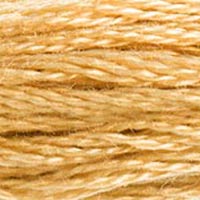
White Aida
Cream / Ecru
Black Aida
Pairs Well With
DMC colors commonly used alongside 422 Light Hazelnut Brown.
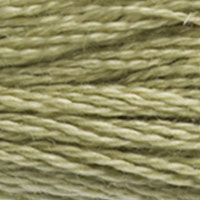
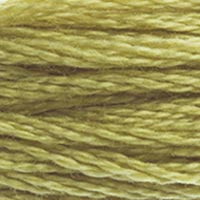
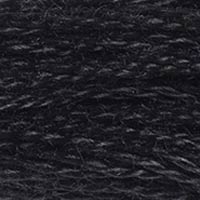
Suggested Palette
Shading Companions
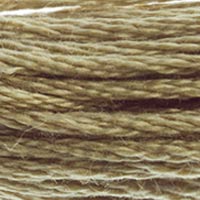
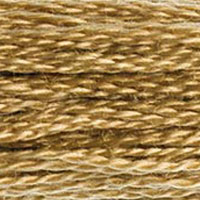
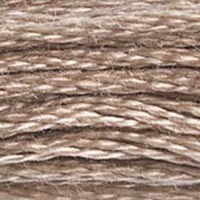
Detailed Conversions
Where to Buy DMC 422
This section contains affiliate links. We may earn a small commission at no cost to you.
Related Guides
Free Printable Thread Conversion Chart
Pick a brand, enter your email, and we'll send you a printable chart mapping all 552 DMC colors to that brand's equivalents. Zero spam, one chart.
Thanks! Here's your free chart:
Download Your ChartOpens in a new tab. Use your browser's Print → Save as PDF.
No spam. Your email is stored securely and never shared.