
Quick Conversion Table
| Brand | Equivalent | Match |
|---|---|---|
| Anchor | 373 | exact |
| Madeira | 2109 | close |
| Cosmo ⚠ | 773 | close |
| Sullivans | 45425 | close |
| J&P Coats | 2412 | close |
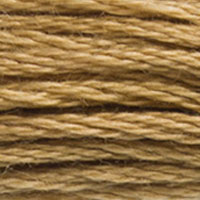
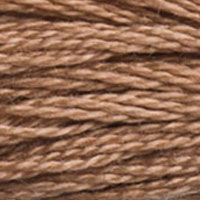
Hazelnut — the actual nut — is a specific and accurate color reference: that warm, medium-dark brown with a slight golden quality, like milk chocolate with a touch of caramel. It's brown with warmth, brown that tells you about richness rather than darkness. DMC 3828 captures this precisely. At hex #B78B61, it reads as a warm, slightly golden medium-brown — not as richly saturated as DMC 3826 (Golden Brown), not as neutrally brown as DMC 3781 (Dark Mocha Brown), but comfortably between both with its own specific character that earns the hazelnut name.
What makes 3828 useful in specific ways is that it sits in the zone between golden-brown and dark-brown where the warm quality is still present but subtly restrained — it reads as a 'proper' brown rather than an orange-brown, while retaining enough warmth to prevent the slight coolness that neutral browns carry. In gradients, this makes it an excellent bridge thread: warm enough to work with the golden end, brown enough to work with the darker end.
Nut and Food-Themed Designs
The direct application — hazelnut-colored subjects — includes nuts, seeds, bark, and food items in the brown-tan range. Autumn harvest designs, food-themed cross-stitch, and botanical specimen pieces all benefit from having this specific warm-brown available. An acorn cap, a pine cone's individual scale, the curved bark of a fallen branch — all of these read correctly in 3828's specific warm-medium-brown.
Bread and pastry cross-stitch, which encompasses everything from simple 'home baker' samplers to elaborate patisserie-themed pieces, uses DMC 3828 for the warm golden-brown of baked crust. It's darker than the pale gold of unbaked dough, lighter than the deep brown of overbaked crust — exactly the color of properly golden bread emerging from the oven. Combined with DMC 3827 (Pale Golden Brown) for the lightest crust highlights and DMC 3826 (Golden Brown) for the deeper crust areas, you can build convincing baked bread coloring.
Wicker, Basketry, and Natural Materials
Natural basketry materials — rattan, rush, willow — are a specific shade of warm-brown that 3828 represents well. Cross-stitch designs featuring wicker furniture, rustic baskets, or woven natural textures use this color in the mid-tone positions. It reads as aged, naturally dried plant material without going so dark that it loses the organic warmth.
Birch bark designs — popular in Scandinavian and Nordic-themed cross-stitch — use 3828 in combination with DMC 3774 (Very Light Desert Sand) and DMC 3781 (Dark Mocha Brown) to build the characteristic layered, warm-yet-variegated appearance of birch bark. The warm quality of 3828 prevents the palette from reading as cold or gray despite the neutral light colors in the mix.
Animal and Wildlife
Birds are a huge cross-stitch genre, and many birds wear hazelnut-brown as their primary plumage color. Sparrows, wrens, female ducks and finches, thrushes, and the muted brown of many common songbirds all have this quality of warm-but-not-flashy brown. DMC 3828 handles their primary feather color with the right combination of warmth and restraint. It's also useful for the brown feather areas in otherwise more colorful birds — the body color of a European robin (which is brown with an orange breast), the wing panels of a bullfinch, the back color of a goldfinch.
Anchor 373 is an exact match for DMC 3828. In the warm-brown range, exact matches are valuable because warm browns are surprisingly distinct from each other in ways that 'it's just brown' thinking misses. Anchor 373 maintains both the warmth and the specific value relationship that makes 3828 work as a bridge color between golden-browns and darker neutrals.
Madeira 2109 is rated close. Madeira's equivalent in this warm-medium-brown range can sometimes sit slightly more golden or slightly more neutral than the DMC, depending on the dye lot. For most applications, Madeira 2109 is workable. For gradient sequences where 3828's precise value relationship with its neighbors matters, a comparison swatch is helpful.
Cosmo 773 and Sullivans 45425 are both rated close and are acceptable substitutes in most contexts. Cosmo 773 tends toward accurate color representation in this range.
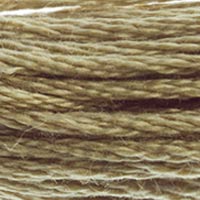
Within the DMC range, 3828's gradient position is between DMC 3827 (Pale Golden Brown) — lighter and more golden — and DMC 3781 (Dark Mocha Brown) — darker and more neutral. Within the same warmth zone, DMC 3826 (Golden Brown) is slightly more saturated and more distinctly golden-orange. DMC 433 (Medium Brown) provides a more neutrally warm medium-brown alternative if the hazelnut warmth is too much for a specific design. DMC 436 (Tan) is in adjacent territory at a slightly lighter value.
Reference quality
How We Validate This Color Record
Use this page as a reference card for DMC 3828: the structured data, quick conversions, and long-form copy are all tied back to the same stored color record.
- Methodology
- This page renders DMC 3828, its hex value, and every brand equivalent from the site's source-of-truth color record, then checks long-form body copy against those same stored fields.
- Verification status
- Source-field checked. The page content is audited against the stored DMC number, brand equivalents, and match-quality labels before publishing.
- Last reviewed
- 2026-04-20
- Approximation warning
- Screen hex values, thread photos, and cross-brand conversions are reference aids. Dye lots, thread sheen, and fabric color can still shift the result in hand.
Decision guide
When to use the DMC 3828 reference page
This page should help you decide faster between palette planning, brand substitution, and shade comparison without turning the color record into a thin lookup page.
Best for
- + Palette planning when you want the stored DMC 3828 Hazelnut Brown record, hex value #B78B61, and linked brand equivalents in one place.
- + Checking the quickest cross-brand shortlist before you buy floss, compare stash substitutes, or route into a more specific conversion page.
- + Finding nearby shades in the browns family before you commit to accents, shading, or background blends.
Watch for
- ! Screen previews are only reference aids. Hazelnut Brown can shift on real fabric because thread sheen, stitch coverage, and room lighting change how the color reads.
- ! A stored equivalent is still a shortlist, not a guarantee that two brands will disappear into each other in the same stitched motif.
- ! Older charts, discontinued kit floss, and dye-lot variation can all introduce small but visible differences that the page cannot detect for you.
Before you commit
- Confirm the role of DMC 3828 Hazelnut Brown: decide whether you need an exact hero shade, a forgiving background, or a rough stash substitute.
- Compare on project fabric: view the skein or stitched sample on the same fabric count and color you will actually use.
- Use the linked conversion pages next: open the brand-specific pages when you need match-quality caveats before substituting away from the DMC reference.
DMC 3828 FAQ
These questions appear on the page so the FAQ schema stays aligned with what visitors can actually read.
What is the Anchor equivalent of DMC 3828?+
The closest Anchor equivalent to DMC 3828 (Hazelnut Brown) is Anchor 373. This is an exact match.
What color is DMC 3828?+
DMC 3828 is called "Hazelnut Brown" and has a hex color value of #B78B61. It belongs to the browns color family.
What is the Madeira equivalent of DMC 3828?+
The closest Madeira equivalent to DMC 3828 (Hazelnut Brown) is Madeira 2109. This is a close match.
How DMC 3828 Looks on Fabric
The same thread appears different depending on your fabric. Always test on your project fabric.
White Aida
Cream / Ecru
Black Aida
Pairs Well With
DMC colors commonly used alongside 3828 Hazelnut Brown.
Suggested Palette

Shading Companions
Detailed Conversions
Where to Buy DMC 3828
This section contains affiliate links. We may earn a small commission at no cost to you.
Related Guides
Free Printable Thread Conversion Chart
Pick a brand, enter your email, and we'll send you a printable chart mapping all 552 DMC colors to that brand's equivalents. Zero spam, one chart.
Thanks! Here's your free chart:
Download Your ChartOpens in a new tab. Use your browser's Print → Save as PDF.
No spam. Your email is stored securely and never shared.