
DMC 3772 — Very Dark Desert Sand
Browns family · Hex #A06C50
Quick Conversion Table
| Brand | Equivalent | Match |
|---|---|---|
| Anchor | 1007 | exact |
| Madeira | 2601 | close |
| Cosmo ⚠ | 425 | close |
| Sullivans | 45386 | close |
| J&P Coats | 5378 | close |
| Dimensions | 15578 | close |
| Bucilla | 3772 | close |
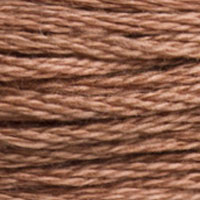
Desert sand, as a color concept, gets romanticized easily. You picture pale gold dunes, Lawrence of Arabia light. But look at actual desert sand up close — at the shadowed base of a dune, at the darker granular layer an inch below the surface, at the color of packed trail dust in afternoon light — and it's a much richer, warmer brown than the romantic image. That's DMC 3772, Very Dark Desert Sand: the saturated, honest version of the desert palette, hex #A06C50, a warm sienna-brown that carries real depth.
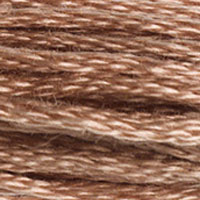
In the Desert Sand family, 3772 anchors the dark end. Its lighter companions — DMC 3773 (Desert Sand), DMC 3774 (Very Light Desert Sand), and the much paler DMC 3770 (Very Light Tawny) — build the complete value range you'd need for a sandy landscape or warm earth-toned work. But 3772 is the one with enough substance to provide genuine shadow depth without reaching for a darker brown family entirely.
Skin Tone Applications
Beyond desert themes, 3772 is a significant thread in skin tone representation for darker and more deeply pigmented complexions. Many portrait stitching patterns use 3772 in the midtone to shadow range for medium-dark skin, where its combination of warmth and depth accurately represents skin with more melanin without resorting to cool grays or flat browns that look lifeless.
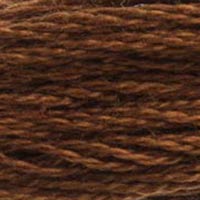
The combination of 3772 with DMC 3781 (Dark Mocha Brown) and DMC 3826 (Golden Brown) creates a versatile three-step skin tone sequence for medium-brown skin tones. Add DMC 3773 (Desert Sand) for highlights and you have a full four-step range. This kind of range-building is what separates technically accomplished portrait work from the kit-level results that rely on a single thread for all skin.
Earth Tones and Landscape Work
Outside portraiture, 3772 shows up wherever warm earth tones create foundation depth. Adobe architecture in Southwestern American and North African-inspired designs uses this color extensively — paired with DMC 3776 (Light Mahogany) for sunlit walls and DMC 3781 (Dark Mocha Brown) for deep shadow, you can build convincing terracotta architecture with warmth and dimension.
Animal fur in cross-stitch — foxes, deer, horses, big cats in their tawny range — frequently incorporates 3772 in the shadow positions. It reads as a true warm-brown shadow without going cold or muddy, which is the challenge with shadows in warm-toned subjects. Try it as a shadow complement to DMC 3827 (Pale Golden Brown) in fawn or golden animal work; the contrast is satisfying and naturalistic.
One thing worth noting about this color in practice: it photographs well. Warm brown shadows have a tendency to look flatter in photos than they look in person — but 3772's saturation is rich enough that it retains its character in both natural and artificial light photography, which matters if you're sharing your WIPs on FlossTube or in SAL groups.
In stash organization, DMC 3772 is worth labeling clearly — warm dark browns in the 9E-A0 hex range can look nearly identical in a skein organizer under artificial light. Its neighbors in adjacent families (DMC 407, DMC 632) are close enough in appearance as skeins that without clear labels, you may find yourself reaching for the wrong thread mid-project. A quick test: 3772 should read as distinctly warmer (more orange-brown) than DMC 3781 (Dark Mocha Brown) and less orange than DMC 3776 (Light Mahogany).
Anchor 1007 is an exact match for DMC 3772. In the Desert Sand family, this is one of the more reliable cross-brand matches available, making Anchor 1007 a genuine first choice when DMC is unavailable. Thread weight is similar enough that mixing Anchor and DMC within the Desert Sand family at adjacent positions in a gradient is generally acceptable.
Madeira 2601 is rated close — it tends to run slightly warmer and sometimes slightly darker than DMC 3772 in certain dye lots. In shadow positions where a touch more depth is acceptable, Madeira 2601 works well. In midtone positions where you need 3772's specific value relationship with its lighter neighbors, do a comparison test first.
Cosmo 425 and Sullivans 45386 are rated close. These are workable substitutes in most contexts. If you're building a long Desert Sand gradient, mixing DMC at one end and Cosmo at the other can sometimes create a visible inconsistency in sheen, so try to keep within one brand for the full sequence if possible.
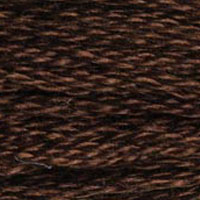
Within the DMC range, DMC 3773 (Desert Sand) is one step lighter — not a substitute but the adjacent value. DMC 407 (Dark Desert Sand) fills a related dark warm-brown position. For a cooler alternative in similar value, DMC 3781 (Dark Mocha Brown) is noticeably more neutrally warm and less orange-brown. DMC 632 (Ultra Very Dark Desert Sand) goes significantly darker if you need even more shadow depth.
Reference quality
How We Validate This Color Record
Use this page as a reference card for DMC 3772: the structured data, quick conversions, and long-form copy are all tied back to the same stored color record.
- Methodology
- This page renders DMC 3772, its hex value, and every brand equivalent from the site's source-of-truth color record, then checks long-form body copy against those same stored fields.
- Verification status
- Source-field checked. The page content is audited against the stored DMC number, brand equivalents, and match-quality labels before publishing.
- Last reviewed
- 2026-04-20
- Approximation warning
- Screen hex values, thread photos, and cross-brand conversions are reference aids. Dye lots, thread sheen, and fabric color can still shift the result in hand.
Decision guide
When to use the DMC 3772 reference page
This page should help you decide faster between palette planning, brand substitution, and shade comparison without turning the color record into a thin lookup page.
Best for
- + Palette planning when you want the stored DMC 3772 Very Dark Desert Sand record, hex value #A06C50, and linked brand equivalents in one place.
- + Checking the quickest cross-brand shortlist before you buy floss, compare stash substitutes, or route into a more specific conversion page.
- + Finding nearby shades in the browns family before you commit to accents, shading, or background blends.
Watch for
- ! Screen previews are only reference aids. Very Dark Desert Sand can shift on real fabric because thread sheen, stitch coverage, and room lighting change how the color reads.
- ! A stored equivalent is still a shortlist, not a guarantee that two brands will disappear into each other in the same stitched motif.
- ! Older charts, discontinued kit floss, and dye-lot variation can all introduce small but visible differences that the page cannot detect for you.
Before you commit
- Confirm the role of DMC 3772 Very Dark Desert Sand: decide whether you need an exact hero shade, a forgiving background, or a rough stash substitute.
- Compare on project fabric: view the skein or stitched sample on the same fabric count and color you will actually use.
- Use the linked conversion pages next: open the brand-specific pages when you need match-quality caveats before substituting away from the DMC reference.
DMC 3772 FAQ
These questions appear on the page so the FAQ schema stays aligned with what visitors can actually read.
What is the Anchor equivalent of DMC 3772?+
The closest Anchor equivalent to DMC 3772 (Very Dark Desert Sand) is Anchor 1007. This is an exact match.
What color is DMC 3772?+
DMC 3772 is called "Very Dark Desert Sand" and has a hex color value of #A06C50. It belongs to the browns color family.
What is the Madeira equivalent of DMC 3772?+
The closest Madeira equivalent to DMC 3772 (Very Dark Desert Sand) is Madeira 2601. This is a close match.
How DMC 3772 Looks on Fabric
The same thread appears different depending on your fabric. Always test on your project fabric.
White Aida
Cream / Ecru
Black Aida
Pairs Well With
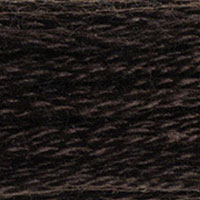
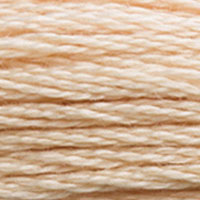
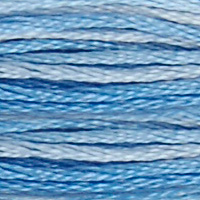
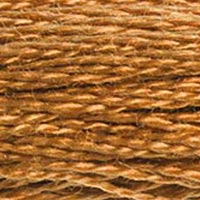
DMC colors commonly used alongside 3772 Very Dark Desert Sand.

Detailed Conversions
Where to Buy DMC 3772
This section contains affiliate links. We may earn a small commission at no cost to you.
Related Guides
Free Printable Thread Conversion Chart
Pick a brand, enter your email, and we'll send you a printable chart mapping all 552 DMC colors to that brand's equivalents. Zero spam, one chart.
Thanks! Here's your free chart:
Download Your ChartOpens in a new tab. Use your browser's Print → Save as PDF.
No spam. Your email is stored securely and never shared.