
Quick Conversion Table
| Brand | Equivalent | Match |
|---|---|---|
| Anchor | 855 | exact |
| Madeira | 1605 | close |
| Cosmo ⚠ | 684 | close |
| Sullivans | 45317 | close |
| J&P Coats | 6842 | close |
| Dimensions | 16843 | close |
| Bucilla | 3012 | close |
The Matcha Connection: Ancient Tea Tones in Modern Stitching
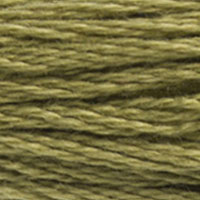
Grind high-grade Japanese green tea leaves into powder, whisk them with water, and the color of the resulting matcha is something remarkably close to DMC 3012. Not the fluorescent green of culinary-grade matcha powder, but the deeper, earthier, slightly brownish green of ceremonial-grade matcha actually whisked in a chawan — the traditional tea bowl. The color carries centuries of association with mindfulness, precision, and the deliberate slowing-down that tea ceremony demands. It's an interesting resonance for a thread that's most commonly used in patient, meditative needlework.
DMC 3012, Medium Khaki Green, sits in the middle of the khaki green gradient between DMC 3011 (Dark Khaki Green) and DMC 3013 (Light Khaki Green). As the midtone, it does the heaviest lifting — more stitches in a typical design will be worked in the middle value than in either the shadow or highlight, simply because most surfaces face roughly toward the viewer and reflect mid-level light. If you're buying thread for a project that uses the full khaki green family, buy an extra skein of 3012. You'll need it.
Why Muted Greens Are Harder Than Bright Ones
Bright greens are straightforward: they're green, they're vivid, they go where green is supposed to go. Muted greens like 3012 are trickier because they operate in a perceptual gray zone (literally) where context controls everything. Surrounded by browns, 3012 reads as green. Surrounded by saturated greens, it reads as brown. Surrounded by warm neutrals, it almost disappears. This chameleon quality is simultaneously 3012's greatest strength and its greatest challenge.
The practical implication: don't judge 3012 on the bobbin or in the skein. Judge it on your fabric, surrounded by your other thread choices, under the lighting where the finished piece will live. A thread that looks muddy and unappealing on a white plastic bobbin can look perfect — nuanced, sophisticated, exactly right — once it's stitched into a carefully designed palette. This is one of those colors that rewards trust in the pattern designer's vision even when your first instinct is skepticism.
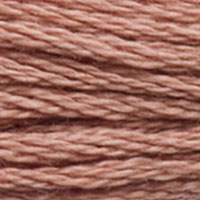
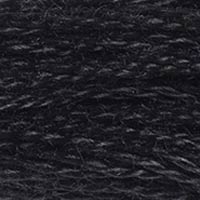
For stitchers building their own palettes, 3012 works beautifully as the green element in an earth-toned naturalistic scheme. Combine it with DMC 610 (Dark Drab Brown), DMC 3790 (Ultra Dark Beige Grey), DMC 3047 (Light Yellow Beige), and DMC 3858 (Medium Rosewood) for a palette that evokes dried flower arrangements, autumn woodlands, and antique textiles. The colors share the same muted, grey-inflected quality, so nothing clashes and nothing dominates.
Coverage and Stitch Notes
On white Aida, 3012 has enough depth to provide good contrast without looking heavy. On natural or cream fabric, contrast drops but the thread gains warmth and sophistication. Two strands on 14-count give clean, full coverage. On 18-count, railroad for even coverage — at this muted value, any twist in the strands that exposes the white fabric beneath creates a speckled appearance that undermines the smooth, quiet quality this thread is meant to provide.
Cross-country stitching works well with 3012 in designs where it covers scattered areas across a row, since the thread doesn't create visible travel lines on the back that shadow through light fabric. On darker or hand-dyed fabrics, you have even more latitude — 3012's midtone value means it neither glows against dark fabric nor vanishes against light, making it adaptable to almost any ground color.
Like its darker sibling 3011, DMC 3012 benefits from exact matches in both Anchor (855) and Madeira (1605). This is the kind of substitution situation that makes a stitcher's life easy — you have high-confidence alternatives in two major brands.
Anchor 855 is, for most purposes, interchangeable with DMC 3012. The matte finish matches, the value matches, and the grey-brown-green balance is preserved with impressive fidelity. If you're substituting within the full 3011/3012/3013 gradient using Anchor, the family cohesion holds — all three Anchor matches (846, 855, 842) maintain the same temperature and muting level.
Madeira 1605 is equally solid. The slight sheen difference is barely perceptible at this muted value, where the greyed quality of the color absorbs surface shine. You'd have to examine the stitches under a magnifying glass to detect the finish difference — in normal viewing, it's invisible.
Cosmo 684 requires a bit more care. The close-but-not-exact rating reflects a slight tendency toward warmer, more golden tones in some stitchers' experience. On cream fabric, this extra warmth might push the thread from "khaki green" into "golden olive" territory. On white Aida, where the cool fabric provides counterbalance, the difference is less noticeable.
One common confusion: DMC 3012 and DMC 3052 (Medium Green Gray) occupy similar value ranges but different color spaces. 3012 is warmer, more khaki, more yellow-brown. 3052 is cooler, greyer, more purely green. They're parallel options for "muted medium green," and the choice between them depends on whether your palette skews warm or cool.
Reference quality
How We Validate This Color Record
Use this page as a reference card for DMC 3012: the structured data, quick conversions, and long-form copy are all tied back to the same stored color record.
- Methodology
- This page renders DMC 3012, its hex value, and every brand equivalent from the site's source-of-truth color record, then checks long-form body copy against those same stored fields.
- Verification status
- Source-field checked. The page content is audited against the stored DMC number, brand equivalents, and match-quality labels before publishing.
- Last reviewed
- 2026-04-20
- Approximation warning
- Screen hex values, thread photos, and cross-brand conversions are reference aids. Dye lots, thread sheen, and fabric color can still shift the result in hand.
Decision guide
When to use the DMC 3012 reference page
This page should help you decide faster between palette planning, brand substitution, and shade comparison without turning the color record into a thin lookup page.
Best for
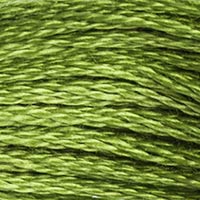
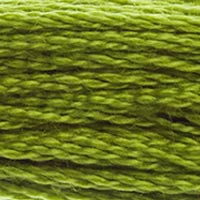
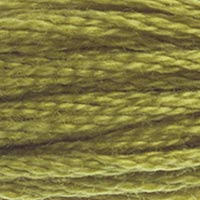
- + Palette planning when you want the stored DMC 3012 Medium Khaki Green record, hex value #A6A75D, and linked brand equivalents in one place.
- + Checking the quickest cross-brand shortlist before you buy floss, compare stash substitutes, or route into a more specific conversion page.
- + Finding nearby shades in the greens family before you commit to accents, shading, or background blends.
Watch for
- ! Screen previews are only reference aids. Medium Khaki Green can shift on real fabric because thread sheen, stitch coverage, and room lighting change how the color reads.
- ! A stored equivalent is still a shortlist, not a guarantee that two brands will disappear into each other in the same stitched motif.
- ! Older charts, discontinued kit floss, and dye-lot variation can all introduce small but visible differences that the page cannot detect for you.
Before you commit
- Confirm the role of DMC 3012 Medium Khaki Green: decide whether you need an exact hero shade, a forgiving background, or a rough stash substitute.
- Compare on project fabric: view the skein or stitched sample on the same fabric count and color you will actually use.
- Use the linked conversion pages next: open the brand-specific pages when you need match-quality caveats before substituting away from the DMC reference.
DMC 3012 FAQ
These questions appear on the page so the FAQ schema stays aligned with what visitors can actually read.
What is the Anchor equivalent of DMC 3012?+
The closest Anchor equivalent to DMC 3012 (Medium Khaki Green) is Anchor 855. This is an exact match.
What color is DMC 3012?+
DMC 3012 is called "Medium Khaki Green" and has a hex color value of #A6A75D. It belongs to the greens color family.
What is the Madeira equivalent of DMC 3012?+
The closest Madeira equivalent to DMC 3012 (Medium Khaki Green) is Madeira 1605. This is a close match.
How DMC 3012 Looks on Fabric
The same thread appears different depending on your fabric. Always test on your project fabric.
White Aida
Cream / Ecru
Black Aida
Pairs Well With
DMC colors commonly used alongside 3012 Medium Khaki Green.
Suggested Palette
Shading Companions
Detailed Conversions
Where to Buy DMC 3012
This section contains affiliate links. We may earn a small commission at no cost to you.
Related Guides
Free Printable Thread Conversion Chart
Pick a brand, enter your email, and we'll send you a printable chart mapping all 552 DMC colors to that brand's equivalents. Zero spam, one chart.
Thanks! Here's your free chart:
Download Your ChartOpens in a new tab. Use your browser's Print → Save as PDF.
No spam. Your email is stored securely and never shared.