
Quick Conversion Table
| Brand | Equivalent | Match |
|---|---|---|
| Anchor | 277 | close |
| Madeira | 2201 | close |
| Cosmo ⚠ | 774 | close |
| Sullivans | 45232 | close |
| J&P Coats | 6845 | close |
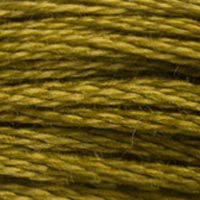
Celtic knotwork, Norse pattern bands, illuminated manuscript borders, medieval-style decorative motifs — a lot of the most popular traditional cross-stitch designs share an aesthetic rooted in pre-industrial craft traditions where gold was not the bright, clean yellow-gold of modern graphic design but something more complex, aged, and intertwined with green and brown. DMC 831, Medium Golden Olive, is the thread that most naturally inhabits that aesthetic. At hex #AA8F56, it reads as the mid-value pivot in the golden olive family — neither the dark depth of 829 nor the bright softness of 833, but the working-gold note that carries the most area in any piece that draws on this tradition.
The Mid-Point That Does the Most Work
In any color family, the mid-tone carries the heaviest load. It covers the most area, defines the color identity of the design element most clearly, and forms the context against which lighter highlights and darker shadows read correctly. In the golden olive family, 831 is that mid-tone. It's dark enough to read as substantial and present, light enough to allow 830 (Dark Golden Olive) and 829 (Very Dark Golden Olive) to function as genuine shadows beneath it, and bright enough that 833 (Light Golden Olive) and 834 (Very Light Golden Olive) can serve as convincing highlights above it.
For stitchers who only want to use two golden olive colors rather than the full five-step range, 831 paired with either 829 or 834 creates a functional two-tone system that covers most design needs adequately — the darker pairing for more dramatic, shadowy work; the lighter pairing for softer, more atmospheric golden elements.
Geometric and Pattern Designs
Bargello, Hardanger, and other counted embroidery traditions that use geometric color patterns frequently employ 831 for its reliable mid-tone quality in complex color arrangements. In a Bargello piece where color progressions create optical texture, 831 appears where a warm, muted mid-gold is needed to bridge darker and lighter elements in the wave pattern.
Traditional band sampler designs often include a band stitched in golden olive tones — the family appears regularly in historical pattern books from the eighteenth and nineteenth centuries, translated into the DMC line's closest equivalents by modern designers. 831 typically handles the primary band color in these historical adaptations.
Contemporary Nature and Food Themes
The sunflower center — that dark, rich golden-brown disc that contrasts with yellow petals — photographs and stitches well in the golden olive family. 831 and 829 together create a realistic sunflower center that reads as warm and organic. Bee designs use similar colors for the amber portions of bee bodies and honeycombs. A hive-themed piece might use 831 as the primary honeycomb color, 829 for the deep cell shadows, and DMC 832 (Golden Olive) for the sun-lit cell edges where the wax is thinner.
Olive oil bottle labels and Mediterranean food packaging — a popular design category for kitchen cross-stitch — often use the golden olive family for bottle background colors, aged paper labels, and decorative borders. 831 in these contexts reads as both authentically olive-connected and warmly domestic.
Madeira 2201 earns an exact match, while Anchor 277 is listed as close — the same Anchor number that earns an exact match for DMC 830. This quirk is worth noting: Anchor 277 sits between DMC 830 and 831 in character, matching 830 exactly and 831 closely. If you're using Anchor throughout, 277 is your best choice for either color, accepting that it's a compromise match for 831 specifically.
Cosmo 774 and Sullivans 45232 are both close matches. The same general considerations apply as with other golden olive family colors — Cosmo's thread finish and occasional undertone variation mean testing before committing is wise, especially in designs where the specific mid-tone golden-olive character of 831 is doing important visual work.
Within DMC, the substitution landscape in this family is limited by the closeness of adjacent values. If 831 is unavailable, DMC 832 (Golden Olive) is the lighter alternative — noticeable but workable if you adjust your palette understanding accordingly. DMC 830 (Dark Golden Olive) gives you more depth, which can look fine if 831 wasn't needed as a mid-tone between 830 and lighter values.
Outside the family, DMC 3013 (Light Khaki Green) shares some of the same muted gold-green character at a lighter value and could appear alongside 831 in designs that need to extend the golden olive range toward cooler, greener territory without leaving the muted earth-tone family.
Reference quality
How We Validate This Color Record
Use this page as a reference card for DMC 831: the structured data, quick conversions, and long-form copy are all tied back to the same stored color record.
- Methodology
- This page renders DMC 831, its hex value, and every brand equivalent from the site's source-of-truth color record, then checks long-form body copy against those same stored fields.
- Verification status
- Source-field checked. The page content is audited against the stored DMC number, brand equivalents, and match-quality labels before publishing.
- Last reviewed
- 2026-04-20
- Approximation warning
- Screen hex values, thread photos, and cross-brand conversions are reference aids. Dye lots, thread sheen, and fabric color can still shift the result in hand.
Decision guide
When to use the DMC 831 reference page
This page should help you decide faster between palette planning, brand substitution, and shade comparison without turning the color record into a thin lookup page.
Best for
- + Palette planning when you want the stored DMC 831 Medium Golden Olive record, hex value #AA8F56, and linked brand equivalents in one place.
- + Checking the quickest cross-brand shortlist before you buy floss, compare stash substitutes, or route into a more specific conversion page.
- + Finding nearby shades in the yellows family before you commit to accents, shading, or background blends.
Watch for
- ! Screen previews are only reference aids. Medium Golden Olive can shift on real fabric because thread sheen, stitch coverage, and room lighting change how the color reads.
- ! A stored equivalent is still a shortlist, not a guarantee that two brands will disappear into each other in the same stitched motif.
- ! Older charts, discontinued kit floss, and dye-lot variation can all introduce small but visible differences that the page cannot detect for you.
Before you commit
- Confirm the role of DMC 831 Medium Golden Olive: decide whether you need an exact hero shade, a forgiving background, or a rough stash substitute.
- Compare on project fabric: view the skein or stitched sample on the same fabric count and color you will actually use.
- Use the linked conversion pages next: open the brand-specific pages when you need match-quality caveats before substituting away from the DMC reference.
DMC 831 FAQ
These questions appear on the page so the FAQ schema stays aligned with what visitors can actually read.
What is the Anchor equivalent of DMC 831?+
The closest Anchor equivalent to DMC 831 (Medium Golden Olive) is Anchor 277. This is a close match.
What color is DMC 831?+
DMC 831 is called "Medium Golden Olive" and has a hex color value of #AA8F56. It belongs to the yellows color family.
What is the Madeira equivalent of DMC 831?+
The closest Madeira equivalent to DMC 831 (Medium Golden Olive) is Madeira 2201. This is a close match.
How DMC 831 Looks on Fabric
The same thread appears different depending on your fabric. Always test on your project fabric.
White Aida
Cream / Ecru
Black Aida
Pairs Well With
DMC colors commonly used alongside 831 Medium Golden Olive.
Suggested Palette
Shading Companions
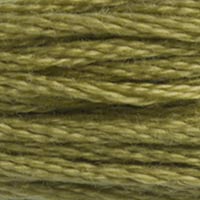
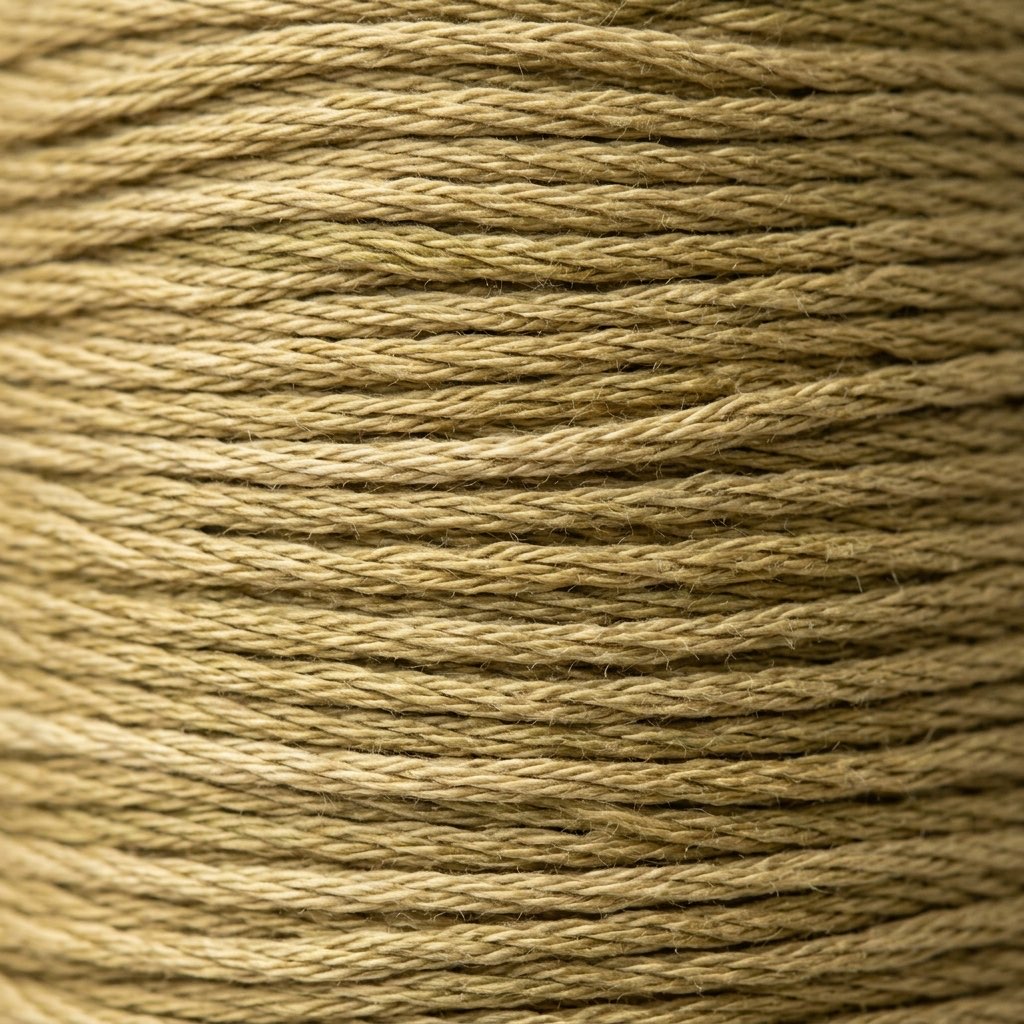
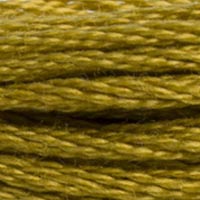
Detailed Conversions
Where to Buy DMC 831
This section contains affiliate links. We may earn a small commission at no cost to you.
Related Guides
Free Printable Thread Conversion Chart
Pick a brand, enter your email, and we'll send you a printable chart mapping all 552 DMC colors to that brand's equivalents. Zero spam, one chart.
Thanks! Here's your free chart:
Download Your ChartOpens in a new tab. Use your browser's Print → Save as PDF.
No spam. Your email is stored securely and never shared.