
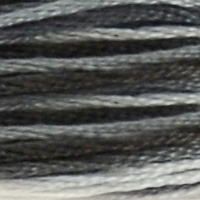
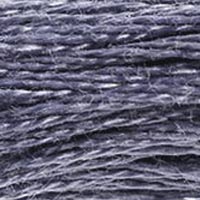
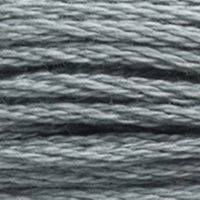
DMC 53 — Variegated Steele Gray
Neutrals family · Hex #909090
Quick Conversion Table
| Brand | Equivalent | Match |
|---|---|---|
| Anchor | 232 | close |
| Madeira | 1801 | close |
| Cosmo ⚠ | 2632 | close |
| Sullivans | 45342 | close |
A variegated grey sounds, at first description, like the least exciting thread in a collection. Grey. Variegated. And yet DMC 53 Variegated Steele Gray has a devoted following among stitchers who work with animal subjects — specifically, any animal whose fur or feathers show natural variation within a grey family. The way 53 cycles through lighter and darker grey values as you stitch mimics the way natural grey hair, fur, and feathers actually behave: not uniform, not flat, but subtly varied in a way that creates the impression of individual hairs or fibers catching light differently.
Why Variegated Neutrals Are Harder to Replace Than You'd Think
Solid thread in any grey value will, when stitched, produce an even, uniform appearance. To achieve natural variation in grey fur or feathers using solid thread, you need to carefully layer multiple grey values and blend them deliberately — which requires significant skill and time. DMC 53, by cycling through grey values automatically, does a version of this work for you. The result isn't as precisely controlled as deliberate multi-thread shading, but it's faster to achieve and produces a convincing organic variation that many stitchers find more natural-looking than their own manually blended efforts.
This makes 53 particularly valuable for stitchers at the intermediate level who want their animal portraits to look three-dimensional and naturalistic but don't yet have the thread painting skills to execute complex manual shading. It's also genuinely useful for experienced stitchers working larger projects who want the efficiency of the variegated effect in background animal elements where extreme precision isn't required.
Animal Design Applications
The obvious applications for Variegated Steele Gray include: cats (especially grey tabbies, blue point Siamese, Russian Blues), dogs (Weimaraners, Whippets, Great Danes), horses (grey and dapple grey breeds), and elephants. For each of these subjects, the natural variation in coat or skin color is largely within the grey family, and 53 approximates this variation convincingly.
Beyond mammals, 53 works well for certain bird species: grey herons, mockingbirds, catbirds, certain owl species, and the grey portions of gull plumage. In all of these, the thread's internal variation creates feather texture without requiring the stitcher to manage multiple threads simultaneously.
Less obvious applications include rock and stone textures, weathered wood, pewter and silver metallic surfaces (where actual metallic thread might feel too shiny), winter landscapes with grey snow clouds, and concrete or architectural stone in urban scene designs. The variegated quality suggests texture in a way that solid grey thread doesn't.
Stitching Technique for Variegated Neutrals
As with DMC 52, cutting shorter working lengths (12–15 inches rather than 18 inches) gives more control over where color transitions fall within the design. For animal fur in particular, some stitchers start each cut at the same point in the color cycle to create a consistent pattern, while others deliberately start at different points to maximize randomness. Neither approach is definitively better — it depends on the design and the visual effect you're aiming for.
Parking can be useful with variegated threads in complex designs: by leaving multiple cuts started and completing individual stitches rather than full rows, you can control the placement of the lighter and darker segments within specific areas of the design.
Substituting variegated grey presents the same fundamental challenge as any variegated substitution: the specific color cycle of the thread is brand-specific, and no other brand's variegated grey will cycle in exactly the same way or at the same rate. Anchor 232 is a solid grey that approximates the median value of DMC 53's range — a workable substitute if you're willing to trade the variegated effect for a solid color result, but a design choice rather than a true like-for-like substitution.
Madeira 1801 is listed as a close match. Madeira does produce variegated grey threads, and 1801 is worth ordering a sample skein of to compare the color range and transition pattern to DMC 53 before purchasing for a major project. The Madeira and DMC variegated grey threads will produce different visual textures even if the overall color family is similar.
Cosmo 2632 is another option worth sampling directly. Cosmo's variegated range has received good reviews for quality, and their grey variations are well-made. Direct comparison testing is essential before using Cosmo as a substitute for DMC 53 in any design where the variegated grey effect is a primary design feature.
Sullivans 45342 is suitable for less critical applications. For practice pieces, beginner projects, and any use where the variegated grey effect is a nice-to-have rather than a specific design requirement, Sullivans is a reasonable economy choice.
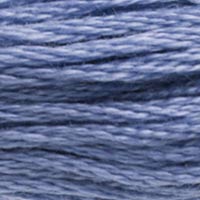
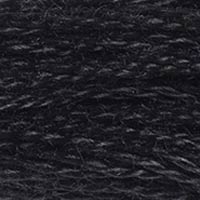
The most reliable DMC-family substitute approach is using multiple solid grey threads — DMC 413 (Dark Pewter Grey), DMC 414 (Dark Steel Grey), and DMC 415 (Pearl Grey) — in a deliberately blended needle or stitched in alternating rows to create manual variegation. This takes more effort but gives more control over the result than any direct substitute thread.
Reference quality
How We Validate This Color Record
Use this page as a reference card for DMC 53: the structured data, quick conversions, and long-form copy are all tied back to the same stored color record.
- Methodology
- This page renders DMC 53, its hex value, and every brand equivalent from the site's source-of-truth color record, then checks long-form body copy against those same stored fields.
- Verification status
- Source-field checked. The page content is audited against the stored DMC number, brand equivalents, and match-quality labels before publishing.
- Last reviewed
- 2026-04-20
- Approximation warning
- Screen hex values, thread photos, and cross-brand conversions are reference aids. Dye lots, thread sheen, and fabric color can still shift the result in hand.
Decision guide
When to use the DMC 53 reference page
This page should help you decide faster between palette planning, brand substitution, and shade comparison without turning the color record into a thin lookup page.
Best for
- + Palette planning when you want the stored DMC 53 Variegated Steele Gray record, hex value #909090, and linked brand equivalents in one place.
- + Checking the quickest cross-brand shortlist before you buy floss, compare stash substitutes, or route into a more specific conversion page.
- + Finding nearby shades in the neutrals family before you commit to accents, shading, or background blends.
Watch for
- ! Screen previews are only reference aids. Variegated Steele Gray can shift on real fabric because thread sheen, stitch coverage, and room lighting change how the color reads.
- ! A stored equivalent is still a shortlist, not a guarantee that two brands will disappear into each other in the same stitched motif.
- ! Older charts, discontinued kit floss, and dye-lot variation can all introduce small but visible differences that the page cannot detect for you.
Before you commit
- Confirm the role of DMC 53 Variegated Steele Gray: decide whether you need an exact hero shade, a forgiving background, or a rough stash substitute.
- Compare on project fabric: view the skein or stitched sample on the same fabric count and color you will actually use.
- Use the linked conversion pages next: open the brand-specific pages when you need match-quality caveats before substituting away from the DMC reference.
DMC 53 FAQ
These questions appear on the page so the FAQ schema stays aligned with what visitors can actually read.
What is the Anchor equivalent of DMC 53?+
The closest Anchor equivalent to DMC 53 (Variegated Steele Gray) is Anchor 232. This is a close match.
What color is DMC 53?+
DMC 53 is called "Variegated Steele Gray" and has a hex color value of #909090. It belongs to the neutrals color family.
What is the Madeira equivalent of DMC 53?+
The closest Madeira equivalent to DMC 53 (Variegated Steele Gray) is Madeira 1801. This is a close match.
How DMC 53 Looks on Fabric
The same thread appears different depending on your fabric. Always test on your project fabric.
White Aida
Cream / Ecru
Black Aida
Pairs Well With
DMC colors commonly used alongside 53 Variegated Steele Gray.
Suggested Palette

Shading Companions
Detailed Conversions
Where to Buy DMC 53
This section contains affiliate links. We may earn a small commission at no cost to you.
Related Guides
Free Printable Thread Conversion Chart
Pick a brand, enter your email, and we'll send you a printable chart mapping all 552 DMC colors to that brand's equivalents. Zero spam, one chart.
Thanks! Here's your free chart:
Download Your ChartOpens in a new tab. Use your browser's Print → Save as PDF.
No spam. Your email is stored securely and never shared.