
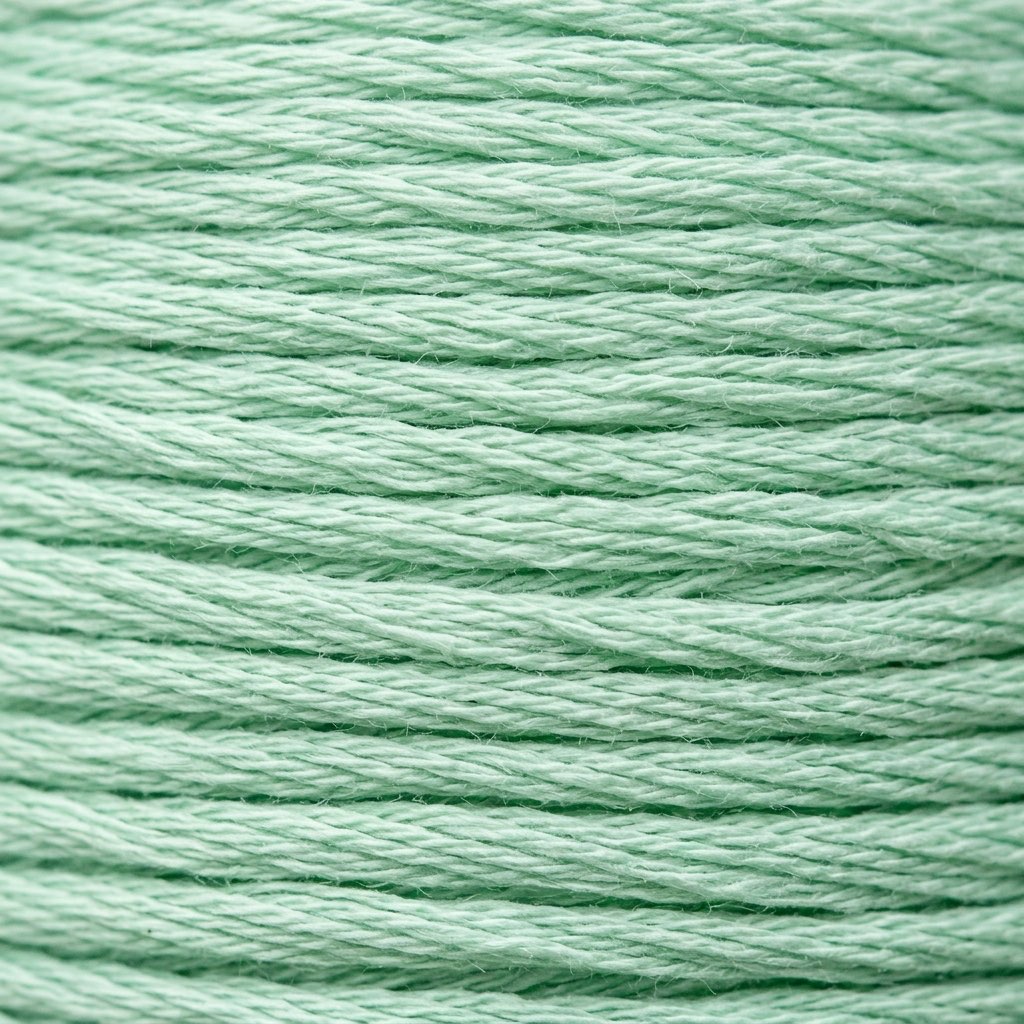
DMC 3945 — Very Light Jade Green
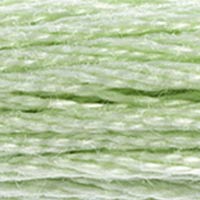
Greens family · Hex #D8F0E0
Quick Conversion Table
| Brand | Equivalent | Match |
|---|---|---|
| Anchor | 875 | close |
| Madeira | 1209 | close |
| Cosmo ⚠ | 979 | close |
| Sullivans | 45324 | close |
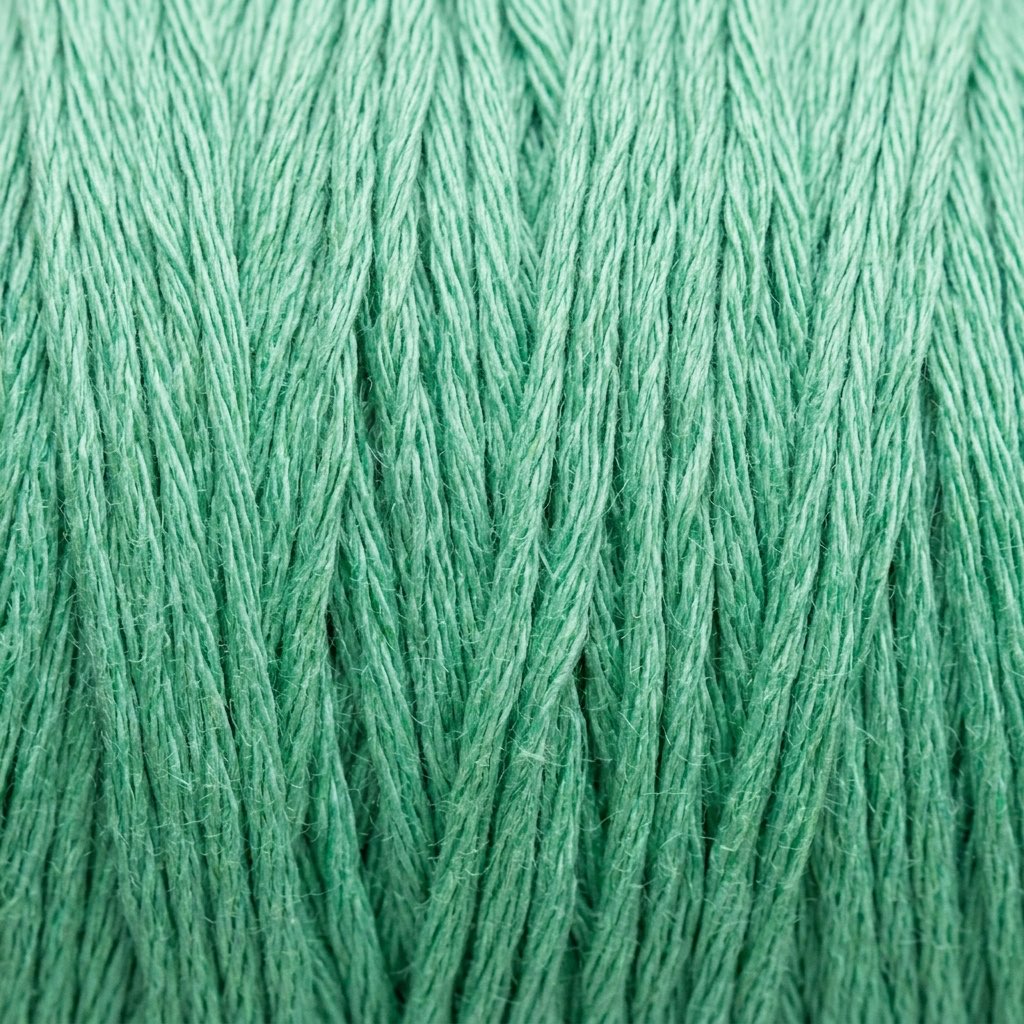
Hold a piece of pale sea glass up to the light and you'll see it: a color so close to white that it barely qualifies as green, yet unmistakably not white. There's a whisper of cool mint, a trace of something mineral, a translucency that solid colors can't replicate. DMC 3945 Very Light Jade Green is working in that territory — a barely-there pale green that functions more like a tint than a color, and whose power is entirely relational. Surrounded by deeper greens, it glows. On its own, it barely registers.
The Art of the Near-Highlight
In color theory, the highest light value in a gradient is where the eye lands first — it's the source of perceived luminosity. Very Light Jade Green exists to fill that role in jade and mint-green compositions. It's the step just before you'd switch to white thread, providing enough color identity to maintain the green family character while serving as a genuine highlight. Thread painters working realistic botanical illustrations use exactly this logic: every plant surface that shows strong specular highlight needs a color that's "white plus a little bit of the local color," and 3945 is that thread for jade-green plant families.
For gradient work in this family, 3945 pairs with DMC 3944 (Light Jade Green) immediately below it, and the gap between them is a single significant step lighter. Below 3944 you'd reach for DMC 3955 (Light Celadon) or DMC 3813 (Light Blue Green) depending on the temperature direction you want to travel.
Fabric Interaction — The Challenge of Very Pale Colors
Very light colors like 3945 present a genuine technical challenge on light-colored fabric: coverage. On 14-count white Aida with 2 strands, the fabric ground can show through, particularly on partial stitches and at the edges of filled areas. Many stitchers find that going to 3 strands on 14-count solves this, or switching to 28-count evenweave stitched over-two gives a different texture that covers more naturally. On dark-ground fabrics — navy, black, dark plum — 3945 is transformed entirely, becoming a visible, luminous pale jade that can be genuinely beautiful.
On natural or antique linen, the warm ground shifts 3945 ever so slightly toward the yellow-green end of the spectrum, which can actually improve its integration with designs that use warm earthy tones. The color doesn't fight the fabric; it softens with it.
Project Applications
Beyond botanical work, 3945 appears in mermaid-tail designs for the lightest scale highlights, in dragonfly and butterfly wing gradients where translucency is implied, in mineral and gemstone illustrations (jade, chrysoprase, certain tourmalines), and in underwater-scene backgrounds where the surface of illuminated water is rendered. Christmas ornament designs with a cool Scandinavian palette occasionally employ it as a subtle background element — the color of moonlit snow with just a trace of cold blue-green.
Stitchers who do whitework and near-whitework pieces on 32-count or finer linen have found that 3945 can substitute admirably for white when a subtle color tint is desired — a technique borrowed from historical embroidery traditions where pure white thread was considered too stark against natural linen and ivory tints were preferred.
Both Anchor 875 and the 3944 equivalent share the same Anchor cross-reference number — which tells you how close the two DMC shades are at the Anchor scale of differentiation. In practice this means Anchor doesn't have a distinct match for 3945 specifically; you're choosing between Anchor 875 (a match for the slightly darker 3944) and stepping to a lighter Anchor shade. Knowing this before purchasing saves the frustration of discovering the gap mid-project.
Madeira 1209 is the recommended substitute and performs reliably. Madeira's pale greens in this family are consistent and have good coverage despite their light value — a nice quality for a color where coverage is already a concern. Madeira 1208 corresponds to the adjacent DMC 3944, so keep these numbers straight when ordering.
Cosmo 979 is a close match and increasingly available internationally. Cosmo's lightest values in the green range are well-made, with good colorfastness even at very low saturation levels — which is worth noting because very pale colors can sometimes look washed out after washing if the dye isn't well fixed. Cosmo doesn't generally have this problem.
Sullivans 45324 works for casual purposes. The very light shades in the Sullivans range sometimes lack the subtle warmth or coolness that gives premium threads their character — they can tend toward a more generic pale green. For designs where the specific cool jade quality matters, stick with DMC or Madeira.
If blending is an option, mixing one strand of DMC 3944 with one strand of DMC Blanc or B5200 in a blended needle gives a result very close to 3945 on 14-count Aida — a useful trick when your stash is unexpectedly short on the correct shade mid-WIP.
Reference quality
How We Validate This Color Record
Use this page as a reference card for DMC 3945: the structured data, quick conversions, and long-form copy are all tied back to the same stored color record.
- Methodology
- This page renders DMC 3945, its hex value, and every brand equivalent from the site's source-of-truth color record, then checks long-form body copy against those same stored fields.
- Verification status
- Source-field checked. The page content is audited against the stored DMC number, brand equivalents, and match-quality labels before publishing.
- Last reviewed
- 2026-04-20
- Approximation warning
- Screen hex values, thread photos, and cross-brand conversions are reference aids. Dye lots, thread sheen, and fabric color can still shift the result in hand.
Decision guide
When to use the DMC 3945 reference page
This page should help you decide faster between palette planning, brand substitution, and shade comparison without turning the color record into a thin lookup page.
Best for
- + Palette planning when you want the stored DMC 3945 Very Light Jade Green record, hex value #D8F0E0, and linked brand equivalents in one place.
- + Checking the quickest cross-brand shortlist before you buy floss, compare stash substitutes, or route into a more specific conversion page.
- + Finding nearby shades in the greens family before you commit to accents, shading, or background blends.
Watch for
- ! Screen previews are only reference aids. Very Light Jade Green can shift on real fabric because thread sheen, stitch coverage, and room lighting change how the color reads.
- ! A stored equivalent is still a shortlist, not a guarantee that two brands will disappear into each other in the same stitched motif.
- ! Older charts, discontinued kit floss, and dye-lot variation can all introduce small but visible differences that the page cannot detect for you.
Before you commit
- Confirm the role of DMC 3945 Very Light Jade Green: decide whether you need an exact hero shade, a forgiving background, or a rough stash substitute.
- Compare on project fabric: view the skein or stitched sample on the same fabric count and color you will actually use.
- Use the linked conversion pages next: open the brand-specific pages when you need match-quality caveats before substituting away from the DMC reference.
DMC 3945 FAQ
These questions appear on the page so the FAQ schema stays aligned with what visitors can actually read.
What is the Anchor equivalent of DMC 3945?+
The closest Anchor equivalent to DMC 3945 (Very Light Jade Green) is Anchor 875. This is a close match.
What color is DMC 3945?+
DMC 3945 is called "Very Light Jade Green" and has a hex color value of #D8F0E0. It belongs to the greens color family.
What is the Madeira equivalent of DMC 3945?+
The closest Madeira equivalent to DMC 3945 (Very Light Jade Green) is Madeira 1209. This is a close match.
How DMC 3945 Looks on Fabric
The same thread appears different depending on your fabric. Always test on your project fabric.
White Aida
Cream / Ecru
Black Aida
Pairs Well With
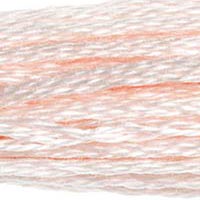
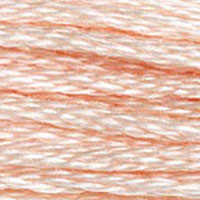
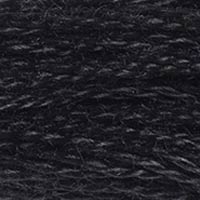
DMC colors commonly used alongside 3945 Very Light Jade Green.
Suggested Palette

Detailed Conversions
Where to Buy DMC 3945
This section contains affiliate links. We may earn a small commission at no cost to you.
Related Guides
Free Printable Thread Conversion Chart
Pick a brand, enter your email, and we'll send you a printable chart mapping all 552 DMC colors to that brand's equivalents. Zero spam, one chart.
Thanks! Here's your free chart:
Download Your ChartOpens in a new tab. Use your browser's Print → Save as PDF.
No spam. Your email is stored securely and never shared.