
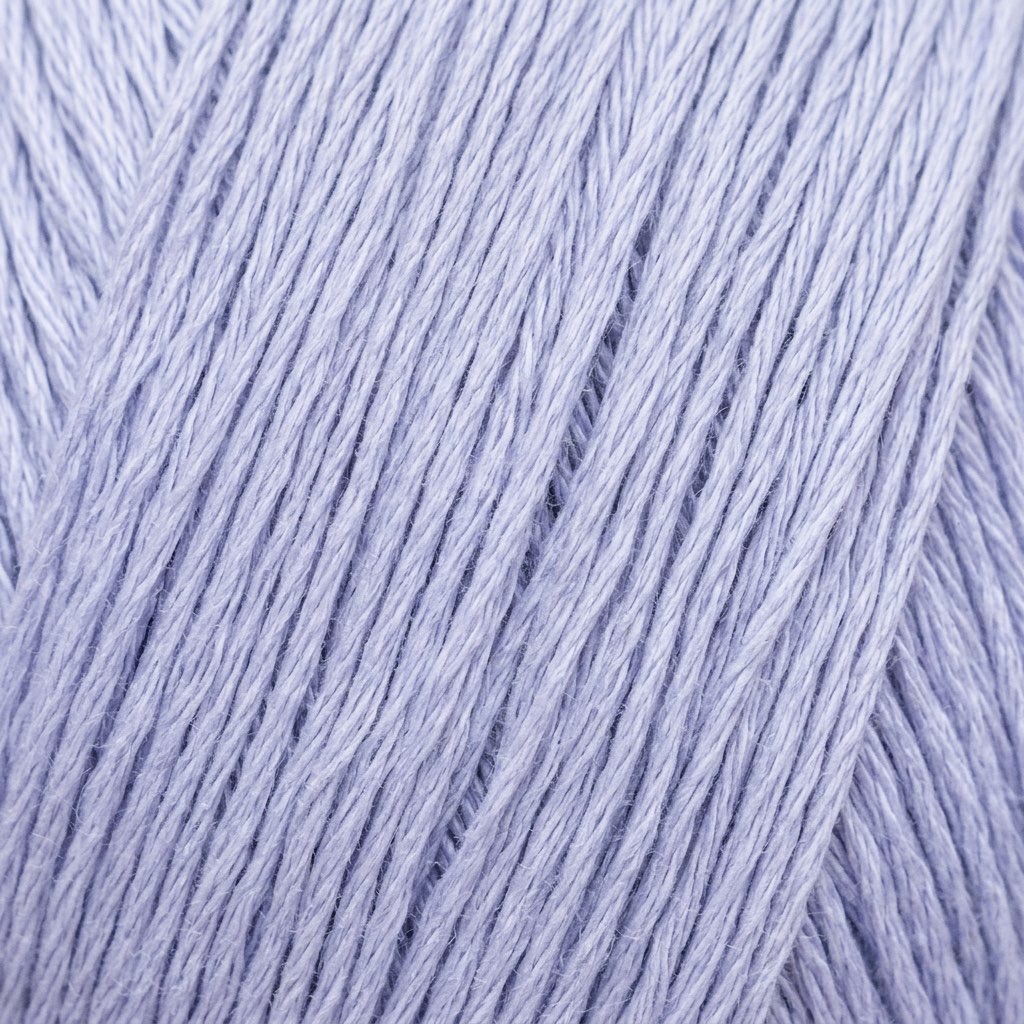
DMC 3930 — Ultra Light Lavender Blue
Purples family · Hex #D8D8F0
Quick Conversion Table
| Brand | Equivalent | Match |
|---|---|---|
| Anchor | 342 | close |
| Madeira | 0801 | close |
| Cosmo ⚠ | 285 | close |
| Sullivans | 45424 | close |
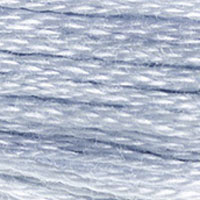
Some colors are defined by what they're not. DMC 3930 Ultra Light Lavender Blue is not quite lavender, not quite blue, not quite grey — it lives in the liminal space between all three. On the skein it looks almost like a trick of light: pale enough to be mistaken for white in low-contrast situations, but with a definite presence when stitched next to true neutrals. Working with 3930 teaches you something about how the eye processes very pale colors, and why they matter so much in finished pieces.
The Role of Ultra-Light Values
Ultra-light colors like 3930 function differently than their darker relatives. They rarely anchor a design — instead, they lift it. In needlework, the most convincing sense of light and three-dimensionality comes from having a true highlight value, not just a medium-light. When you're building a gradient from deep violet like DMC 550 (Very Dark Violet) through DMC 553 (Violet) and DMC 554 (Light Violet), eventually you need something barely-there for the point where light bleaches the color out. DMC 3930 is that final step.
Similarly, on sky backgrounds, 3930 appears in the portion of the sky closest to the horizon on clear days — where the deep cerulean blue above grades into near-white near the ground. Stitching these gradient skies with railroading can help the individual stitches align and reduce the visible texture that would otherwise break up the smooth transition.
Fabric Behavior on Different Grounds
On white or natural Aida and evenweave, 3930 requires more stitches than you'd expect to achieve satisfactory coverage — its low contrast with light fabric means the ground color bleeds through if you're not working with adequate strand count or tight tension. This is where going up a strand count (3 strands on 14-count instead of 2) can help, though it changes the overall texture of the piece. On antique or tea-dyed linen, the contrast improves significantly and the thread reads more distinctly.
On darker fabrics — navy, black, deep plum — 3930 transforms completely. It reads as a soft, luminous lilac that can be genuinely striking, particularly in night sky designs, galaxy patterns, and any design depicting light sources against darkness. The thread's paleness, which can be a liability on light fabric, becomes its greatest asset on dark ground.
Companion Colors and Palette Building
DMC 3930 pairs most naturally with DMC 341 (Light Blue Violet) and DMC 340 (Medium Blue Violet) as stepping stones toward deeper color. For a soft lavender-and-white palette suitable for baby items, wedding samplers, or delicate botanical designs, it works alongside DMC 3743 (Very Light Antique Violet) and DMC 3042 (Light Antique Violet) — both of which share the dusty, slightly greyed quality that keeps the palette cohesive rather than garish.
In SALs featuring large-scale floral designs, 3930 appears frequently as the sky or mist color in the background, creating visual breathing room between the busy foreground elements. It's one of those threads experienced stitchers stock a couple of spares of, because running out of the lightest shade at a critical moment is frustrating in a way that running out of a dark color isn't — you can always substitute down from a darker value, but you can't fabricate a convincing lighter one from nothing.
Ultra-light shades are among the harder ones to substitute precisely, because small tonal shifts are highly visible against light fabric and in gradient work. Anchor 342 is the recommended match and performs reasonably well, though it may run very slightly cooler (more blue, less lavender). In broad gradient work this is imperceptible; in precise technical applications, check it against your existing threads before committing.
Madeira 0801 tracks closely and has the consistent dye lot reliability you want when ordering multiples. Madeira's ultra-light shades sometimes appear slightly grayer in the skein than when stitched — stitch a test patch to see the true color before deciding.
Cosmo 285 is a serviceable option that many stitchers find readily available through online retailers. The color sits in essentially the same pale lavender-blue register as the DMC original. Cosmo's thread tends toward slightly different texture than DMC, which can be noticeable on fine evenweave but rarely matters on Aida.
Sullivans 45424 is suitable for less exacting projects. If 3930 appears in just a few stitches in your pattern — a small highlight accent or border detail — the Sullivans option is perfectly adequate. For designs where this shade covers significant area or anchors a gradient, the more precise match from the premium brands is worth the extra cost.
If you need to mix toward something even lighter than 3930, stitching one strand of 3930 with one strand of white (DMC B5200 or DMC Blanc) in a blended needle creates a near-white with just enough violet character to read distinctly against true white Aida.
Reference quality
How We Validate This Color Record
Use this page as a reference card for DMC 3930: the structured data, quick conversions, and long-form copy are all tied back to the same stored color record.
- Methodology
- This page renders DMC 3930, its hex value, and every brand equivalent from the site's source-of-truth color record, then checks long-form body copy against those same stored fields.
- Verification status
- Source-field checked. The page content is audited against the stored DMC number, brand equivalents, and match-quality labels before publishing.
- Last reviewed
- 2026-04-20
- Approximation warning
- Screen hex values, thread photos, and cross-brand conversions are reference aids. Dye lots, thread sheen, and fabric color can still shift the result in hand.
Decision guide
When to use the DMC 3930 reference page
This page should help you decide faster between palette planning, brand substitution, and shade comparison without turning the color record into a thin lookup page.
Best for
- + Palette planning when you want the stored DMC 3930 Ultra Light Lavender Blue record, hex value #D8D8F0, and linked brand equivalents in one place.
- + Checking the quickest cross-brand shortlist before you buy floss, compare stash substitutes, or route into a more specific conversion page.
- + Finding nearby shades in the purples family before you commit to accents, shading, or background blends.
Watch for
- ! Screen previews are only reference aids. Ultra Light Lavender Blue can shift on real fabric because thread sheen, stitch coverage, and room lighting change how the color reads.
- ! A stored equivalent is still a shortlist, not a guarantee that two brands will disappear into each other in the same stitched motif.
- ! Older charts, discontinued kit floss, and dye-lot variation can all introduce small but visible differences that the page cannot detect for you.
Before you commit
- Confirm the role of DMC 3930 Ultra Light Lavender Blue: decide whether you need an exact hero shade, a forgiving background, or a rough stash substitute.
- Compare on project fabric: view the skein or stitched sample on the same fabric count and color you will actually use.
- Use the linked conversion pages next: open the brand-specific pages when you need match-quality caveats before substituting away from the DMC reference.
DMC 3930 FAQ
These questions appear on the page so the FAQ schema stays aligned with what visitors can actually read.
What is the Anchor equivalent of DMC 3930?+
The closest Anchor equivalent to DMC 3930 (Ultra Light Lavender Blue) is Anchor 342. This is a close match.
What color is DMC 3930?+
DMC 3930 is called "Ultra Light Lavender Blue" and has a hex color value of #D8D8F0. It belongs to the purples color family.
What is the Madeira equivalent of DMC 3930?+
The closest Madeira equivalent to DMC 3930 (Ultra Light Lavender Blue) is Madeira 0801. This is a close match.
How DMC 3930 Looks on Fabric
The same thread appears different depending on your fabric. Always test on your project fabric.
White Aida
Cream / Ecru
Black Aida
Pairs Well With
DMC colors commonly used alongside 3930 Ultra Light Lavender Blue.
Suggested Palette
Shading Companions
Detailed Conversions
Where to Buy DMC 3930
This section contains affiliate links. We may earn a small commission at no cost to you.
Related Guides
Free Printable Thread Conversion Chart
Pick a brand, enter your email, and we'll send you a printable chart mapping all 552 DMC colors to that brand's equivalents. Zero spam, one chart.
Thanks! Here's your free chart:
Download Your ChartOpens in a new tab. Use your browser's Print → Save as PDF.
No spam. Your email is stored securely and never shared.