
Quick Conversion Table
| Brand | Equivalent | Match |
|---|---|---|
| Anchor | 5975 | close |
| Madeira | 0401 | close |
| Cosmo ⚠ | 466 | close |
| Sullivans | 45427 | close |
| J&P Coats | 2975 | close |
| Dimensions | 12975 | close |
| Bucilla | 3830 | close |
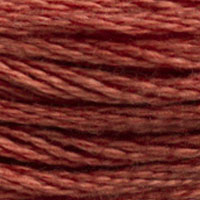
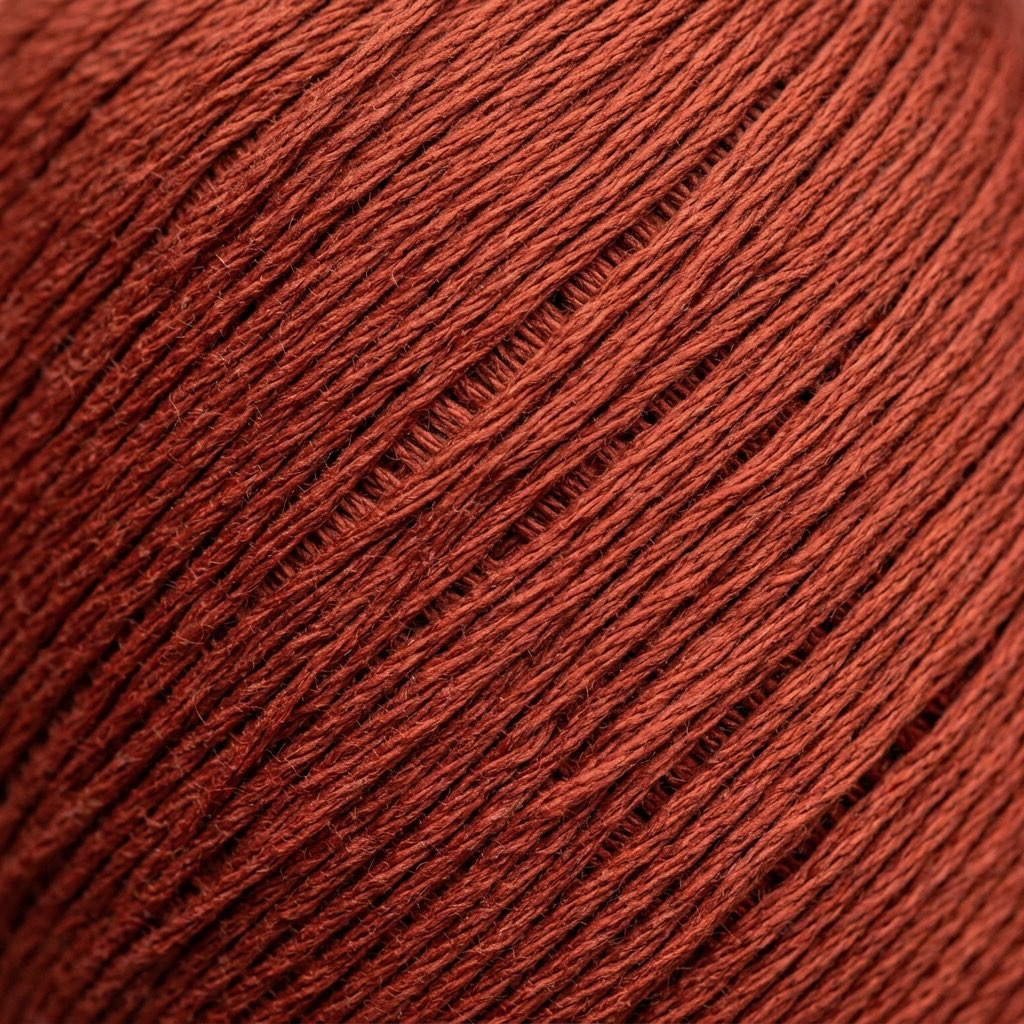
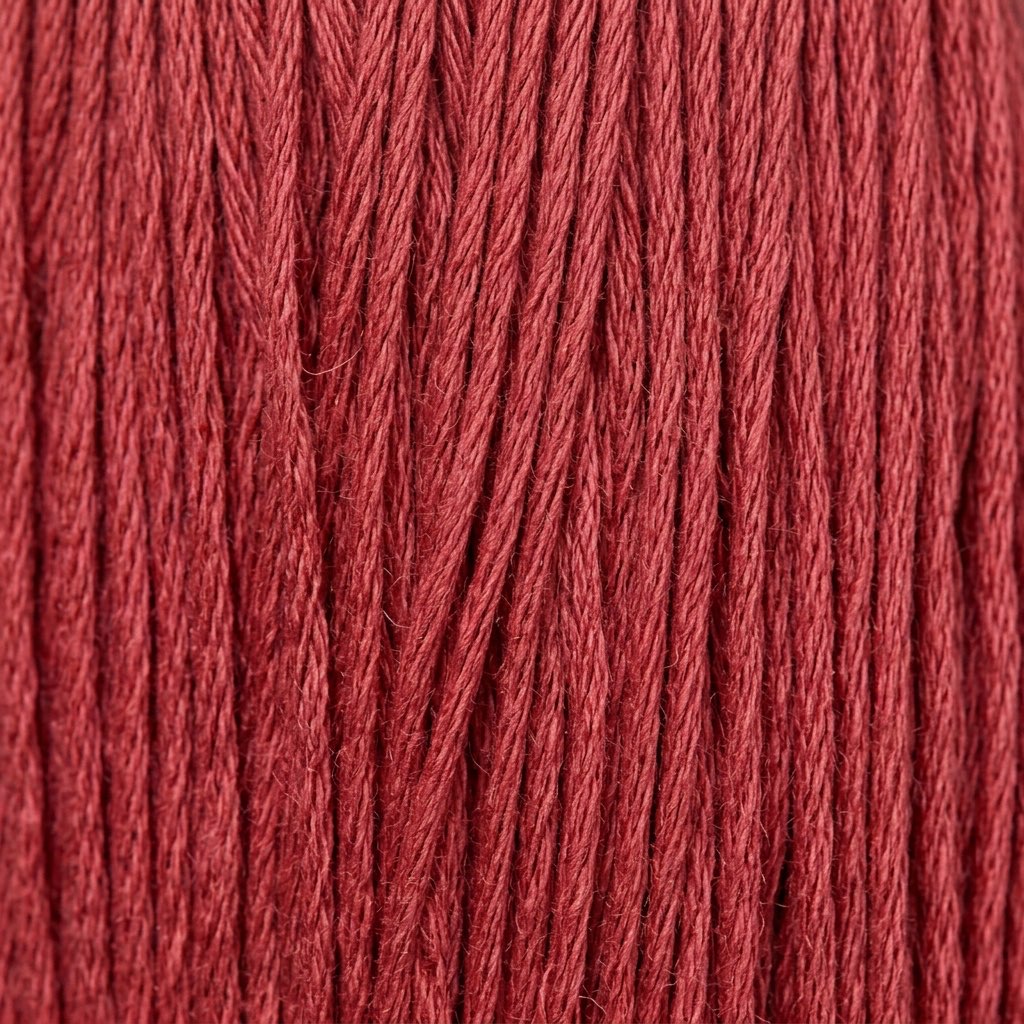
If you look at the DMC numbering scheme for the terra cotta family, DMC 3830 sits as the 'plain' member — not 'light,' not 'very dark,' not 'ultra very' anything. Just Terra Cotta. This suggests it's the reference point: the color that defines what the family is and that all the qualified versions are measured against. At hex #BC5544, it earns that central position: a medium-warm, moderately saturated red-orange-brown that reads unmistakably as fired clay. Not too red, not too brown, not too orange — this is terra cotta as the potter's wheel produces it, neither in shadow nor in full highlight.
The color's history as a material is ancient and global. Terra cotta translates literally as 'baked earth' in Italian, and fired red clay artifacts appear in archaeological records from China, India, Greece, Rome, Mesoamerica, and sub-Saharan Africa. No color is more fundamentally human craft than this. When you work with DMC 3830, you're working with a color that literally helped make civilization possible.
Pottery and Craft Object Representation
Cross-stitch designs featuring pottery, ceramics, clay pots, and artisan craft objects are a natural home for this thread. Garden scenes with clay flowerpots use DMC 3830 as the primary pot color — with DMC 3777 (Very Dark Terra Cotta) for shadows in the pot's interior and shadowed rim areas, and DMC 3778 (Light Terra Cotta) for the lighter, sun-facing sides. The three together create convincing clay pot texture that reads as dimensional.
Southwest American and Mediterranean-influenced design themes use terra cotta extensively — it's one of the defining colors of adobe architecture, Mexican tile work, Moorish-influenced Spanish design, and Greek island aesthetics. Any design drawing on these traditions can use DMC 3830 with confidence that it reads as culturally appropriate and visually accurate.
Autumn and Earth-Toned Palettes
In autumn-themed cross-stitch, terra cotta plays a different role from the orange-browns. Where DMC 3776 (Light Mahogany) and the pumpkin range read as harvest-orange, terra cotta reads as earth — the underlying ground color that roots the composition, the dried-clay warmth that autumn brings as the year turns toward its close. Terra cotta autumn palettes feel different from pumpkin autumn palettes — quieter, more grounded, less festively orange.
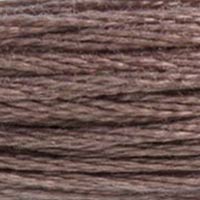
Pairing DMC 3830 with DMC 3768 (Dark Gray Green) creates one of the most satisfying natural complementary pairings in the DMC range — the warm red-orange-brown against the cool gray-green is visually balanced and reads as very contemporary, exactly the kind of palette that appears in current interior design and botanical illustration. Add DMC 3774 (Very Light Desert Sand) as a neutral pale accent and you have a complete modern palette built from three threads.
Folk Art and International Design
Mexican folk embroidery-influenced cross-stitch — a growing genre with distinctive bold, colorful designs — uses terra cotta as one of its characteristic colors alongside vivid turquoises, greens, and yellows. Romanian and Bulgarian folk patterns use similar warm red-oranges. West African kente-inspired textile designs use this color range in their warm stripe sequences. DMC 3830 functions in all these traditions as the 'warm earth' color that grounds more vivid accents.
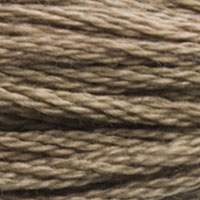
One underappreciated application: sepia-toned portrait and historical scene work. Using a limited palette of terra cotta family threads with DMC 3782 (Light Mocha Brown) and DMC 3774 (Very Light Desert Sand) creates a sepia effect that reads as genuinely old-photograph quality rather than merely brownish. DMC 3830 at the darkest end of such a palette provides the depth that prevents the composition from looking washed out.
No brand offers an exact match for DMC 3830 — Anchor 5975, Madeira 0401, Cosmo 466, and Sullivans 45427 are all rated close. In the terra cotta range, this is unfortunately the norm — the specific red-orange-brown balance is difficult to replicate exactly across brand boundaries.
Anchor 5975 is the most commonly used substitute. It reads accurately in most contexts, though some stitchers note it sits slightly more red and slightly less brown than DMC 3830 in direct comparison — a touch more vivid-red, a touch less earthy. In designs where the earthy quality is important (archaeological and architectural themes), this shift can be noticeable. In folk art and floral contexts where a slightly more vivid terra cotta is actually welcome, Anchor 5975 can look quite good.
Madeira 0401 is rated close and is a workable substitute in most contexts. Like the Anchor equivalent, it can read slightly differently in the red-orange balance depending on the dye lot. Cosmo 466 and Sullivans 45427 are both acceptable with the usual caveats.
Within the DMC range, the terra cotta family is its own best resource for alternatives. DMC 3778 (Light Terra Cotta) goes one step lighter. DMC 356 (Medium Terra Cotta) provides a slightly different position in the mid-range. DMC 3777 (Very Dark Terra Cotta) is the shadow anchor. If the terra cotta family itself is unavailable, DMC 3830's nearest relatives outside the family are DMC 355 (Dark Terra Cotta) in the adjacent brick-red range, and DMC 3773 (Desert Sand) for the golden-brown adjacent territory.
Reference quality
How We Validate This Color Record
Use this page as a reference card for DMC 3830: the structured data, quick conversions, and long-form copy are all tied back to the same stored color record.
- Methodology
- This page renders DMC 3830, its hex value, and every brand equivalent from the site's source-of-truth color record, then checks long-form body copy against those same stored fields.
- Verification status
- Source-field checked. The page content is audited against the stored DMC number, brand equivalents, and match-quality labels before publishing.
- Last reviewed
- 2026-04-20
- Approximation warning
- Screen hex values, thread photos, and cross-brand conversions are reference aids. Dye lots, thread sheen, and fabric color can still shift the result in hand.
Decision guide
When to use the DMC 3830 reference page
This page should help you decide faster between palette planning, brand substitution, and shade comparison without turning the color record into a thin lookup page.
Best for
- + Palette planning when you want the stored DMC 3830 Terra Cotta record, hex value #BC5544, and linked brand equivalents in one place.
- + Checking the quickest cross-brand shortlist before you buy floss, compare stash substitutes, or route into a more specific conversion page.
- + Finding nearby shades in the reds family before you commit to accents, shading, or background blends.
Watch for
- ! Screen previews are only reference aids. Terra Cotta can shift on real fabric because thread sheen, stitch coverage, and room lighting change how the color reads.
- ! A stored equivalent is still a shortlist, not a guarantee that two brands will disappear into each other in the same stitched motif.
- ! Older charts, discontinued kit floss, and dye-lot variation can all introduce small but visible differences that the page cannot detect for you.
Before you commit
- Confirm the role of DMC 3830 Terra Cotta: decide whether you need an exact hero shade, a forgiving background, or a rough stash substitute.
- Compare on project fabric: view the skein or stitched sample on the same fabric count and color you will actually use.
- Use the linked conversion pages next: open the brand-specific pages when you need match-quality caveats before substituting away from the DMC reference.
DMC 3830 FAQ
These questions appear on the page so the FAQ schema stays aligned with what visitors can actually read.
What is the Anchor equivalent of DMC 3830?+
The closest Anchor equivalent to DMC 3830 (Terra Cotta) is Anchor 5975. This is a close match.
What color is DMC 3830?+
DMC 3830 is called "Terra Cotta" and has a hex color value of #BC5544. It belongs to the reds color family.
What is the Madeira equivalent of DMC 3830?+
The closest Madeira equivalent to DMC 3830 (Terra Cotta) is Madeira 0401. This is a close match.
How DMC 3830 Looks on Fabric
The same thread appears different depending on your fabric. Always test on your project fabric.
White Aida
Cream / Ecru
Black Aida
Pairs Well With
DMC colors commonly used alongside 3830 Terra Cotta.
Suggested Palette
Shading Companions
Detailed Conversions
Where to Buy DMC 3830
This section contains affiliate links. We may earn a small commission at no cost to you.
Related Guides
Free Printable Thread Conversion Chart
Pick a brand, enter your email, and we'll send you a printable chart mapping all 552 DMC colors to that brand's equivalents. Zero spam, one chart.
Thanks! Here's your free chart:
Download Your ChartOpens in a new tab. Use your browser's Print → Save as PDF.
No spam. Your email is stored securely and never shared.