
DMC 150 — Ultra Very Dark Dusty Rose
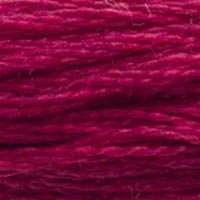
Pinks family · Hex #AB0249
Quick Conversion Table
| Brand | Equivalent | Match |
|---|---|---|
| Anchor | 59 | close |
| Madeira | 0506 | close |
| Cosmo ⚠ | 120 | close |
| Sullivans | 45465 | close |
| J&P Coats | 3047 | close |
| Dimensions | 13065 | close |
The Deepest Dusty Rose That Isn't Red
DMC's naming convention can feel excessive sometimes — "Ultra Very Dark" is a mouthful, the kind of modifier pile-up that suggests someone at the factory ran out of vocabulary. But pull a strand of 150 from the skein and the name makes sense. This is as far as dusty rose can go toward darkness before it stops being pink and becomes something else entirely. It's the shadow at the heart of a deep red rose just before the petals close. The stain on a wine-soaked tablecloth. The last visible warmth in a winter sunset before the sky goes purple and then dark.
What separates 150 from the reds in the DMC range is its underlying blue-pink character. Place it next to DMC 321 (Red) or DMC 498 (Dark Red) and you immediately see the difference: those threads are warm, orange-biased reds. DMC 150 leans cool, pulling toward berry and magenta rather than toward fire and tomato. That cool bias gives it a completely different personality in a palette — where warm reds advance and dominate, 150 has a recessive sophistication. It's intense without being aggressive.
This distinction matters enormously in floral work. If you're stitching roses and need the darkest shadow in the petal folds, the choice between a warm dark red and 150 determines whether your rose reads as a classic red garden variety or a deep, dusky pink cabernet rose. Neither is wrong, but they're different flowers. Pair 150 with DMC 3350 (Ultra Dark Dusty Rose), DMC 3731 (Very Dark Dusty Rose), and DMC 3354 (Light Dusty Rose) to build a complete dusty rose gradient from deepest shadow to light highlight — a family that stays cohesive because they all share that cool, muted pink DNA.
Breast Cancer Awareness and Pink Ribbon Stitching
The pink ribbon movement has created an entire category of cross-stitch and embroidery design, and the shade of pink matters. The official pink ribbon is a particular medium-light pink, but designs built around the theme often incorporate a range of pink values for depth and visual interest. DMC 150 serves as the anchor dark in these palettes — the shadow behind the ribbon's folds, the outline that gives the symbol definition, the darkest value in a gradient that moves through DMC 3731 and 3354 up to DMC 151 (Very Light Dusty Rose) at the lightest end.
For awareness-themed pieces destined for charity auctions or fundraiser gifts, 150's richness adds gravity. A pink ribbon stitched entirely in light pink can look delicate to the point of insubstantial. Adding 150 for the darkest contour lines and shadow areas gives the design weight and presence — appropriate for a symbol that carries real emotional significance for many stitchers.
Cool Fuchsia Territory and Color Placement
On the spectrum from cool fuchsia to warm salmon, DMC 150 sits firmly at the cool end. It's almost a berry — not quite purple enough to be plum, not quite red enough to be crimson, hovering in that blue-pink zone that color theorists call magenta-adjacent. This makes it a surprisingly versatile dark when you need cool contrast.
In a Valentine's Day palette, 150 provides the depth that lighter pinks need for structure. Hearts, roses, and romantic borders gain definition and dimension when 150 handles the darkest areas. It reads as passionate without the warmth of red — more moody, more complex, the kind of romantic feeling that belongs in a love poem rather than on a greeting card. Pair it with DMC 3716 (Very Light Dusty Rose) and DMC 818 (Baby Pink) for a gradient that moves from this brooding dark into soft, blushing light.
On white Aida, 150 looks striking — maximum contrast, bold and defined. On cream or antique fabric, it softens slightly and gains warmth from the background, which can actually push it closer to a true berry tone. On darker fabrics or in designs where 150 is backstitched around lighter pinks, its cool intensity creates clean, dramatic outlines that hold their own without the heaviness of black backstitch.
Matching the Berry Without Losing the Dust
The word "dusty" in dusty rose refers to that greyed, muted quality that prevents the pink from reading as bright or neon. At this dark value, the dustiness manifests as a slightly muted saturation — 150 is rich and deep, but it's not electric. A substitute that's too clean and vivid will jump forward in the design rather than anchoring the shadows.
Madeira 0506 is rated as an exact match and delivers well — it captures the deep berry-pink with appropriate muting. This should be your first choice if DMC 150 isn't available. Anchor 59 is close and reliable, though some stitchers report that Anchor's version can carry a touch more blue, pushing it slightly further toward true magenta. For most applications, this difference is invisible in the finished piece, but if you're building a tight gradient with other DMC dusty rose threads, test the Anchor against your adjacent colors to make sure the transitions stay smooth.
Cosmo 120 sits in the right neighborhood but may lean slightly warmer. Sullivans 45465 is another close option worth evaluating. With any substitute at this depth of color, check for colorfastness before washing — very dark pinks can be prone to bleeding, and brands handle dye fixation differently. A quick soak test on a scrap length of thread can save you heartbreak on a finished piece.
Within DMC's own range, DMC 3350 (Ultra Dark Dusty Rose) is the closest neighbor — slightly lighter and marginally less cool, but from the same family. If 150 is unavailable and you're willing to accept a shade shift, 3350 can step in for most applications without breaking the palette. Avoid reaching for DMC 326 (Very Dark Rose) as a substitute; despite its name similarity, it's a warmer, less muted thread that belongs to a different color family entirely.
Reference quality
How We Validate This Color Record
Use this page as a reference card for DMC 150: the structured data, quick conversions, and long-form copy are all tied back to the same stored color record.
- Methodology
- This page renders DMC 150, its hex value, and every brand equivalent from the site's source-of-truth color record, then checks long-form body copy against those same stored fields.
- Verification status
- Source-field checked. The page content is audited against the stored DMC number, brand equivalents, and match-quality labels before publishing.
- Last reviewed
- 2026-04-20
- Approximation warning
- Screen hex values, thread photos, and cross-brand conversions are reference aids. Dye lots, thread sheen, and fabric color can still shift the result in hand.
Decision guide
When to use the DMC 150 reference page
This page should help you decide faster between palette planning, brand substitution, and shade comparison without turning the color record into a thin lookup page.
Best for
- + Palette planning when you want the stored DMC 150 Ultra Very Dark Dusty Rose record, hex value #AB0249, and linked brand equivalents in one place.
- + Checking the quickest cross-brand shortlist before you buy floss, compare stash substitutes, or route into a more specific conversion page.
- + Finding nearby shades in the pinks family before you commit to accents, shading, or background blends.
Watch for
- ! Screen previews are only reference aids. Ultra Very Dark Dusty Rose can shift on real fabric because thread sheen, stitch coverage, and room lighting change how the color reads.
- ! A stored equivalent is still a shortlist, not a guarantee that two brands will disappear into each other in the same stitched motif.
- ! Older charts, discontinued kit floss, and dye-lot variation can all introduce small but visible differences that the page cannot detect for you.
Before you commit
- Confirm the role of DMC 150 Ultra Very Dark Dusty Rose: decide whether you need an exact hero shade, a forgiving background, or a rough stash substitute.
- Compare on project fabric: view the skein or stitched sample on the same fabric count and color you will actually use.
- Use the linked conversion pages next: open the brand-specific pages when you need match-quality caveats before substituting away from the DMC reference.
DMC 150 FAQ
These questions appear on the page so the FAQ schema stays aligned with what visitors can actually read.
What is the Anchor equivalent of DMC 150?+
The closest Anchor equivalent to DMC 150 (Ultra Very Dark Dusty Rose) is Anchor 59. This is a close match.
What color is DMC 150?+
DMC 150 is called "Ultra Very Dark Dusty Rose" and has a hex color value of #AB0249. It belongs to the pinks color family.
What is the Madeira equivalent of DMC 150?+
The closest Madeira equivalent to DMC 150 (Ultra Very Dark Dusty Rose) is Madeira 0506. This is a close match.
How DMC 150 Looks on Fabric
The same thread appears different depending on your fabric. Always test on your project fabric.
White Aida
Cream / Ecru
Black Aida
Pairs Well With
DMC colors commonly used alongside 150 Ultra Very Dark Dusty Rose.
Suggested Palette
Shading Companions
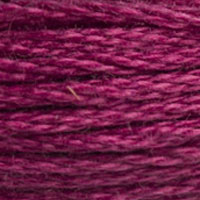
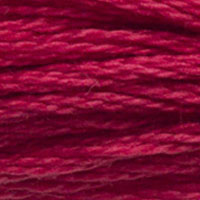
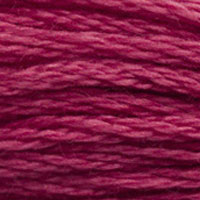
Detailed Conversions
Where to Buy DMC 150
This section contains affiliate links. We may earn a small commission at no cost to you.
Related Guides
Free Printable Thread Conversion Chart
Pick a brand, enter your email, and we'll send you a printable chart mapping all 552 DMC colors to that brand's equivalents. Zero spam, one chart.
Thanks! Here's your free chart:
Download Your ChartOpens in a new tab. Use your browser's Print → Save as PDF.
No spam. Your email is stored securely and never shared.