
Quick Conversion Table
| Brand | Equivalent | Match |
|---|---|---|
| Anchor | 1218 | close |
| Madeira | 2210 | close |
| Cosmo ⚠ | 2585 | close |
| Sullivans | 45224 | close |
Variegated Mustard: DMC 111 and the Art of Letting Thread Do the Work
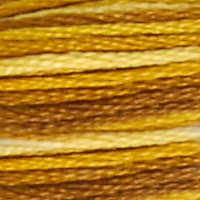
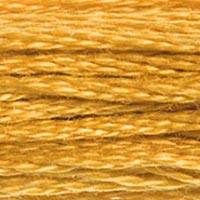
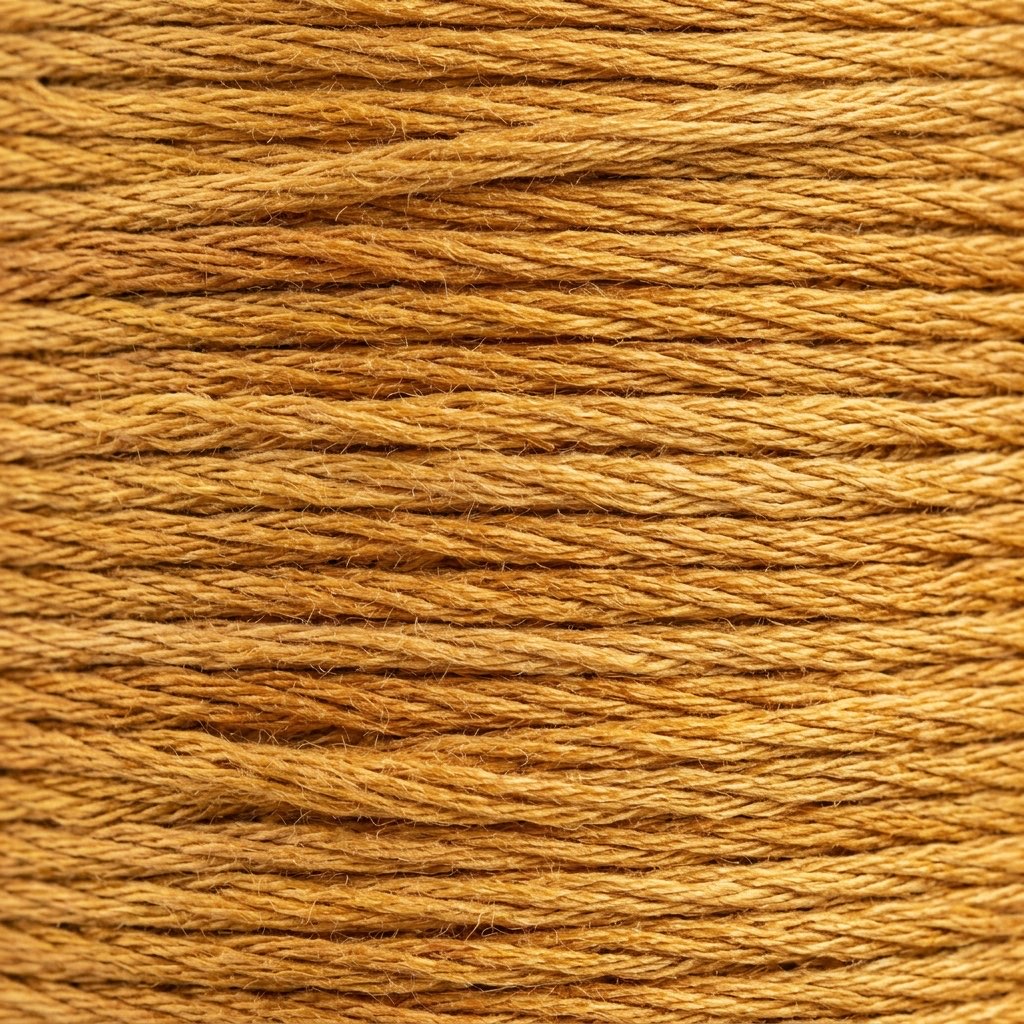
Variegated threads are a different animal entirely from their solid-color cousins, and DMC 111 Variegated Mustard is one of those skeins that either excites you or terrifies you — sometimes both at once. This thread shifts through a range of warm mustard tones, from a medium golden amber down to a darker, almost burnt sienna-edged ochre. The transitions happen gradually along the strand, creating an organic, painterly quality that no amount of careful color-changing with solid flosses can replicate.
The magic of 111 lies in its unpredictability. When you stitch a field of sunflowers, the petals won't look uniformly colored the way they would with solid DMC 783 (Medium Topaz) or DMC 729 (Medium Old Gold). Instead, each petal catches a different part of the color gradient, creating depth and movement that mimics how real sunflower petals catch light at slightly different angles. It's especially effective on larger motifs where the eye can absorb the gentle shifts — on tiny details, the variation can read as muddy rather than artistic.
Working With Variegated Thread: Technique Matters
Here's where DMC 111 demands a different approach from your usual stitching routine. Cross-country stitching — where you complete each X before moving to the next — tends to produce the most natural-looking results with variegated thread. The Danish method, where you stitch a row of half-crosses and then return, can create visible striping that may or may not be what you want. Some stitchers love that striped effect for geometric patterns, but for organic subjects like autumn leaves or wheat fields, the more random distribution of cross-country is usually preferable.
Needle length also matters more than you might expect. Because the color shifts occur at regular intervals along the strand, cutting longer or shorter lengths changes which colors appear in your stitches. Some experienced stitchers deliberately vary their thread length to control the color distribution — shorter lengths for more concentrated color patches, longer lengths for smoother transitions.
Where Variegated Mustard Shines
Autumn-themed projects are the obvious home for DMC 111, and it earns its place there honestly. Leaf designs, harvest scenes, and pumpkin patches all benefit from its warm tonal range. But consider it also for less obvious applications: the body of a honeybee, the sandy coat of a retriever, the weathered wood of a barn, or the glowing center of a flickering candle flame. Any subject that would naturally show variation within a single warm tone is a candidate.
On fabric choice, variegated threads interact with background color differently than solids. On white Aida, DMC 111 shows maximum contrast between its light and dark phases. On cream or natural linen, the lightest parts of the variegation can nearly disappear, which creates an interesting faded, antique quality. On oatmeal or tan evenweave, you get something almost like a camouflage effect — the thread seems to emerge from and recede into the fabric in a very organic way.
Pair DMC 111 with solid companions like DMC 3829 (Very Dark Old Gold) for shadows and DMC 3822 (Light Straw) for highlights to create an autumn palette that has both the organic variation of the variegated and the stability of defined lights and darks. Adding DMC 3371 (Black Brown) for backstitch outlines grounds the whole composition.
Finding Alternatives to DMC 111 Variegated Mustard
Substituting variegated threads is genuinely harder than matching solid colors. It's not just the hue you need to match — it's the rate of color change, the range of the gradient, and the specific tones at each end of the shift.
Anchor 1218 is listed as a close match, and it captures the general mustard-to-amber range reasonably well. Anchor's variegated threads tend to have slightly more abrupt color transitions than DMC's, which creates a more defined banding effect. Whether that's better or worse depends entirely on your project.
Madeira 2210 is also a close match. Madeira's variegated range has a reputation for smoother, more subtle transitions, so if you prefer a gentler gradient, this may actually be an upgrade for certain projects.
Cosmo 2585 offers a close approximation, though Cosmo's variegated threads can lean slightly cooler in their mustard tones. Hold them side by side before committing.
If you can't find any variegated match and need to fake it, consider using a blended needle technique with two strands of different solid DMC colors — one strand of DMC 729 (Medium Old Gold) paired with one strand of DMC 782 (Dark Topaz) creates a reasonable approximation of the color range, though without the gradual shifts.
Some stitchers report success with hand-overdyed threads from indie dyers as substitutes for DMC variegated colors. The results can be gorgeous but less predictable, so buy extra.
Reference quality
How We Validate This Color Record
Use this page as a reference card for DMC 111: the structured data, quick conversions, and long-form copy are all tied back to the same stored color record.
- Methodology
- This page renders DMC 111, its hex value, and every brand equivalent from the site's source-of-truth color record, then checks long-form body copy against those same stored fields.
- Verification status
- Source-field checked. The page content is audited against the stored DMC number, brand equivalents, and match-quality labels before publishing.
- Last reviewed
- 2026-04-20
- Approximation warning
- Screen hex values, thread photos, and cross-brand conversions are reference aids. Dye lots, thread sheen, and fabric color can still shift the result in hand.
Decision guide
When to use the DMC 111 reference page
This page should help you decide faster between palette planning, brand substitution, and shade comparison without turning the color record into a thin lookup page.
Best for
- + Palette planning when you want the stored DMC 111 Variegated Mustard record, hex value #C89030, and linked brand equivalents in one place.
- + Checking the quickest cross-brand shortlist before you buy floss, compare stash substitutes, or route into a more specific conversion page.
- + Finding nearby shades in the yellows family before you commit to accents, shading, or background blends.
Watch for
- ! Screen previews are only reference aids. Variegated Mustard can shift on real fabric because thread sheen, stitch coverage, and room lighting change how the color reads.
- ! A stored equivalent is still a shortlist, not a guarantee that two brands will disappear into each other in the same stitched motif.
- ! Older charts, discontinued kit floss, and dye-lot variation can all introduce small but visible differences that the page cannot detect for you.
Before you commit
- Confirm the role of DMC 111 Variegated Mustard: decide whether you need an exact hero shade, a forgiving background, or a rough stash substitute.
- Compare on project fabric: view the skein or stitched sample on the same fabric count and color you will actually use.
- Use the linked conversion pages next: open the brand-specific pages when you need match-quality caveats before substituting away from the DMC reference.
DMC 111 FAQ
These questions appear on the page so the FAQ schema stays aligned with what visitors can actually read.
What is the Anchor equivalent of DMC 111?+
The closest Anchor equivalent to DMC 111 (Variegated Mustard) is Anchor 1218. This is a close match.
What color is DMC 111?+
DMC 111 is called "Variegated Mustard" and has a hex color value of #C89030. It belongs to the yellows color family.
What is the Madeira equivalent of DMC 111?+
The closest Madeira equivalent to DMC 111 (Variegated Mustard) is Madeira 2210. This is a close match.
How DMC 111 Looks on Fabric
The same thread appears different depending on your fabric. Always test on your project fabric.
White Aida
Cream / Ecru
Black Aida
Pairs Well With
DMC colors commonly used alongside 111 Variegated Mustard.
Suggested Palette
Shading Companions
Detailed Conversions
Where to Buy DMC 111
This section contains affiliate links. We may earn a small commission at no cost to you.
Related Guides
Free Printable Thread Conversion Chart
Pick a brand, enter your email, and we'll send you a printable chart mapping all 552 DMC colors to that brand's equivalents. Zero spam, one chart.
Thanks! Here's your free chart:
Download Your ChartOpens in a new tab. Use your browser's Print → Save as PDF.
No spam. Your email is stored securely and never shared.