
Quick Conversion Table
| Brand | Equivalent | Match |
|---|---|---|
| Anchor | 1015 | exact |
| Madeira | 2502 | close |
| Cosmo ⚠ | 467 | close |
| Sullivans | 45390 | close |
| J&P Coats | 2339 | close |
| Dimensions | 12339 | close |
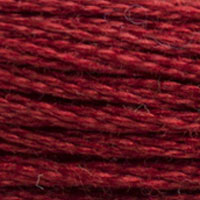
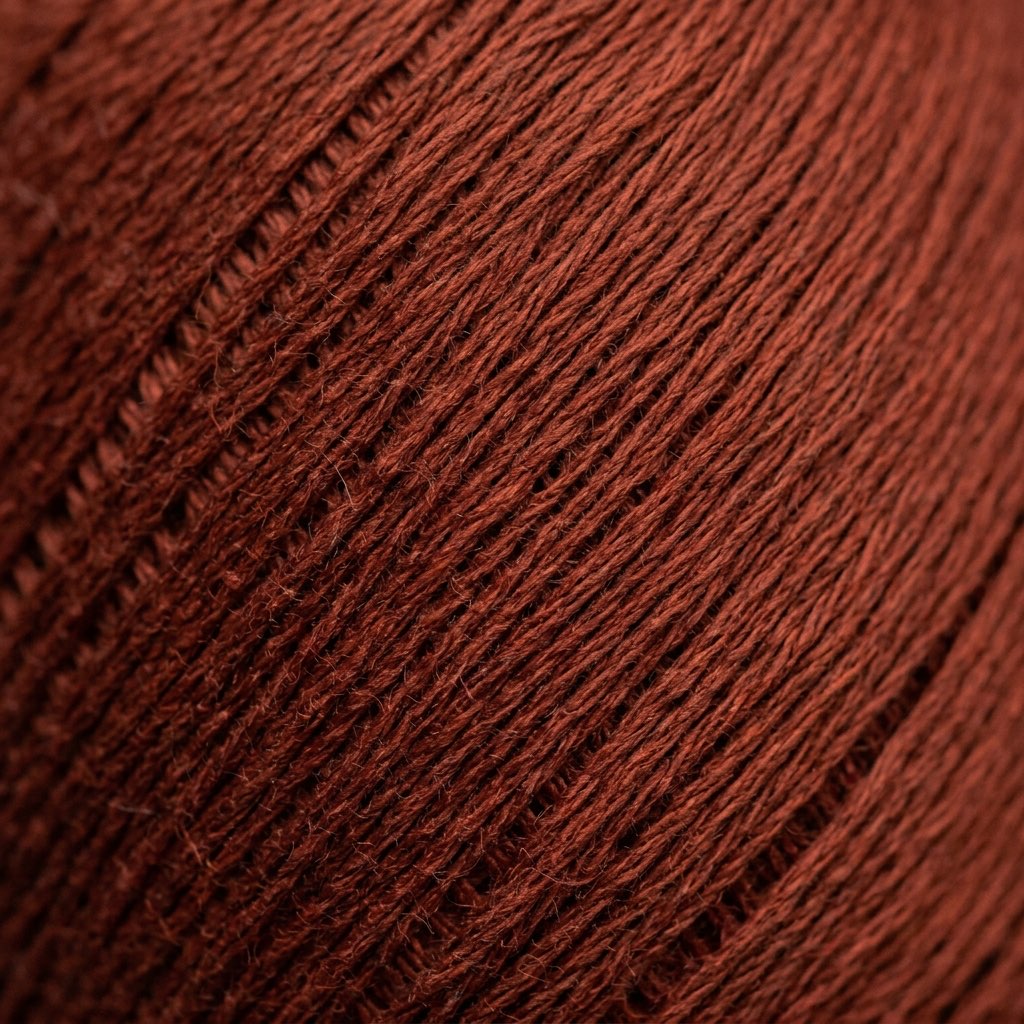
The debate about whether to use DMC 3777 or DMC 3371 (Black Brown) for dark outlining in earth-toned designs comes up regularly in cross-stitch communities. Both are dark, both read as near-black in certain contexts — but 3777 brings something 3371 can't: warmth. At hex #863022, Very Dark Terra Cotta is a deep, richly warm dark red-brown that reads as almost black in shadow positions while retaining the visual heat that makes warm-palette designs feel alive. Where 3371 cools and neutralizes, 3777 anchors without chilling.
This is a sophisticated thread precisely because of this functional ambiguity. Used as a solid color, it reads as a very dark, slightly wine-tinged terra cotta — dense, complex, unmistakably warm. Used as an outline or backstitch color in earthy designs, it disappears into near-darkness while maintaining the palette's warmth. Few threads serve both functions this well.
Historical and Cultural Context
Terra cotta as a material has one of the longest histories in human craft — unbaked clay fired into a reddish-brown ceramic has been used for pottery, architecture, and sculpture for millennia across nearly every culture. The color we call terra cotta references this material directly: the specific red-brown of iron-rich clay when fired. DMC 3777 represents the darkest, most saturated version of this color in the thread range — the shadow within the fired clay, the deep stoneware glaze, the color of ancient Roman roof tiles.
This association makes 3777 particularly appropriate in designs with historical or archaeological themes — ancient Roman, Greek, Mesoamerican, or North African inspired patterns where the terra cotta color palette is both aesthetically and historically accurate. Paired with DMC 3772 (Very Dark Desert Sand) and DMC 3774 (Very Light Desert Sand), it creates a palette that feels genuinely antique rather than artificially aged.
Practical Applications
In the terra cotta family, 3777 anchors the dark end and is most commonly used in shadow positions within that color family's shading sequences. The full range — from DMC 3771 (Ultra Very Light Terra Cotta) through DMC 3778 (Light Terra Cotta), DMC 356 (Medium Terra Cotta), and finally 3777 — gives you a complete value progression for realistic terra cotta representation in pottery, tile, architectural work, and earth-themed landscapes.
Outside the terra cotta family, 3777 finds use as a warm dark in autumn designs (where it represents the deepest shadow in fall foliage or seed pod arrangements), in portrait work for shadow positions in warm-toned darker skin, and as an outline/backstitch color in folk art designs where black would feel too stark and cold.
On natural linen, the warmth of 3777 integrates beautifully. It's a color that almost seems made for evenweave — the texture of the fabric and the depth of the thread create a richness together that flat Aida sometimes can't match. Recommended for heirloom-style or reproduction pieces where period-appropriate warmth matters.
Stash management note: DMC 3777 can be difficult to distinguish from DMC 355 (Dark Terra Cotta) and DMC 814 (Dark Garnet) in a dimly lit skein organizer. All three are dark red-browns in roughly the same value range. The easiest on-hand test: 3777 should read as the most distinctly brown of the three (less vivid-red than 814, slightly darker and less orange than 355). When in doubt, hold the skeins up to a window. Confusing these in your needle mid-project is the kind of mistake that causes expensive frogging.
Exact matches from both Anchor (1015) and Madeira (2502) are available for DMC 3777 — a welcome situation for a color often used in large quantities for outlining, shadow fills, and primary design elements. Both substitutes are reliable across dye lots in this dark range, where variation is generally less visible than in lighter colors.
Cosmo 467 is rated close. In practice it reads very similarly to DMC 3777 in most conditions, though some stitchers note it can sit slightly darker or slightly more burgundy-toned in certain dye lots. In backstitching and outline work where small quantities are used, this distinction rarely matters. In large fill areas, do a quick comparison first.
Sullivans 45390 is also rated close and is an acceptable substitute in most uses. Like many Sullivans equivalents, dye lot consistency can vary — check your specific skein if color accuracy is critical.
Within DMC, if 3777 is unavailable and you need its outline function, DMC 3371 (Black Brown) is the cooler alternative that many stitchers use interchangeably in outline positions — though be aware of the warmth difference this creates. DMC 814 (Dark Garnet) covers some of the same dark wine-red territory but with more red and less brown. DMC 3782 (Light Mocha Brown) is much lighter. For shadow positions specifically, DMC 839 (Dark Beige Brown) goes a different direction but can work in designs where warm dark neutrals are needed.
Reference quality
How We Validate This Color Record
Use this page as a reference card for DMC 3777: the structured data, quick conversions, and long-form copy are all tied back to the same stored color record.
- Methodology
- This page renders DMC 3777, its hex value, and every brand equivalent from the site's source-of-truth color record, then checks long-form body copy against those same stored fields.
- Verification status
- Source-field checked. The page content is audited against the stored DMC number, brand equivalents, and match-quality labels before publishing.
- Last reviewed
- 2026-04-20
- Approximation warning
- Screen hex values, thread photos, and cross-brand conversions are reference aids. Dye lots, thread sheen, and fabric color can still shift the result in hand.
Decision guide
When to use the DMC 3777 reference page
This page should help you decide faster between palette planning, brand substitution, and shade comparison without turning the color record into a thin lookup page.
Best for
- + Palette planning when you want the stored DMC 3777 Very Dark Terra Cotta record, hex value #863022, and linked brand equivalents in one place.
- + Checking the quickest cross-brand shortlist before you buy floss, compare stash substitutes, or route into a more specific conversion page.
- + Finding nearby shades in the reds family before you commit to accents, shading, or background blends.
Watch for
- ! Screen previews are only reference aids. Very Dark Terra Cotta can shift on real fabric because thread sheen, stitch coverage, and room lighting change how the color reads.
- ! A stored equivalent is still a shortlist, not a guarantee that two brands will disappear into each other in the same stitched motif.
- ! Older charts, discontinued kit floss, and dye-lot variation can all introduce small but visible differences that the page cannot detect for you.
Before you commit
- Confirm the role of DMC 3777 Very Dark Terra Cotta: decide whether you need an exact hero shade, a forgiving background, or a rough stash substitute.
- Compare on project fabric: view the skein or stitched sample on the same fabric count and color you will actually use.
- Use the linked conversion pages next: open the brand-specific pages when you need match-quality caveats before substituting away from the DMC reference.
DMC 3777 FAQ
These questions appear on the page so the FAQ schema stays aligned with what visitors can actually read.
What is the Anchor equivalent of DMC 3777?+
The closest Anchor equivalent to DMC 3777 (Very Dark Terra Cotta) is Anchor 1015. This is an exact match.
What color is DMC 3777?+
DMC 3777 is called "Very Dark Terra Cotta" and has a hex color value of #863022. It belongs to the reds color family.
What is the Madeira equivalent of DMC 3777?+
The closest Madeira equivalent to DMC 3777 (Very Dark Terra Cotta) is Madeira 2502. This is a close match.
How DMC 3777 Looks on Fabric
The same thread appears different depending on your fabric. Always test on your project fabric.
White Aida
Cream / Ecru
Black Aida
Pairs Well With
DMC colors commonly used alongside 3777 Very Dark Terra Cotta.
Suggested Palette
Shading Companions
Detailed Conversions
Where to Buy DMC 3777
This section contains affiliate links. We may earn a small commission at no cost to you.
Related Guides
Free Printable Thread Conversion Chart
Pick a brand, enter your email, and we'll send you a printable chart mapping all 552 DMC colors to that brand's equivalents. Zero spam, one chart.
Thanks! Here's your free chart:
Download Your ChartOpens in a new tab. Use your browser's Print → Save as PDF.
No spam. Your email is stored securely and never shared.