
Quick Conversion Table
| Brand | Equivalent | Match |
|---|---|---|
| Anchor | 26 | exact |
| Madeira | 0408 | close |
| Cosmo ⚠ | 203 | close |
| Sullivans | 45247 | close |
| J&P Coats | 3127 | close |
| Dimensions | 6034 | close |
| Bucilla | 6034 | close |
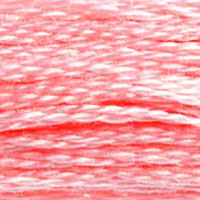
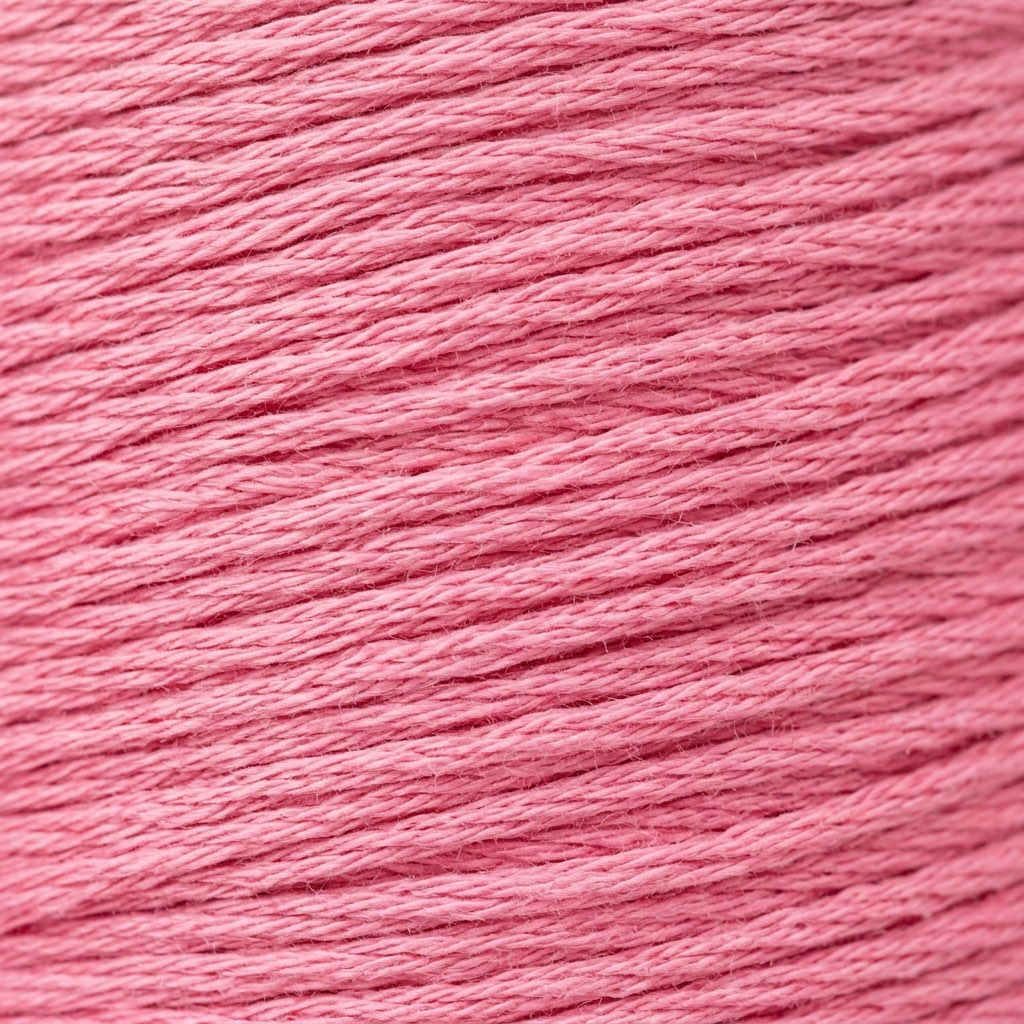
A well-known FlossTube phenomenon: experienced stitchers pulling out their color cards, looking at 894 in the skein, and thinking it seems too peachy-light to be worth using — until they see it in a finished piece where the warm, salmon-tinged pale pink reads as luminous and perfect, giving lighter petal areas exactly the warmth that a cool pale pink would have flattened into pale nothing. Very Light Carnation at hex #FFB2BB is deceptively useful precisely because of its warmth at a light value.
The Warm Pale End of a Vivid Family
894 occupies a peculiar position in the carnation family: it's the lightest of four vivid pinks, but its warmth at this light value gives it a different character than a typical very-light-pink. Most pale pinks read as delicate, soft, and slightly cool. 894 reads as pale and warm — the warmth of salmon or peach is visible in its light pink. This warm-pale combination is less common in the DMC line than either vivid warm pink or cool delicate pale pink, which is part of what makes 894 useful in specific contexts.
For gradient work in the carnation family, 894 provides a warm-soft termination — the gradient ends not in a cool, fading-to-white pale but in a warm, glowing pale that retains color temperature even at its lightest. This property is essential for realistic petal rendering where the petal tip is lit from behind, creating the glowing translucent quality of backlit thin flower petals.
Skin Tones and Figure Cross-Stitch
894's warm-pale quality makes it one of the more useful skin tone colors in the entire DMC line, though this use isn't obvious from the name or skein appearance. For medium-light skin tones with warm undertones — the kind that would be described as peachy or golden — 894 can serve as a primary light or highlight tone. It's warmer than DMC 819 (Light Baby Pink) and more clearly skin-toned than pure pink, while being lighter than DMC 818 (Baby Pink).
Portrait cross-stitch communities (and there's a dedicated, enthusiastic community doing this work, sharing on FlossTube and in SAL groups) have developed nuanced skin tone systems using DMC colors, and 894 appears in several of the popular systems for lighter warm-toned skin. The combination of its warmth and paleness puts it in useful highlight territory for cheeks, noses, and foreheads in portrait work.
Decorative Florals and Romantic Themes
Valentine and romantic-themed designs benefit from 894's warm pale quality differently than they benefit from DMC 818 or 819 (Baby Pink and Light Baby Pink). Those cooler pale pinks read as soft and innocent; 894 reads as warm and feminine, closer to the rosy-flush quality of romantic imagery. A heart motif or floral wreath border stitched in 894 has a warmer, more immediately pink character than the same motif in a cool pale pink.
Bridalwear-inspired designs — items for bridal showers, wedding gifts, engagement celebration needlework — often want a palette that reads as romantic and feminine without being childishly pastel. 894 paired with DMC 3727 (Light Antique Mauve) and a very light cream or off-white creates exactly this balance: warm, sophisticated pale pink with a slightly vintage feeling.
Anchor 26 and Madeira 0408 both earn exact match ratings, completing the carnation family's remarkable record of exact matches across Anchor and Madeira for all four family members. This level of cross-brand calibration in a vivid pink family is genuinely impressive and makes the carnation family one of the most flexibility-friendly color groups for stitchers who work across brands.
Cosmo 203 and Sullivans 45247 are close matches. At 894's lighter value, Cosmo's thread finish may make their equivalent appear slightly more luminous, while Sullivans tracks closer to DMC's matte quality. Neither difference is significant enough to prevent substitution in most design applications, but the usual testing recommendation applies for designs where the specific warm-pale-pink character of 894 is critical.
Within DMC, 894 is the terminal light value in the carnation family. The next-lightest carnation is 893, which is clearly more vivid and less pale. If 894 is unavailable, using 893 for its role in a gradient compresses the family by one step at the light end — the gradient is shorter and slightly more vivid overall. For standalone use where 894 provides a warm pale pink without gradient context, DMC 818 (Baby Pink) is the alternative — cooler and less warm, but in the same pale-pink value zone.
One quirk worth knowing: the color families of baby pink (818-819) and very light carnation (894) are close enough in value that stitchers sometimes find them mixed in their stash after working on baby-themed pieces and carnation-family pieces. Hold them up to good light and compare — 894 will have a clearly warmer, peachy-salmon cast compared to the cooler, more neutral pink of 818. Keeping them labeled or in separate compartments prevents confusion during projects.
Reference quality
How We Validate This Color Record
Use this page as a reference card for DMC 894: the structured data, quick conversions, and long-form copy are all tied back to the same stored color record.
- Methodology
- This page renders DMC 894, its hex value, and every brand equivalent from the site's source-of-truth color record, then checks long-form body copy against those same stored fields.
- Verification status
- Source-field checked. The page content is audited against the stored DMC number, brand equivalents, and match-quality labels before publishing.
- Last reviewed
- 2026-04-20
- Approximation warning
- Screen hex values, thread photos, and cross-brand conversions are reference aids. Dye lots, thread sheen, and fabric color can still shift the result in hand.
Decision guide
When to use the DMC 894 reference page
This page should help you decide faster between palette planning, brand substitution, and shade comparison without turning the color record into a thin lookup page.
Best for
- + Palette planning when you want the stored DMC 894 Very Light Carnation record, hex value #FFB2BB, and linked brand equivalents in one place.
- + Checking the quickest cross-brand shortlist before you buy floss, compare stash substitutes, or route into a more specific conversion page.
- + Finding nearby shades in the pinks family before you commit to accents, shading, or background blends.
Watch for
- ! Screen previews are only reference aids. Very Light Carnation can shift on real fabric because thread sheen, stitch coverage, and room lighting change how the color reads.
- ! A stored equivalent is still a shortlist, not a guarantee that two brands will disappear into each other in the same stitched motif.
- ! Older charts, discontinued kit floss, and dye-lot variation can all introduce small but visible differences that the page cannot detect for you.
Before you commit
- Confirm the role of DMC 894 Very Light Carnation: decide whether you need an exact hero shade, a forgiving background, or a rough stash substitute.
- Compare on project fabric: view the skein or stitched sample on the same fabric count and color you will actually use.
- Use the linked conversion pages next: open the brand-specific pages when you need match-quality caveats before substituting away from the DMC reference.
DMC 894 FAQ
These questions appear on the page so the FAQ schema stays aligned with what visitors can actually read.
What is the Anchor equivalent of DMC 894?+
The closest Anchor equivalent to DMC 894 (Very Light Carnation) is Anchor 26. This is an exact match.
What color is DMC 894?+
DMC 894 is called "Very Light Carnation" and has a hex color value of #FFB2BB. It belongs to the pinks color family.
What is the Madeira equivalent of DMC 894?+
The closest Madeira equivalent to DMC 894 (Very Light Carnation) is Madeira 0408. This is a close match.
How DMC 894 Looks on Fabric
The same thread appears different depending on your fabric. Always test on your project fabric.
White Aida
Cream / Ecru
Black Aida
Pairs Well With
DMC colors commonly used alongside 894 Very Light Carnation.
Suggested Palette
Shading Companions
Detailed Conversions
Where to Buy DMC 894
This section contains affiliate links. We may earn a small commission at no cost to you.
Related Guides
Free Printable Thread Conversion Chart
Pick a brand, enter your email, and we'll send you a printable chart mapping all 552 DMC colors to that brand's equivalents. Zero spam, one chart.
Thanks! Here's your free chart:
Download Your ChartOpens in a new tab. Use your browser's Print → Save as PDF.
No spam. Your email is stored securely and never shared.