
Quick Conversion Table
| Brand | Equivalent | Match |
|---|---|---|
| Anchor | 27 | exact |
| Madeira | 0411 | close |
| Cosmo ⚠ | 205 | close |
| Sullivans | 45246 | close |
| J&P Coats | 3152 | close |
| Dimensions | 6033 | close |
| Bucilla | 6033 | close |
| Candamar | 6304 | close |
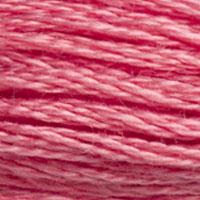
The color of a carnation petal where sunlight is directly striking it — where the pink is at once lighter and warmer, pulled toward a warm salmon-coral by the intensity of the light filtering through thin petal tissue — is exactly where DMC 893 lives. Light Carnation at hex #FC90A2 is warm-lit pink: the color that results when the orange warmth of a carnation's petal structure meets direct illumination. It reads as simultaneously pink and softly orange, vivid but not saturated to the point of aggression, cheerful in a way that the deeper carnation values aren't.
The Warmest Pink in the Family
An interesting property of the carnation family is that the lighter values read progressively warmer — more coral and orange-influenced — while the darker value (891) reads as more blue-pink in its depth. This is a natural property of how light interacts with warm-toned florals: shadows in warm flowers tend to be cooler and more purple-pink, while highlights are warmer and more orange-influenced. The carnation family's design captures this accurately, which makes the four-value gradient (891-894) look optically correct in a way that many simplified pink gradients don't.
893's specific warmth — the warm pink that edges toward salmon without crossing over — makes it useful outside the carnation family. Any design that needs warm pink as a standalone color (not part of a gradient) will find 893 more characterful and interesting than a more neutral or cooler pink at similar value. Salmon-adjacent designs, warm tropical themes, and anything that benefits from the energy of warm pink can use 893 as a primary color.
Skin Tone Support
Warm-toned skin highlights — the slight flush of color at the high point of a cheek, the warm highlight of a lip, the flushed color of skin after physical exertion or strong emotion in portrait cross-stitch — sometimes correspond to 893's warm-light-pink character. Not all skin tone systems use the carnation family, but for designs depicting people with clearly warm skin undertones, 893 can appear as a highlight or flush element in ways that cooler pinks wouldn't serve.
Baby-themed designs sometimes use 893 for a slightly warmer, more vivid pink than DMC 818 (Baby Pink) or 819 (Light Baby Pink) provide — particularly in designs that want a cheerful, vivid nursery pink rather than a soft, delicate one. The difference between 893 and the baby pink family is character: 893 has more energy and warmth, 818 and 819 have more softness and delicacy.
Springtime and Fresh Flower Designs
Spring cross-stitch — cherry blossoms, tulips, early summer florals — often benefits from 893's warm, fresh quality. Cherry blossoms in particular have a warmth to their pink that the cooler, more blue-pink rose family doesn't fully capture. A cherry blossom design that uses 893 and 894 for the petals and DMC 819 (Light Baby Pink) for the very palest moments will read as more authentically cherry-blossom-colored than one that reaches for the rose or dusty rose families.
Tulip cross-stitch in the pink-to-coral range also reaches for 893. The darker streaks in a light pink tulip petal, the deepened color at the base of each petal where it narrows, and the primary body color of a warm-pink tulip all correspond well to the carnation family with 893 carrying the primary petal role.
Anchor 27 and Madeira 0411 both earn exact match ratings — the carnation family's consistent exact-match record across Anchor and Madeira continues for 893. This makes sourcing across brands straightforward for stitchers who work with multiple manufacturers.
Cosmo 205 and Sullivans 45246 are close matches. The carnation family's high saturation and warm undertone can look slightly different across thread brands at any value, but the difference at 893's warm-light-pink level is usually within acceptable range for most design applications. For very precise color work or for designs where 893's specific warm salmon-pink character is the key design element, testing before committing is recommended.
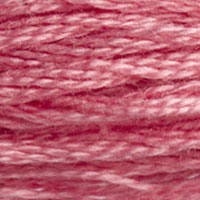
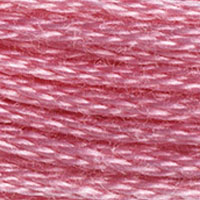
Within DMC, 893 sits between DMC 892 (Medium Carnation), which is deeper and more intensely pink, and DMC 894 (Very Light Carnation), which is lighter and even more coral-influenced. For designs using the full four-value carnation gradient, neither neighbor substitutes exactly for 893 without compressing the gradient. For standalone use, 892 gives more depth while 894 gives more delicacy.
Outside the carnation family, 893's warm-salmon-pink character overlaps somewhat with DMC 352 (Light Coral) — a coral-family color that shares the warm, orange-influenced pink territory but comes from a different family with different undertone balance. In designs where the carnation family isn't specifically required, 352 can serve in a similar warm-light-pink role and may pair better with orange-red adjacent palettes.
Reference quality
How We Validate This Color Record
Use this page as a reference card for DMC 893: the structured data, quick conversions, and long-form copy are all tied back to the same stored color record.
- Methodology
- This page renders DMC 893, its hex value, and every brand equivalent from the site's source-of-truth color record, then checks long-form body copy against those same stored fields.
- Verification status
- Source-field checked. The page content is audited against the stored DMC number, brand equivalents, and match-quality labels before publishing.
- Last reviewed
- 2026-04-20
- Approximation warning
- Screen hex values, thread photos, and cross-brand conversions are reference aids. Dye lots, thread sheen, and fabric color can still shift the result in hand.
Decision guide
When to use the DMC 893 reference page
This page should help you decide faster between palette planning, brand substitution, and shade comparison without turning the color record into a thin lookup page.
Best for
- + Palette planning when you want the stored DMC 893 Light Carnation record, hex value #FC90A2, and linked brand equivalents in one place.
- + Checking the quickest cross-brand shortlist before you buy floss, compare stash substitutes, or route into a more specific conversion page.
- + Finding nearby shades in the pinks family before you commit to accents, shading, or background blends.
Watch for
- ! Screen previews are only reference aids. Light Carnation can shift on real fabric because thread sheen, stitch coverage, and room lighting change how the color reads.
- ! A stored equivalent is still a shortlist, not a guarantee that two brands will disappear into each other in the same stitched motif.
- ! Older charts, discontinued kit floss, and dye-lot variation can all introduce small but visible differences that the page cannot detect for you.
Before you commit
- Confirm the role of DMC 893 Light Carnation: decide whether you need an exact hero shade, a forgiving background, or a rough stash substitute.
- Compare on project fabric: view the skein or stitched sample on the same fabric count and color you will actually use.
- Use the linked conversion pages next: open the brand-specific pages when you need match-quality caveats before substituting away from the DMC reference.
DMC 893 FAQ
These questions appear on the page so the FAQ schema stays aligned with what visitors can actually read.
What is the Anchor equivalent of DMC 893?+
The closest Anchor equivalent to DMC 893 (Light Carnation) is Anchor 27. This is an exact match.
What color is DMC 893?+
DMC 893 is called "Light Carnation" and has a hex color value of #FC90A2. It belongs to the pinks color family.
What is the Madeira equivalent of DMC 893?+
The closest Madeira equivalent to DMC 893 (Light Carnation) is Madeira 0411. This is a close match.
How DMC 893 Looks on Fabric
The same thread appears different depending on your fabric. Always test on your project fabric.
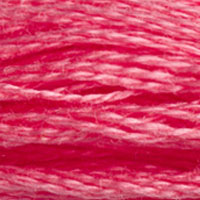
White Aida
Cream / Ecru
Black Aida
Pairs Well With
DMC colors commonly used alongside 893 Light Carnation.
Suggested Palette
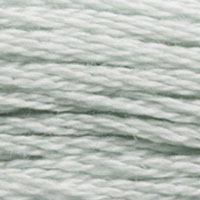
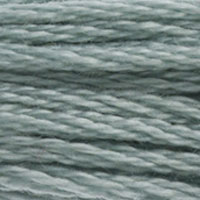
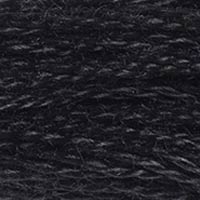
Shading Companions
Detailed Conversions
Where to Buy DMC 893
This section contains affiliate links. We may earn a small commission at no cost to you.
Related Guides
Free Printable Thread Conversion Chart
Pick a brand, enter your email, and we'll send you a printable chart mapping all 552 DMC colors to that brand's equivalents. Zero spam, one chart.
Thanks! Here's your free chart:
Download Your ChartOpens in a new tab. Use your browser's Print → Save as PDF.
No spam. Your email is stored securely and never shared.