
DMC 834 — Very Light Golden Olive
Yellows family · Hex #DBBE7F
Quick Conversion Table
| Brand | Equivalent | Match |
|---|---|---|
| Anchor | 874 | close |
| Madeira | 2206 | close |
| Cosmo ⚠ | 772 | close |
| Sullivans | 45235 | close |
| J&P Coats | 2874 | close |
When a stitcher wants to simulate gold without metallic thread, the conversation usually starts with which warm yellow to use for the most luminous highlights. DMC 834 — Very Light Golden Olive at hex #DBBE7F — is often the answer. Pale enough to read as a near-white highlight in dark-surrounded gold contexts, warm enough to retain a clear gold identity rather than drifting toward cream or beige, 834 functions as the final light note in the golden olive family's value progression and as the brightest accent in gold-colored design elements.
Terminal Highlight in the Golden Olive Family
834 is the lightest of the five golden olive values (829 through 834), which means it appears in designs at the moments of maximum light — the edges of objects catching direct illumination, the sun-struck peaks of textured surfaces, the bright rim of a metal object. In a gradient system, 834 appears last, positioned where the design transitions from clearly golden to nearly neutral pale yellow.
Because of its position at the light extreme, 834 rarely appears alone or as a primary fill color. Instead, it serves the highlight role in multi-tone systems. A golden wreath rendered in the full family might use 829 for deep branch shadows, 831 for the main leaf fill, 832 for lighter leaf areas, 833 for leaf highlights, and 834 for the very palest moments where leaves catch the light at the sharpest angle. This kind of full-family progression creates work of remarkable depth and luminosity.
Christmas and Ornamental Gold
Holiday designs that incorporate non-metallic gold — Christmas stars, candle glows, gift ribbon accents, bells, and general seasonal decorative elements — benefit from having a very pale gold available for their brightest points. 834 in a Christmas palette alongside DMC 816 (Garnet) and DMC 890 (Ultra Dark Pistachio Green) creates a warm, traditional holiday color scheme with significant depth and glow. The combination avoids both the commercial brightness of modern red-green-gold and the stiffness of metallic thread while still reading as warmly festive.
Ornament cross-stitch that aims for the quality of antique glass ornaments — the slightly muted, aged gold of old Christmas tree decorations — uses 834 and 833 together as their gold system. Antique glass reflects light in a softer, warmer way than bright modern metallic, and the muted quality of the golden olive family approximates this vintage quality quite naturally.
Straw, Parchment, and Paper Tones
834 reads in many contexts as straw, parchment, or aged paper — natural materials that carry a warm, pale, yellowish character without strong color saturation. Letters and manuscripts in historical-themed designs, book and library imagery, and any piece that references paper or parchment will find 834 useful for background elements and aged-paper textures. Combined with DMC 613 (Very Light Drab Brown) or DMC 3033 (Very Light Mocha Brown), 834 contributes to aged-paper palettes that feel genuinely historical.
Wicker, rattan, and woven-texture designs also reach for 834. The pale, muted gold of wicker furniture or a woven basket's lightest strands is well represented by 834. In basket weave patterns or decorative wicker motifs, 834 handles the highlight strands while 829 or 830 handle the shadow areas of the weave.
834 is unusual in the golden olive family for receiving close rather than exact ratings from both Anchor and Madeira — both brands have their nearest equivalent at a slightly different value or undertone. Anchor 874 (which earns exact for 833) is close for 834, suggesting it's slightly too dark. Madeira 2206 is also close, with a minor variation in the specific pale golden character.
This across-the-board close rating means 834 requires more care in substitution than its family members. At this very pale value, even minor undertone or saturation differences become more visible. If you're substituting any brand's equivalent for 834, test a few stitches on your actual fabric before proceeding — pale golds in particular can shift dramatically toward either cream, pale lime, or pale warm yellow depending on the light source and surrounding colors.
Cosmo 772 and Sullivans 45235 are both close, with the usual caveats about Cosmo's thread finish and potential saturation differences. At this pale value, Cosmo's silkier finish may make their equivalent read as slightly brighter or more luminous than DMC's matte version — which could actually be advantageous for highlight work where extra luminosity helps.
Within DMC, the only direct family neighbor lighter than 834 would be white, which is a dramatic jump. If 834 reads as too pale for your purpose, DMC 833 (Light Golden Olive) adds noticeable golden presence. Going outside the family, DMC 677 (Very Light Old Gold) is worth comparing — it shares a similar pale, warm-gold character and appears alongside 834 in patterns that want very fine pale gold gradation. The two are not identical but are close enough in palette family to coexist in designs calling for pale gold accents.
Reference quality
How We Validate This Color Record
Use this page as a reference card for DMC 834: the structured data, quick conversions, and long-form copy are all tied back to the same stored color record.
- Methodology
- This page renders DMC 834, its hex value, and every brand equivalent from the site's source-of-truth color record, then checks long-form body copy against those same stored fields.
- Verification status
- Source-field checked. The page content is audited against the stored DMC number, brand equivalents, and match-quality labels before publishing.
- Last reviewed
- 2026-04-20
- Approximation warning
- Screen hex values, thread photos, and cross-brand conversions are reference aids. Dye lots, thread sheen, and fabric color can still shift the result in hand.
Decision guide
When to use the DMC 834 reference page
This page should help you decide faster between palette planning, brand substitution, and shade comparison without turning the color record into a thin lookup page.
Best for
- + Palette planning when you want the stored DMC 834 Very Light Golden Olive record, hex value #DBBE7F, and linked brand equivalents in one place.
- + Checking the quickest cross-brand shortlist before you buy floss, compare stash substitutes, or route into a more specific conversion page.
- + Finding nearby shades in the yellows family before you commit to accents, shading, or background blends.
Watch for
- ! Screen previews are only reference aids. Very Light Golden Olive can shift on real fabric because thread sheen, stitch coverage, and room lighting change how the color reads.
- ! A stored equivalent is still a shortlist, not a guarantee that two brands will disappear into each other in the same stitched motif.
- ! Older charts, discontinued kit floss, and dye-lot variation can all introduce small but visible differences that the page cannot detect for you.
Before you commit
- Confirm the role of DMC 834 Very Light Golden Olive: decide whether you need an exact hero shade, a forgiving background, or a rough stash substitute.
- Compare on project fabric: view the skein or stitched sample on the same fabric count and color you will actually use.
- Use the linked conversion pages next: open the brand-specific pages when you need match-quality caveats before substituting away from the DMC reference.
DMC 834 FAQ
These questions appear on the page so the FAQ schema stays aligned with what visitors can actually read.
What is the Anchor equivalent of DMC 834?+
The closest Anchor equivalent to DMC 834 (Very Light Golden Olive) is Anchor 874. This is a close match.
What color is DMC 834?+
DMC 834 is called "Very Light Golden Olive" and has a hex color value of #DBBE7F. It belongs to the yellows color family.
What is the Madeira equivalent of DMC 834?+
The closest Madeira equivalent to DMC 834 (Very Light Golden Olive) is Madeira 2206. This is a close match.
How DMC 834 Looks on Fabric
The same thread appears different depending on your fabric. Always test on your project fabric.
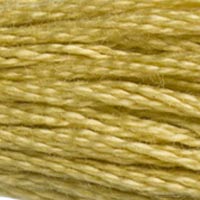
White Aida
Cream / Ecru
Black Aida
Pairs Well With
DMC colors commonly used alongside 834 Very Light Golden Olive.
Suggested Palette
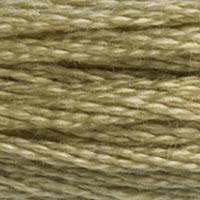
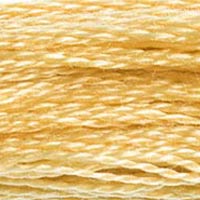
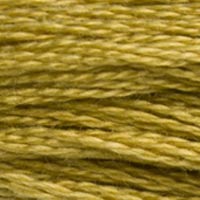
Shading Companions
Detailed Conversions
Where to Buy DMC 834
This section contains affiliate links. We may earn a small commission at no cost to you.
Related Guides
Free Printable Thread Conversion Chart
Pick a brand, enter your email, and we'll send you a printable chart mapping all 552 DMC colors to that brand's equivalents. Zero spam, one chart.
Thanks! Here's your free chart:
Download Your ChartOpens in a new tab. Use your browser's Print → Save as PDF.
No spam. Your email is stored securely and never shared.