
Quick Conversion Table
| Brand | Equivalent | Match |
|---|---|---|
| Anchor | 238 | exact |
| Madeira | 1307 | close |
| Cosmo ⚠ | 272 | close |
| Sullivans | 45163 | close |
| J&P Coats | 3238 | close |
| Dimensions | 16238 | close |
| Candamar | 6289 | close |
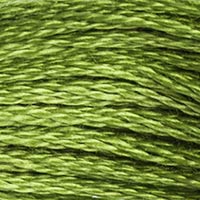
Chartreuse as a color takes its name from a French liqueur made by Carthusian monks — a vivid yellow-green that was startlingly unusual for its time. DMC 703 carries that legacy: it's a green with significant yellow content that sits uncomfortably between pure green and pure yellow-green, belonging fully to neither. This is precisely what makes it interesting and, for certain applications, irreplaceable. Where DMC 700 and 701 are safe, confident Christmas greens, DMC 703 is the eccentric cousin that shows up and makes everything around it more alive.
Color Theory Position
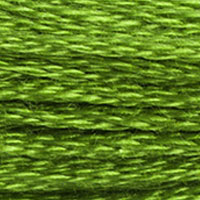
On the color wheel, DMC 703 sits in the yellow-green quadrant, noticeably warmer and more yellow than the Christmas Green family. Its hex #7BB547 breaks down to high green, significant red (which makes it warm), and low blue — the formula for a warm, slightly lemony green with good saturation. This position means it creates strong vibrancy when placed against red-purple or violet (complementary contrast), reads as acidic and fresh against warm earth tones, and energizes more muted greens when used alongside them as an accent.
In a mixed green palette — say, a dense garden or forest scene — 703 provides the bright, sunlit highlights that make the scene feel alive rather than painted. Real leaves in strong sunlight often do tip into chartreuse territory at their edges, particularly on thin-leafed plants like grasses, ferns, and young spring growth. Using 703 for these hot spots, with DMC 701 or 702 for the mid-tones and DMC 905 or 895 for shadows, creates foliage that reads as photographically observed rather than decoratively simplified.
Nature Applications
Insects are where DMC 703 really earns its unconventional position. Katydids, praying mantises, and certain caterpillars are exactly this chartreuse green — not conventionally pretty, but vividly, almost unsettlingly accurate when rendered in this thread. Parakeet feathers, parrot highlights, and tropical bird plumage also use 703's yellow-green as the bright accent against deeper greens. In the natural world, chartreuse is often the color of newness — new growth, young animals, fresh leaves — and 703 captures that energetic quality.
Spring-themed embroidery designs use 703 for early-season foliage that hasn't yet deepened into summer green. Willow catkins, fresh moss, the bright tips of new fern fronds — all of these read as DMC 703 in embroidery. Pair it with DMC 471 Very Light Avocado Green for a complete spring palette that captures both the vivid new growth and the softer developing foliage behind it.
Palette Pairing Notes
Used without restraint, 703 can overwhelm a palette — its energy is significant. The skill is in using it where nature would actually put chartreuse: at leaf tips, sunlit edges, and in areas of maximum light intensity. Containing it to these highlight roles while carrying the main green work in 700, 701, or 704 keeps the design balanced. Against warm reds and oranges — autumn berries, flower centers, decorative borders — 703 creates vibrant complementary contrast. Against cooler blues and purples, it reads as particularly energetic and fresh.
Anchor 238 and Madeira 1307 are exact matches for DMC 703. For a color this specific in its yellow-green positioning, having exact matches across brands is genuinely useful — chartreuse is hard to approximate without landing noticeably off.
Cosmo 272 and Sullivans 45163 land at close. Cosmo 272 is generally a good match though it can run slightly more pure green than 703's warm chartreuse. Sullivans 45163 is similar. For applications where 703's specific yellow-green quality is the point — insect work, spring foliage, bright tropical highlights — comparing your substitute in daylight against DMC 703 is worth doing before starting a project.
Within the DMC range, DMC 704 Bright Chartreuse is the lighter, even more yellow-green neighbor — brighter and paler than 703, useful for chartreuse highlights when 703 itself is serving as the mid-tone. DMC 472 Ultra Light Avocado Green is in a similar territory but shifts more toward yellow-gray than chartreuse's vivid quality. DMC 907 Light Parrot Green is a reasonable ballpark substitute if you need something in this yellow-green territory without the specific saturation of 703. None of these is a drop-in replacement; they each have distinct character, and 703 is specific enough that sourcing the real thread is the better path for designs where it's featured.
Reference quality
How We Validate This Color Record
Use this page as a reference card for DMC 703: the structured data, quick conversions, and long-form copy are all tied back to the same stored color record.
- Methodology
- This page renders DMC 703, its hex value, and every brand equivalent from the site's source-of-truth color record, then checks long-form body copy against those same stored fields.
- Verification status
- Source-field checked. The page content is audited against the stored DMC number, brand equivalents, and match-quality labels before publishing.
- Last reviewed
- 2026-04-20
- Approximation warning
- Screen hex values, thread photos, and cross-brand conversions are reference aids. Dye lots, thread sheen, and fabric color can still shift the result in hand.
Decision guide
When to use the DMC 703 reference page
This page should help you decide faster between palette planning, brand substitution, and shade comparison without turning the color record into a thin lookup page.
Best for
- + Palette planning when you want the stored DMC 703 Chartreuse record, hex value #7BB547, and linked brand equivalents in one place.
- + Checking the quickest cross-brand shortlist before you buy floss, compare stash substitutes, or route into a more specific conversion page.
- + Finding nearby shades in the greens family before you commit to accents, shading, or background blends.
Watch for
- ! Screen previews are only reference aids. Chartreuse can shift on real fabric because thread sheen, stitch coverage, and room lighting change how the color reads.
- ! A stored equivalent is still a shortlist, not a guarantee that two brands will disappear into each other in the same stitched motif.
- ! Older charts, discontinued kit floss, and dye-lot variation can all introduce small but visible differences that the page cannot detect for you.
Before you commit
- Confirm the role of DMC 703 Chartreuse: decide whether you need an exact hero shade, a forgiving background, or a rough stash substitute.
- Compare on project fabric: view the skein or stitched sample on the same fabric count and color you will actually use.
- Use the linked conversion pages next: open the brand-specific pages when you need match-quality caveats before substituting away from the DMC reference.
DMC 703 FAQ
These questions appear on the page so the FAQ schema stays aligned with what visitors can actually read.
What is the Anchor equivalent of DMC 703?+
The closest Anchor equivalent to DMC 703 (Chartreuse) is Anchor 238. This is an exact match.
What color is DMC 703?+
DMC 703 is called "Chartreuse" and has a hex color value of #7BB547. It belongs to the greens color family.
What is the Madeira equivalent of DMC 703?+
The closest Madeira equivalent to DMC 703 (Chartreuse) is Madeira 1307. This is a close match.
How DMC 703 Looks on Fabric
The same thread appears different depending on your fabric. Always test on your project fabric.
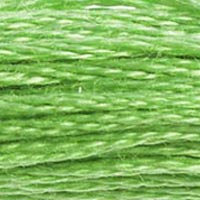
White Aida
Cream / Ecru
Black Aida
Pairs Well With
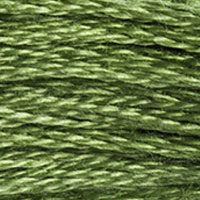
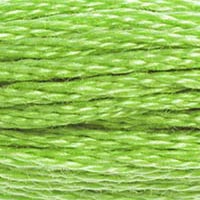
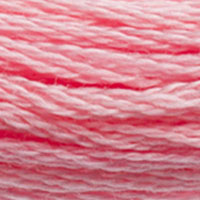
DMC colors commonly used alongside 703 Chartreuse.

Detailed Conversions
Where to Buy DMC 703
This section contains affiliate links. We may earn a small commission at no cost to you.
Related Guides
Free Printable Thread Conversion Chart
Pick a brand, enter your email, and we'll send you a printable chart mapping all 552 DMC colors to that brand's equivalents. Zero spam, one chart.
Thanks! Here's your free chart:
Download Your ChartOpens in a new tab. Use your browser's Print → Save as PDF.
No spam. Your email is stored securely and never shared.