
Quick Conversion Table
| Brand | Equivalent | Match |
|---|---|---|
| Anchor | 1220 | close |
| Madeira | 0609 | close |
| Cosmo ⚠ | 2630 | close |
| Sullivans | 45109 | close |
When One Rose Shade Is Not Enough
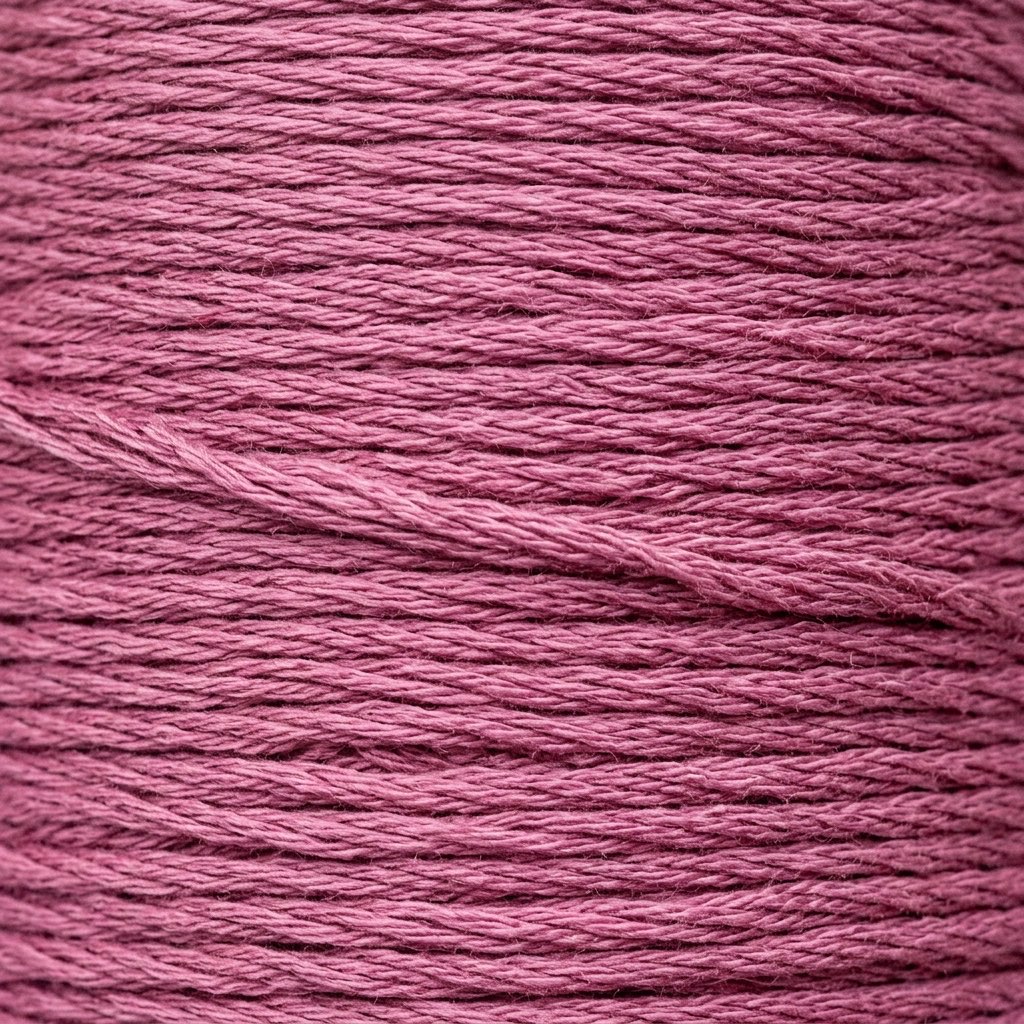
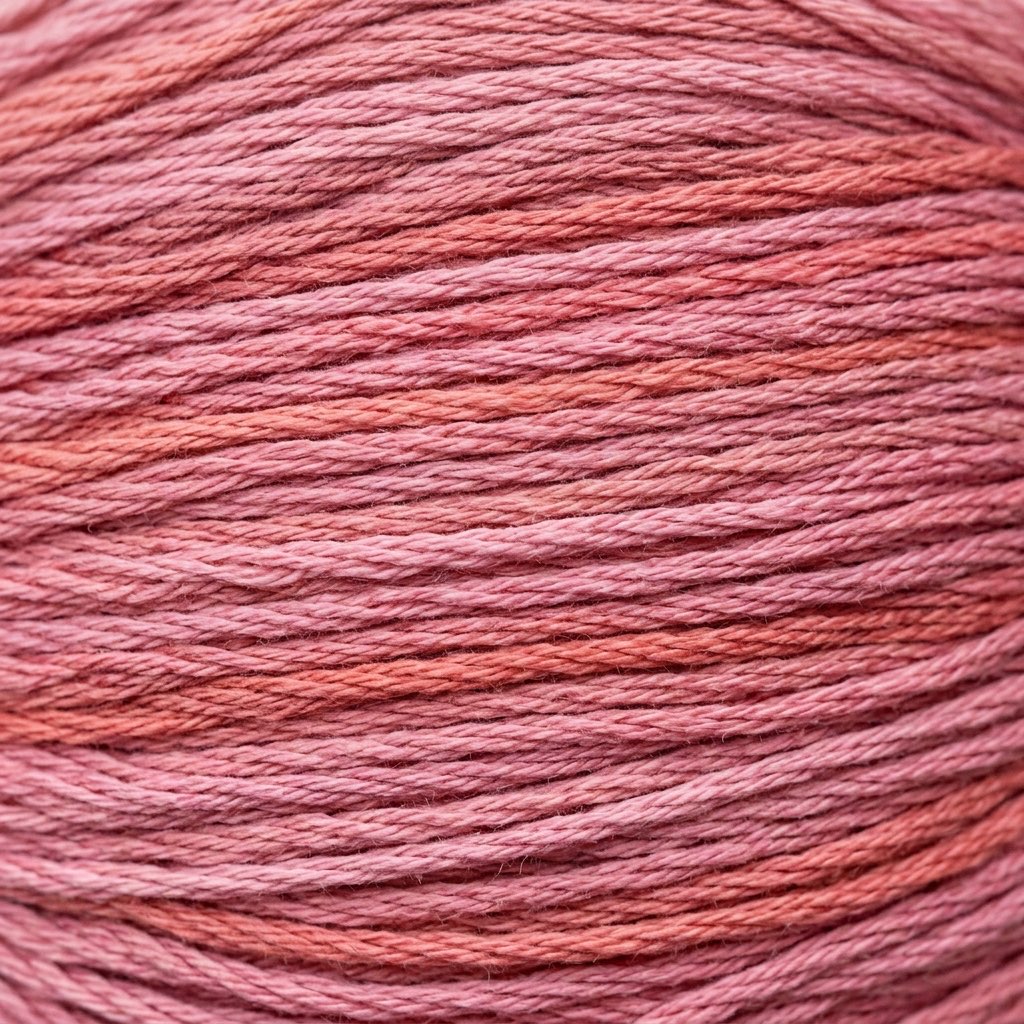
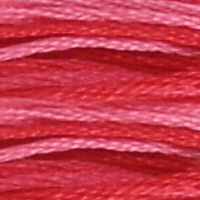
Roses in nature are never a single flat color. Even the most uniformly colored bloom shows variation — deeper pink in the shadows between petals, lighter at the edges where light passes through thin tissue, slightly cooler where petals overlap and block direct sun. DMC 51 Variegated Dusty Rose captures this natural variability in a single strand. The thread transitions through a range of dusty rose values, from a deeper mauve-pink to a lighter blush, creating organic color shifts that solid threads simply cannot achieve without multiple skein changes.
Pairing This Rose with Greens for Floral Realism
The most natural use for DMC 51 is floral work, and the most important pairing decision you will make is which green to put next to it. Because 51 is a variegated thread in the dusty rose range — muted, slightly greyed, and warm — it needs greens that match its temperament.
DMC 3052 (Medium Green Gray) is the ideal companion leaf color. Both threads share a muted, slightly grey quality that makes them look like they belong in the same ecosystem. Using 3052 for leaf fill with DMC 3051 (Dark Green Gray) for leaf veins and shadows creates foliage that complements 51's variegated roses perfectly.
Avoid pairing DMC 51 with bright, saturated greens like DMC 700 (Bright Christmas Green) or DMC 906 (Medium Parrot Green). The clash in saturation levels makes the roses look muddy and the leaves look artificial. Muted roses need muted leaves. DMC 3013 (Light Khaki Green), DMC 522 (Fern Green), and DMC 3363 (Medium Pine Green) all work well, each adding a slightly different mood — sage, silvery, or forest, respectively.
Historical Context: Variegated Threads in Embroidery
Variegated threads have a longer history than many stitchers realize. Victorian fancy needlework used hand-dyed graduated threads for shading effects long before DMC standardized the technique. The appeal then was the same as now: one thread does the work of three, and the transitions look smoother than manually switching between skeins. DMC 51 specifically echoes the kind of rose tints that appeared in Victorian Berlin woolwork flowers, where shaded wools created the illusion of three-dimensional petals on flat canvas.
Modern hand-dyers have taken this concept further with boutique variegated threads, but DMC 51 remains the accessible, reliably available option that most stitchers reach for when they need a variegated rose. Its color range stays within a controlled band — no wild swings into unexpected hues — which makes it predictable enough for pattern work while still providing that lovely organic variation.
Technique Tips for Best Results
Stitch each cross individually (cross-country method) rather than in rows if you want maximum color scatter. Cut consistent strand lengths — about 18 inches — to maintain similar color distribution across your piece. If you want more dramatic color variation, cut longer strands; for subtler variation, cut shorter ones and let natural overlap of the repeat pattern smooth things out.
DMC 51 works on both Aida and evenweave, but the effect is more noticeable on evenweave stitched over two, where the slightly larger stitch surface area allows each cross to display more of the color gradient. On 14-count Aida, individual stitches are compact enough that the variation can be subtle unless you are looking closely.
Replacing Variegated Dusty Rose
Substituting variegated threads requires matching a color range, not a single color point. Anchor 1220 is listed as close, but keep in mind that this conversion may refer to a solid dusty rose rather than a variegated equivalent. Not all brands offer exact variegated counterparts, so you may need to check whether the substitute is truly variegated or merely a solid thread in the midpoint of 51's range.
Madeira 0609 is close and may be available in a variegated format within Madeira's range — check the specific product line. Cosmo 2630 and Sullivans 45109 face the same question: verify whether the substitute is variegated before buying.
If no variegated substitute is available, you can approximate DMC 51 with solid DMC threads using blended needle. Combine one strand of DMC 3733 (Dusty Rose) with one strand of DMC 3726 (Dark Antique Mauve), and alternate which you load first to create random variation. For a lighter option, try one strand of 3733 with one strand of DMC 962 (Medium Dusty Rose). Neither approach replaces the smooth gradient of true variegated thread, but both capture the dusty rose color range effectively.
Reference quality
How We Validate This Color Record
Use this page as a reference card for DMC 51: the structured data, quick conversions, and long-form copy are all tied back to the same stored color record.
- Methodology
- This page renders DMC 51, its hex value, and every brand equivalent from the site's source-of-truth color record, then checks long-form body copy against those same stored fields.
- Verification status
- Source-field checked. The page content is audited against the stored DMC number, brand equivalents, and match-quality labels before publishing.
- Last reviewed
- 2026-04-20
- Approximation warning
- Screen hex values, thread photos, and cross-brand conversions are reference aids. Dye lots, thread sheen, and fabric color can still shift the result in hand.
Decision guide
When to use the DMC 51 reference page
This page should help you decide faster between palette planning, brand substitution, and shade comparison without turning the color record into a thin lookup page.
Best for
- + Palette planning when you want the stored DMC 51 Variegated Dusty Rose record, hex value #D87898, and linked brand equivalents in one place.
- + Checking the quickest cross-brand shortlist before you buy floss, compare stash substitutes, or route into a more specific conversion page.
- + Finding nearby shades in the pinks family before you commit to accents, shading, or background blends.
Watch for
- ! Screen previews are only reference aids. Variegated Dusty Rose can shift on real fabric because thread sheen, stitch coverage, and room lighting change how the color reads.
- ! A stored equivalent is still a shortlist, not a guarantee that two brands will disappear into each other in the same stitched motif.
- ! Older charts, discontinued kit floss, and dye-lot variation can all introduce small but visible differences that the page cannot detect for you.
Before you commit
- Confirm the role of DMC 51 Variegated Dusty Rose: decide whether you need an exact hero shade, a forgiving background, or a rough stash substitute.
- Compare on project fabric: view the skein or stitched sample on the same fabric count and color you will actually use.
- Use the linked conversion pages next: open the brand-specific pages when you need match-quality caveats before substituting away from the DMC reference.
DMC 51 FAQ
These questions appear on the page so the FAQ schema stays aligned with what visitors can actually read.
What is the Anchor equivalent of DMC 51?+
The closest Anchor equivalent to DMC 51 (Variegated Dusty Rose) is Anchor 1220. This is a close match.
What color is DMC 51?+
DMC 51 is called "Variegated Dusty Rose" and has a hex color value of #D87898. It belongs to the pinks color family.
What is the Madeira equivalent of DMC 51?+
The closest Madeira equivalent to DMC 51 (Variegated Dusty Rose) is Madeira 0609. This is a close match.
How DMC 51 Looks on Fabric
The same thread appears different depending on your fabric. Always test on your project fabric.
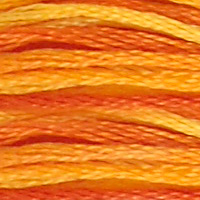
White Aida
Cream / Ecru
Black Aida
Pairs Well With
DMC colors commonly used alongside 51 Variegated Dusty Rose.
Suggested Palette
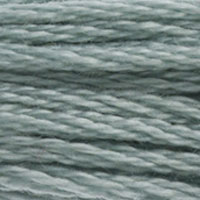
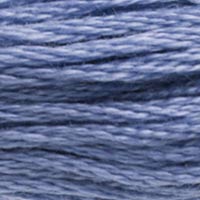
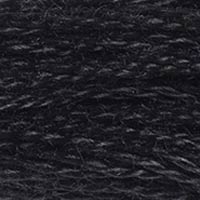
Shading Companions
Detailed Conversions
Where to Buy DMC 51
This section contains affiliate links. We may earn a small commission at no cost to you.
Related Guides
Free Printable Thread Conversion Chart
Pick a brand, enter your email, and we'll send you a printable chart mapping all 552 DMC colors to that brand's equivalents. Zero spam, one chart.
Thanks! Here's your free chart:
Download Your ChartOpens in a new tab. Use your browser's Print → Save as PDF.
No spam. Your email is stored securely and never shared.