
Quick Conversion Table
| Brand | Equivalent | Match |
|---|---|---|
| Anchor | 298 | close |
| Madeira | 0114 | close |
| Cosmo ⚠ | 600 | close |
| Sullivans | 45235 | close |
Recovery decision for DMC 3920
Use this page as a yellow decision point, not just a lookup card. DMC 3920 works when the project needs a confident lemon yellow with depth, and it fails when the surrounding palette wants a paler highlight instead.
Where this shade fails first: DMC 3920 fails first when the original design expects a highlight yellow and this darker lemon turns the section more gold than light.
This page should move visitors quickly toward the right yellow family decision: keep the darker lemon, or step lighter into the pale-yellow recovery pages.
It is well known in the stitching community about whether rich, saturated yellows are a nightmare to work with or an underappreciated workhorse — and DMC 3920 Dark Lemon Yellow lands squarely in the middle of that argument. It's assertive enough to carry sunflower centers, golden accents, and harvest imagery without needing backup, but complex enough in its undertones that it fights with certain palettes unexpectedly. Understanding when 3920 sings and when it clashes is genuinely useful knowledge.
The Color Theory Case for Dark Lemon Yellow
What separates 3920 from other dark yellows in the DMC range is its cool undertone. Most rich yellows trend warm — toward amber, gold, or orange. Dark Lemon Yellow resists this, staying in a cleaner, slightly acidic register that's closer to the yellow of a legal pad than to autumn wheat. This matters enormously when building palettes: 3920 pairs beautifully with blues and greens without creating muddy transitions, whereas a warmer yellow like DMC 725 (Topaz) can produce unexpected results in the same context.
Its natural companions in the DMC range include DMC 445 (Light Lemon) for lighter values in the same cool yellow family, and DMC 444 (Dark Lemon) as a slightly warmer sibling. For shading in the opposite direction — pushing toward gold — DMC 3922 (Light Autumn Gold) bridges the gap between lemon yellows and the amber family.
Where Stitchers Actually Use It
Sunflower designs are the obvious application, and 3920 handles the darker value sections of those petals well — particularly the shadowed areas near the center or where petals overlap. Honeybee patterns use it constantly, both for body stripes and for the rich amber of honeycomb when backstitched with DMC 435 (Very Light Brown). Autumn-themed pieces featuring golden leaves, harvest corn, and harvest moon imagery reach for it regularly.
In full-coverage pieces, 3920 is one of those colors that stitchers sometimes find they've run through faster than expected. Its visual weight means it often covers significant foreground areas, and the per-skein meterage disappears quickly on larger WIPs. Buying two skeins upfront rather than one is generally good practice.
Some stitchers use 3920 in blended needle technique with DMC 3821 (Straw) to create a luminous golden-yellow that neither color achieves alone — this trick shows up in needlepoint and larger thread painting pieces where subtle gradation matters more than strict color matching to a pattern's prescribed palette.
Fabric and Visibility Considerations
On white or pale Aida, 3920 reads bright and confident. On natural or antique linen, the warm undertone of the fabric actually works in this color's favor — the slight warmth of linen softens 3920's acidity and produces a more harmonious result than the stark white Aida version. Cross-country stitching with this color on dark fabric requires care: the thread can appear to shift slightly toward green against very dark grounds, which occasionally surprises stitchers who didn't swatch first.
Best Uses for Dark Lemon Yellow (DMC 3920)
Cross stitch projects featuring DMC 3920 benefit from its unique tonal qualities. When selecting the ideal cross stitch floss for your design, keep Dark Lemon Yellow in mind as a versatile choice that blends perfectly with other shades.
Anchor 298 is a reliable alternative but sits slightly more orange-warm than the cool lemon of the DMC original. In designs where 3920 is surrounded by warm colors this difference is negligible, but if it's playing against cool blues or greens, the shift becomes noticeable. Swatch before committing.
Madeira 0114 is a reliably close match, tracking the cool undertone better than the Anchor option. Madeira's consistency across dye lots is a genuine advantage when you're ordering multiple skeins for a large project — less risk of the color varying batch to batch than some competitors. The thread weight is slightly finer than DMC, so factor in whether you need to adjust strand count on fine evenweave.
Cosmo 600 performs well, though some stitchers note it looks marginally brighter in the skein than after stitching — a trait occasionally seen in Cosmo's yellow range. Stitch a small test section before deciding whether the brightness difference matters for your project.
Sullivans 45235 is broadly serviceable for casual projects. The colorfastness of Sullivans' yellow range has been questioned by some FlossTube stitchers who report slight fading on pieces that hang in sunlight — worth keeping in mind for anything that will live on a well-lit wall. For pieces stored in albums or used in practice samplers, it's fine.
If you find yourself midway through a project with no 3920 available, DMC 725 (Topaz) is the closest available neighbor but runs warmer and more orange. Adjust by using it in smaller quantities or in areas where surrounding colors can compensate for the tonal shift.
Reference quality
How We Validate This Color Record
Use this page as a reference card for DMC 3920: the structured data, quick conversions, and long-form copy are all tied back to the same stored color record.
- Methodology
- This page renders DMC 3920, its hex value, and every brand equivalent from the site's source-of-truth color record, then checks long-form body copy against those same stored fields.
- Verification status
- Source-field checked. The page content is audited against the stored DMC number, brand equivalents, and match-quality labels before publishing.
- Last reviewed
- 2026-04-20
- Approximation warning
- Screen hex values, thread photos, and cross-brand conversions are reference aids. Dye lots, thread sheen, and fabric color can still shift the result in hand.
Decision guide
When to use the DMC 3920 reference page
This page should help you decide faster between palette planning, brand substitution, and shade comparison without turning the color record into a thin lookup page.
Best for
- + Warm highlights, folk-art accents, and bright detail that still needs enough depth to read on fabric.
- + Palette planning when you want the stored DMC 3920 Dark Lemon Yellow record, hex value #F0C000, and linked brand equivalents in one place.
- + Checking the quickest cross-brand shortlist before you buy floss, compare stash substitutes, or route into a more specific conversion page.
- + Finding nearby shades in the yellows family before you commit to accents, shading, or background blends.
Watch for
- ! DMC 3920 fails first when the original design expects a highlight yellow and this darker lemon turns the section more gold than light.
- ! If the pattern is built from pale yellow steps, compare this page against the lighter reverse and kit batch routes before you replace the whole gradient.
- ! Screen previews are only reference aids. Dark Lemon Yellow can shift on real fabric because thread sheen, stitch coverage, and room lighting change how the color reads.
- ! A stored equivalent is still a shortlist, not a guarantee that two brands will disappear into each other in the same stitched motif.
- ! Older charts, discontinued kit floss, and dye-lot variation can all introduce small but visible differences that the page cannot detect for you.
Before you commit
- Test DMC 3920 at the lightest visible edge of the design before you use it as a general substitute yellow.
- Confirm the role of DMC 3920 Dark Lemon Yellow: decide whether you need an exact hero shade, a forgiving background, or a rough stash substitute.
- Compare on project fabric: view the skein or stitched sample on the same fabric count and color you will actually use.
- Use the linked conversion pages next: open the brand-specific pages when you need match-quality caveats before substituting away from the DMC reference.
DMC 3920 FAQ
These questions appear on the page so the FAQ schema stays aligned with what visitors can actually read.
What is the Anchor equivalent of DMC 3920?+
The closest Anchor equivalent to DMC 3920 (Dark Lemon Yellow) is Anchor 298. This is a close match.
What color is DMC 3920?+
DMC 3920 is called "Dark Lemon Yellow" and has a hex color value of #F0C000. It belongs to the yellows color family.
What is the Madeira equivalent of DMC 3920?+
The closest Madeira equivalent to DMC 3920 (Dark Lemon Yellow) is Madeira 0114. This is a close match.
Dark Lemon Yellow shines brightest in designs that embrace its cool, slightly acidic vibrancy. It is a staple in botanical and floral pieces, particularly those featuring sunflowers, daisies, and bright yellow lilies where it provides the necessary mid-tone shadow and structural definition without muddying the petals into orange or brown. The clean contrast it offers makes it ideal for these applications.
Beyond florals, 3920 is frequently called upon in seasonal autumn designs. While many fall palettes lean heavily into warm ambers and rusts, the inclusion of a cool dark yellow like 3920 adds a necessary spark of late-summer brightness that keeps the overall piece from feeling too heavy or uniform. It accurately represents the crisp, bright yellow of turning leaves before they transition to deeper gold.
For contemporary and geometric patterns, the assertive nature of Dark Lemon Yellow provides excellent graphic punch. When used alongside deep navy blues or crisp whites, it delivers a sharp, modern contrast that warmer, golden yellows cannot achieve. This makes it a surprisingly versatile color that spans from traditional naturalistic shading to bold, abstract design work.
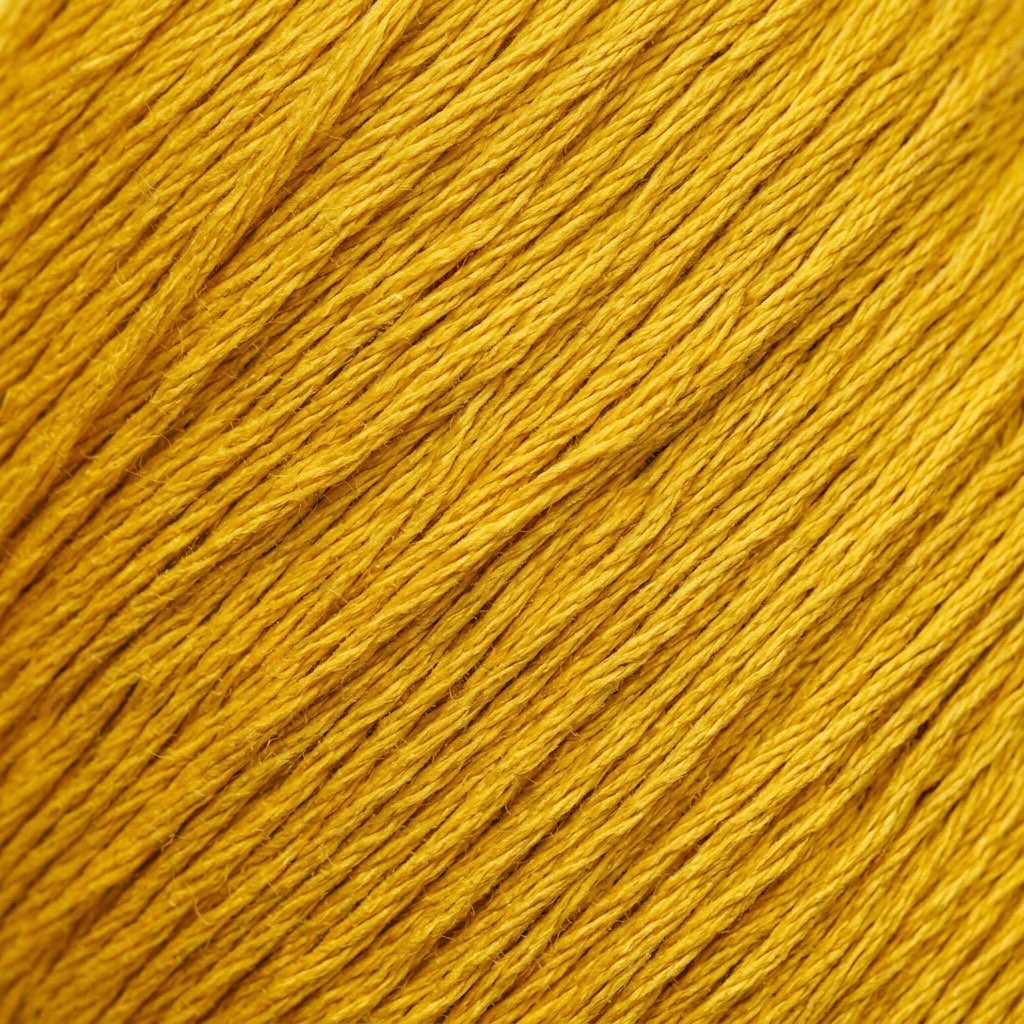
How DMC 3920 Looks on Fabric
The same thread appears different depending on your fabric. Always test on your project fabric.
White Aida
Cream / Ecru
Black Aida
Pairs Well With
DMC colors commonly used alongside 3920 Dark Lemon Yellow.
Suggested Palette
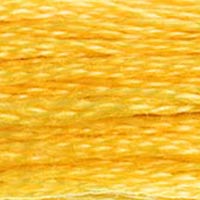
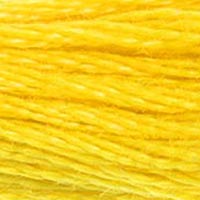
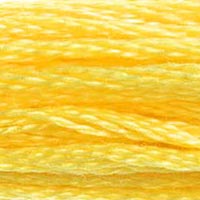
Shading Companions
Detailed Conversions
Where to Buy DMC 3920
This section contains affiliate links. We may earn a small commission at no cost to you.
Related Guides
Free Printable Thread Conversion Chart
Pick a brand, enter your email, and we'll send you a printable chart mapping all 552 DMC colors to that brand's equivalents. Zero spam, one chart.
Thanks! Here's your free chart:
Download Your ChartOpens in a new tab. Use your browser's Print → Save as PDF.
No spam. Your email is stored securely and never shared.