
Quick Conversion Table
| Brand | Equivalent | Match |
|---|---|---|
| Anchor | 59 | close |
| Madeira | 0508 | close |
| Cosmo ⚠ | 108 | close |
| Sullivans | 45064 | close |
| J&P Coats | 3401 | close |
| Dimensions | 6022 | close |
| Bucilla | 2057 | close |
| Candamar | 6215 | close |
Lipstick Red: The Fashion Color in Your Floss Box
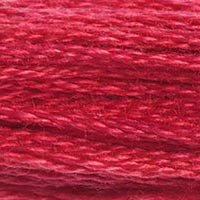
There is a specific red that cosmetics companies have chased for decades — vivid enough to make a statement, cool enough to flatter most skin tones, and deep enough to read as sophisticated rather than silly. That red, the classic power lipstick shade, is almost precisely DMC 326 Very Dark Rose. Hold a skein up next to a tube of Chanel Rouge Allure or MAC Ruby Woo, and the family resemblance is unmistakable. This is not an accident of naming — "Very Dark Rose" describes the intersection where red intensity meets blue-pink undertone, which is exactly the formula that makes a lipstick read as glamorous.
The hex (#B33B4B) tells the story. High red channel, almost no green, and a meaningful blue contribution that pulls the shade away from fire-engine red and toward the berry-crimson territory. This is a red with opinions — it is not neutral, not warm, and not trying to be anything other than a specific, decisive shade of cool crimson-rose. In a lineup of DMC reds, 326 stands apart because it carries more pink energy than DMC 304 (Medium Red) but more red intensity than DMC 600 (Very Dark Cranberry). It occupies a niche that neither of those neighbors can fill.
Roses, Obviously — But Which Roses?
The name includes "Rose," and yes, this thread exists partly to stitch roses. But not all roses. DMC 326 is the color of hybrid tea roses — those formal, long-stemmed, Valentine's Day roses bred for deep crimson perfection. It is not the color of wild roses (too pink, too pale), English garden roses (too warm, too peachy), or yellow roses touched with red at the petal edges (too complex). It is the color of the single red rose lying across a white tablecloth, the dozen in a glass vase, the rose on the cover of a romance novel.
For stitching these roses, 326 serves as the mid-to-dark value in the petal shading. Pair it with DMC 309 (Dark Rose) or DMC 902 (Very Dark Garnet) for the deepest shadows in the center of the bloom, and DMC 3350 (Ultra Dark Dusty Rose) or DMC 335 (Rose) for the lighter outer petals catching the light. This gives you a three-to-four shade gradient that creates convincing depth within the flower. The trick is keeping the transitions soft — use fractional stitches (quarter and three-quarter crosses) at shade boundaries to avoid hard lines between values, which real rose petals never show.
Valentine's and romance-themed samplers are the obvious project home for 326, and there is nothing wrong with that. A heart stitched in 326 on white Aida reads as classic, timeless, and unironic — it has the seriousness of a real declaration rather than the playfulness of a pink or coral heart. For wedding samplers where the couple wants red without Christmas connotations, 326's cool undertone keeps it firmly in romance territory rather than holiday territory.
The Cool Red Advantage in Complex Palettes
One of 326's underappreciated strengths is how well it plays with purples and blues. Cool reds share blue undertones with the purple and blue families, which means they transition smoothly in gradient work. A palette that moves from DMC 550 (Very Dark Violet) through DMC 902 (Very Dark Garnet), DMC 326, DMC 335 (Rose), and into DMC 3609 (Ultra Light Plum) creates a seamless warm-to-cool-to-warm arc that is impossible to achieve with warm reds. Warm reds clash at the purple boundary — they carry orange energy that fights the blue in purple. Cool reds like 326 simply melt into the purple spectrum.
This makes 326 essential for designs featuring dark-colored flowers like anemones, dahlias, and ranunculus, where the petals shift between deep red and purple. It is equally useful in sunset scenes where the sky moves from warm orange through red and into the deep magenta and violet of twilight — 326 bridges the gap between the last true red and the first true purple in a way that warm reds cannot.
For Chinese and Asian-themed designs, 326 offers an interesting alternative to the traditional bright red (DMC 321 or 666). While Chinese cultural red is typically warm and vivid — the red of lacquerware and festival lanterns — Japanese aesthetic traditions often favor cooler, more restrained reds. The shade of a lacquered chopstick, the deep red of a winter camellia (tsubaki), the crimson of a shrine torii gate weathered by rain — these are 326's territory. If your design draws from Japanese rather than Chinese visual traditions, this cooler red will feel more authentic.
On fabric, 326 performs like most saturated DMC reds: two strands on 14-count gives full coverage, the thread separates cleanly, and colorfastness is solid. Red dyes historically have more colorfastness variation than other color families, but DMC's modern formulations are reliable. Still, if you are stitching a piece destined for framing behind glass, washing before framing is always wise — any excess dye rinses out before it can migrate to adjacent lighter threads during years of display.
Navigating the 326 Substitution Landscape
Madeira 0508 is the standout option — an exact match that captures both the intensity and the cool undertone that define 326. Madeira's version has a slightly smoother surface texture that can enhance the sophisticated quality of this shade. For rose petals and floral work, Madeira's subtle sheen adds a lifelike quality that mimics the slight gloss of real flower petals.
Anchor 59 is rated close, and it is a shade that also maps to DMC 600 (Very Dark Cranberry). This doubling creates a problem for patterns using both 326 and 600, which is not uncommon in floral designs featuring roses alongside cranberry or berry accents. If your pattern calls for only one of these DMC shades, Anchor 59 is a serviceable stand-in. If both appear, you will need to find a second Anchor option for the other — try Anchor 42 or Anchor 44 to differentiate.
Cosmo 108 is a close match that trends slightly warmer than the DMC original. Cosmo's thread has a softer hand that creates flatter stitches, which at this color value can actually help — flatter stitches reflect less light, which enhances the deep, saturated quality of the shade. For full-coverage pieces where you want the red to feel rich and dense rather than sparkly, Cosmo is worth considering.
Sullivans 45064 is a close match with adequate color alignment but potentially lighter coverage density. On white Aida, verify that your stitches are fully opaque before committing — any fabric show-through will make this deep red look washed out and pinkish, which defeats the purpose of choosing such a specific shade.
Within DMC, the nearest neighbors are 309 (Dark Rose, slightly darker), 600 (Very Dark Cranberry, more pink-purple), and 304 (Medium Red, less pink). For projects where 326's exact cool-rose character is negotiable, DMC 309 is the most natural swap — it shares the same cool undertone family and differs primarily in depth rather than hue.
Reference quality
How We Validate This Color Record
Use this page as a reference card for DMC 326: the structured data, quick conversions, and long-form copy are all tied back to the same stored color record.
- Methodology
- This page renders DMC 326, its hex value, and every brand equivalent from the site's source-of-truth color record, then checks long-form body copy against those same stored fields.
- Verification status
- Source-field checked. The page content is audited against the stored DMC number, brand equivalents, and match-quality labels before publishing.
- Last reviewed
- 2026-04-20
- Approximation warning
- Screen hex values, thread photos, and cross-brand conversions are reference aids. Dye lots, thread sheen, and fabric color can still shift the result in hand.
Decision guide
When to use the DMC 326 reference page
This page should help you decide faster between palette planning, brand substitution, and shade comparison without turning the color record into a thin lookup page.
Best for
- + Palette planning when you want the stored DMC 326 Very Dark Rose record, hex value #B33B4B, and linked brand equivalents in one place.
- + Checking the quickest cross-brand shortlist before you buy floss, compare stash substitutes, or route into a more specific conversion page.
- + Finding nearby shades in the reds family before you commit to accents, shading, or background blends.
Watch for
- ! Screen previews are only reference aids. Very Dark Rose can shift on real fabric because thread sheen, stitch coverage, and room lighting change how the color reads.
- ! A stored equivalent is still a shortlist, not a guarantee that two brands will disappear into each other in the same stitched motif.
- ! Older charts, discontinued kit floss, and dye-lot variation can all introduce small but visible differences that the page cannot detect for you.
Before you commit
- Confirm the role of DMC 326 Very Dark Rose: decide whether you need an exact hero shade, a forgiving background, or a rough stash substitute.
- Compare on project fabric: view the skein or stitched sample on the same fabric count and color you will actually use.
- Use the linked conversion pages next: open the brand-specific pages when you need match-quality caveats before substituting away from the DMC reference.
DMC 326 FAQ
These questions appear on the page so the FAQ schema stays aligned with what visitors can actually read.
What is the Anchor equivalent of DMC 326?+
The closest Anchor equivalent to DMC 326 (Very Dark Rose) is Anchor 59. This is a close match.
What color is DMC 326?+
DMC 326 is called "Very Dark Rose" and has a hex color value of #B33B4B. It belongs to the reds color family.
What is the Madeira equivalent of DMC 326?+
The closest Madeira equivalent to DMC 326 (Very Dark Rose) is Madeira 0508. This is a close match.
How DMC 326 Looks on Fabric
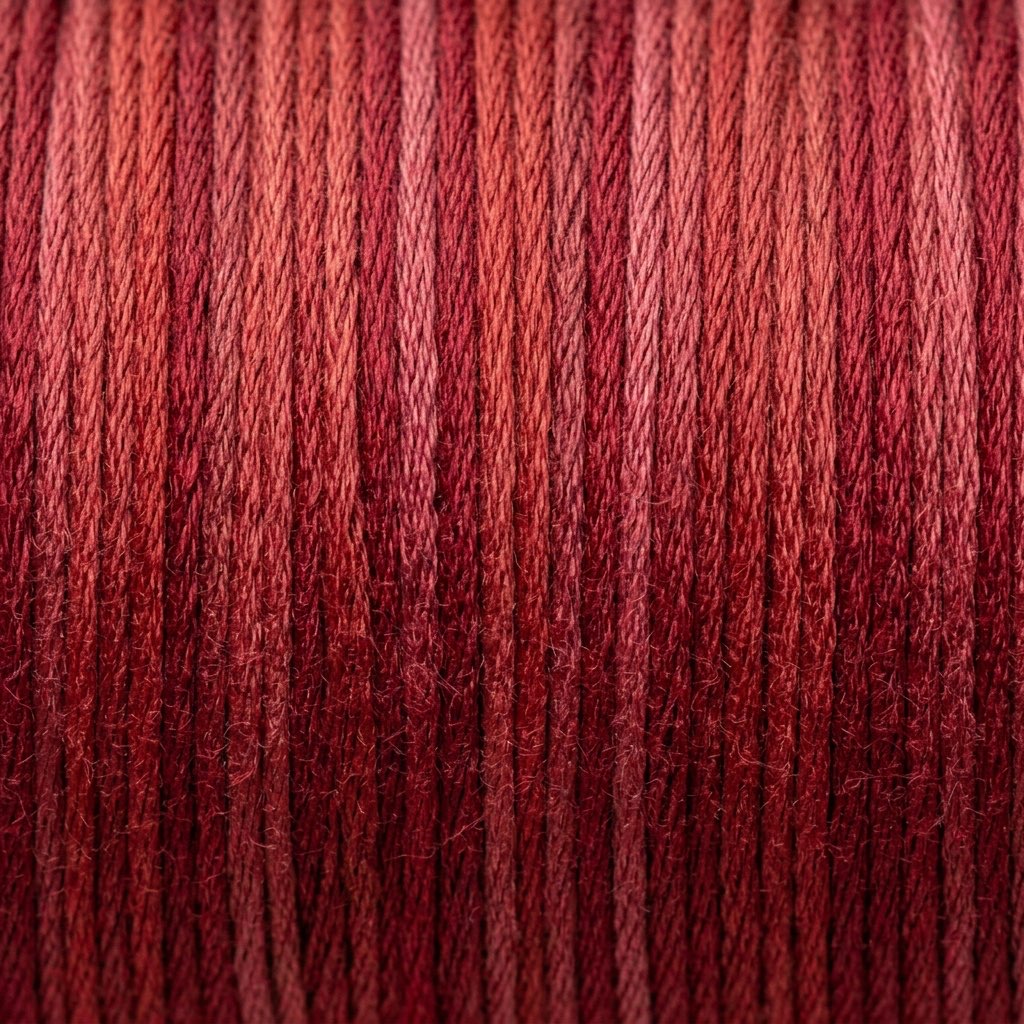
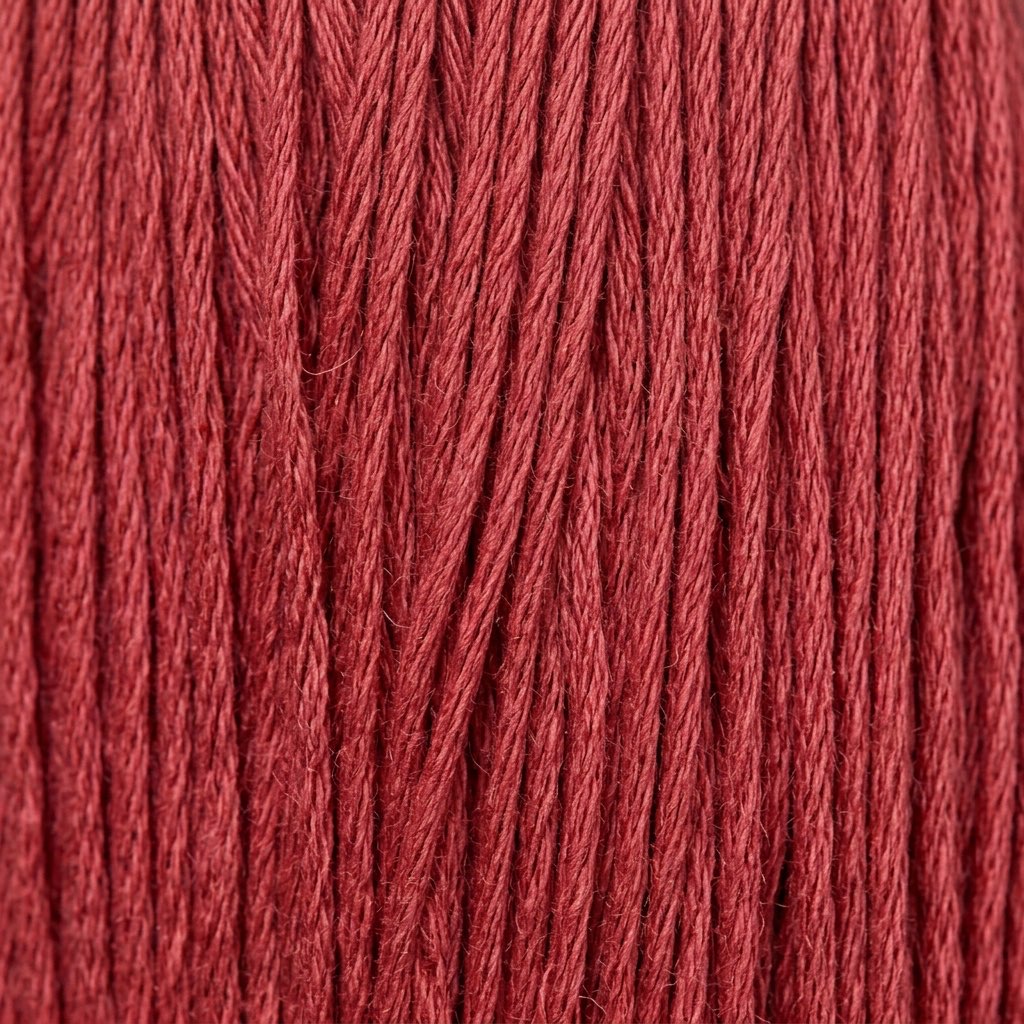
The same thread appears different depending on your fabric. Always test on your project fabric.
White Aida
Cream / Ecru
Black Aida
Pairs Well With
DMC colors commonly used alongside 326 Very Dark Rose.
Suggested Palette
Shading Companions
Detailed Conversions
Where to Buy DMC 326
This section contains affiliate links. We may earn a small commission at no cost to you.
Related Guides
Free Printable Thread Conversion Chart
Pick a brand, enter your email, and we'll send you a printable chart mapping all 552 DMC colors to that brand's equivalents. Zero spam, one chart.
Thanks! Here's your free chart:
Download Your ChartOpens in a new tab. Use your browser's Print → Save as PDF.
No spam. Your email is stored securely and never shared.